Monday, September 29, 2025

From Fleet to Courtroom: Program Trains Enlisted Marines to Become Lawyers

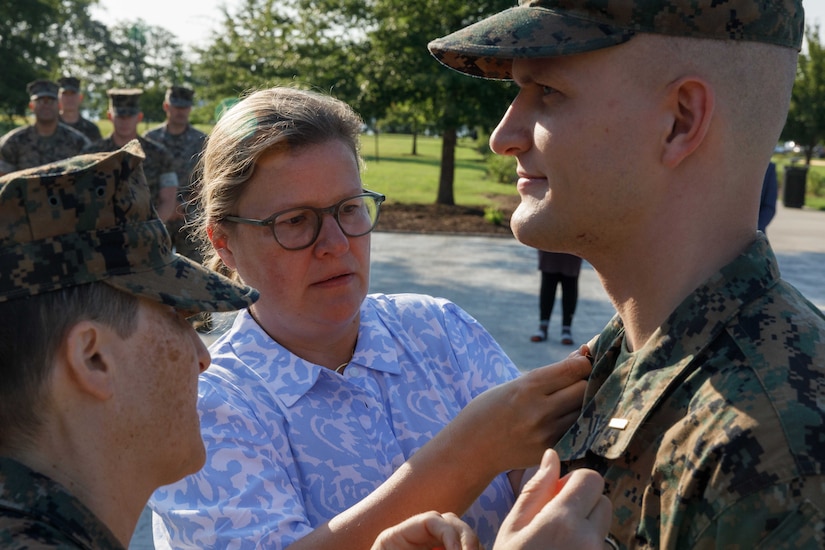
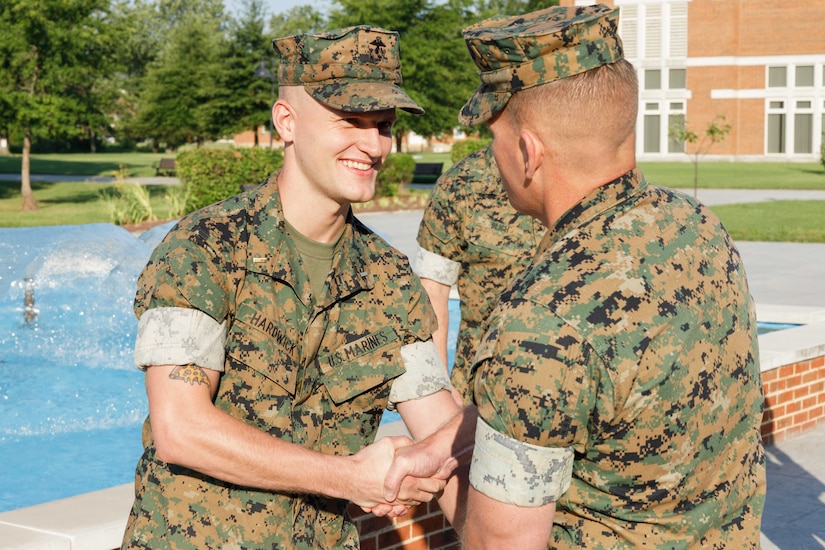
Marine Corps 2nd Lt. William Hardwick is one of the initial applicants to be selected for the Enlisted to Judge Advocate Program. Before earning his commission, he served as a sergeant in the Marine Corps, where he worked as a legal services specialist. 

A person in a camouflage military uniform and a person in casual attire pin a military rank on the collar of another person wearing a military uniform outside.

 
The program offers qualified enlisted Marines a fully funded path to becoming a Marine Corps lawyer. Those selected attend Officer Candidates School, then head to an American Bar Association-accredited law school, followed by The Basic School and Naval Justice School, all while receiving active-duty pay and benefits. 
 
"This is a tremendous opportunity," Hardwick said. "If you are enlisted and have any interest in this program, look into it, read the relevant [Marine administrative messages], orders and regulations, reach out to the [points of contact], find a judge advocate and ask them about their job." 
 
Program applicants must hold a bachelor's degree with a GPA of 3.0 or higher, score at least a 150 on the LSAT, have between four and eight years of active service and be in good standing with no disciplinary actions. 
 
The selection board for the fiscal year 25 cycle closed in August, but the program runs annually. 
 
"The big benefit of this program is you continue to be active duty while you are in law school, with no break in service and no break in benefits," Hardwick said. "While you are in school, you will continue to be paid basic pay and basic allowance for [housing], which puts you ahead of your peers in law school. All three years of law school will count towards your retirement, if you choose to have a full 20-year career." 

Two people wearing camouflage military uniforms shake hands outside.

 
Prior to entering the program, Hardwick served as the noncommissioned officer in charge of the Defense Services Organization at Camp Lejeune, North Carolina. His supervisor, Marine Corps Maj. Lauren Neal, recognized how quickly he became paramount to the office, noting that Hardwick's experience, both in and out of the courtroom, set him apart as a candidate for the Enlisted to Judge Advocate Program. 
 
"He consistently demonstrated the kind of leadership and judgment we strive to instill in every Marine," Neal said. "He brings operational insight, credibility and a deep commitment to the Marine Corps' core values of honor, courage and commitment." 
 
Hardwick is currently attending Fordham University in New York City, working toward his goal of serving in the Marine Corps as a judge advocate.

DEA Targets CJNG Operations, Seizing a Million Counterfeit Pills and 77,000 Kilograms of their Drugs in Five Days

WASHINGTON – Today, the Drug Enforcement Administration announced the results of a week-long operational surge aimed at dismantling the Jalisco New Generation Cartel (CJNG), one of the most violent and prolific drug trafficking organizations in the world.

Designated as a Foreign Terrorist Organization in February by the Trump Administration, CJNG is a significant threat to public safety, public health, and national security. CJNG is responsible for flooding the United States with deadly fentanyl, methamphetamine, cocaine, and heroin to fuel addiction, overdoses, and violence in communities across the United States.

“DEA is targeting the Jalisco New Generation Cartel as what it is—a terrorist organization—at every level, from its leadership to its distribution networks and everyone in between,” said DEA Administrator Terrance Cole. “Let this serve as a warning: DEA will not relent. Working side by side with our state, local, tribal, and federal partners, and through the Homeland Security Task Force, DEA is committed to these partnerships to take the fight directly to designated terrorist organizations. Every arrest, every seizure, and every dollar stripped from CJNG represents lives saved and communities protected. This focused operation is only the beginning—we will carry this fight forward together until this threat is defeated.”

From September 22 through September 26, 2025, DEA agents across 23 domestic field divisions and seven foreign regions carried out coordinated enforcement actions that resulted in:

  • Arrests: 670

  • Drug Seizures:

  • 92.4 kilograms of fentanyl powder,

  • 1,157,672 counterfeit pills,

  • 6,062 kilograms of methamphetamine,

  • 22,842 kilograms of cocaine, and

  • 33 kilograms of heroin

  • Currency Seizures: $18,644,105

  • Assets Seized: $29,694,429

  • Firearms: 244

CJNG operates globally, with tens of thousands of members, associates, and facilitators in at least 40 countries. The cartel is responsible for the production, manufacturing, and distribution of synthetic drugs, as well as the violence and corruption that accompany their operations.

DEA is committed to taking down CJNG’s command, control, and distribution networks and the continued pursuit of CJNG co-founder and leader Nemesio Rubén Oseguera Cervantes, also known as El Mencho. He remains one of DEA’s most wanted fugitives and the subject of a reward of up to $15 Million under the U.S. Department of State Narcotics Rewards Program.

DEA’s efforts are part of a larger whole-of-government approach to dismantling transnational criminal organizations and protecting U.S. communities. By working closely with the Homeland Security Task Force (HSTF) and other federal partners, DEA is ensuring that current and future operations align with broader U.S. efforts to combat designated terrorist organizations and transnational organized crime.

Sunday, September 28, 2025

Mental Illness Behind Bars: Why Prisons Have Become America’s Asylums

A half-century ago, most Americans with serious mental illness received treatment—even if imperfect and too often coercive—in state psychiatric hospitals. Today, by contrast, the country’s largest concentrations of people with serious mental illness are not in hospitals but in jails and prisons. Sheriffs in Los Angeles, Chicago, and New York have long described their lockups as the “largest mental health facilities” in their regions—an indictment of a system that routinely routes people with clinical needs into correctional custody. The result is a sprawling, decentralized, and under-resourced “asylum” network inside carceral institutions that were designed for security and incapacitation, not health care.

This essay explains how we got here, what we know about the scale of mental illness behind bars, how correctional environments complicate care, and what evidence-based reforms point to a different future. The focus is the United States, with reference to broader trends that illuminate the distinctively American pathway from deinstitutionalization to criminalization. Throughout, the argument is simple: the more we rely on correctional institutions to manage untreated mental illness, the worse the clinical outcomes, the higher the human and fiscal costs, and the further we drift from the constitutional and ethical mandates that should govern both health care and punishment.

From Hospitals to Jails: A Brief History

Beginning in the 1950s and accelerating through the 1960s and 1970s, the United States closed tens of thousands of state psychiatric beds under the banner of “deinstitutionalization.” In principle, shuttered hospitals were to be replaced by a robust community mental-health system. In practice, the promised community infrastructure arrived unevenly, leaving many people with serious mental illness without timely access to treatment and housing. By the 1990s and 2000s, researchers and county officials were documenting what they called the “new asylums”: a carceral safety net in which jails and prisons held far more people with serious mental illness than the country’s remaining state hospitals (Torrey, Kennard, Eslinger, Lamb, & Pavle, 2010; Torrey et al., 2014). The shift was not accidental. As public inpatient capacity declined and community services lagged, police—who are legally obligated to respond to crises—became de facto front-line mental-health responders. Courts and correctional systems absorbed the downstream consequences.

The “new asylum” moniker is not mere rhetoric. One national survey by the Treatment Advocacy Center concluded that, by the 2010s, jails and prisons held several times as many individuals with serious mental illness as state psychiatric hospitals, and that many of those individuals would previously have received inpatient treatment rather than incarceration (Torrey et al., 2010; Torrey et al., 2014). The criminalization pathway is now so entrenched that even well-intentioned local initiatives often amount to triage rather than structural change.

What the Data Show: Prevalence and Need

Although measurement varies across studies, the weight of evidence indicates that the prevalence of mental health symptoms and diagnoses in correctional settings far exceeds that of the general population. The Bureau of Justice Statistics (BJS) found that 14% of state and federal prisoners and 26% of jail inmates met the threshold for serious psychological distress in the prior 30 days; 37% of prisoners and 44% of jail inmates reported having been told by a mental-health professional at some point that they had a mental disorder (Bronson & Berzofsky, 2017). That compares to about 5% meeting the same distress threshold in the general population sample used for comparison (Bronson & Berzofsky, 2017). Estimates from psychiatric advocacy and clinical literature commonly place the share of people with serious mental illness (SMI)—conditions such as schizophrenia, bipolar disorder, or major depression with severe impairment—at roughly 15% in prisons and 20% in jails (Treatment Advocacy Center, 2016).

These carceral numbers are not occurring in a vacuum. In the broader community, SAMHSA’s uniform reporting system estimates that millions of adults live with SMI in any given year, with significant unmet need for treatment (Substance Abuse and Mental Health Services Administration [SAMHSA], 2025). When community systems fail to engage those most at risk—often individuals with co-occurring substance use disorders, homelessness, and trauma histories—police and jails become the default point of contact.

Mortality and morbidity data underscore the consequences. BJS reports that suicide remains a leading cause of death in jails and a persistent concern in prisons (Bureau of Justice Statistics, 2021). Federal oversight bodies have repeatedly documented lapses in screening, monitoring, and follow-up—failures with direct implications for people with mental illness (U.S. Department of Justice Office of the Inspector General [DOJ OIG], 2025; U.S. Government Accountability Office [GAO], 2024).

Why Correctional Settings Struggle to Deliver Care

Mission mismatch. Prisons and jails prioritize safety, custody, and order. Clinical care—especially for chronic, relapsing disorders—requires continuity, privacy, therapeutic alliance, and post-release linkage, all of which are hard to sustain in carceral environments. The American Psychiatric Association (APA) has long emphasized that correctional facilities nonetheless carry a constitutional obligation to provide necessary mental-health services—a duty that stems from case law prohibiting “deliberate indifference” to serious medical needs (APA, 2024). Meeting that obligation, however, is resource-intensive.

Churn and fragmentation. Jails experience massive turnover—millions of bookings annually—which complicates intake screening, medication reconciliation, and continuity of care. Many individuals arrive off their regimens, in withdrawal, or in acute crisis. Short stays mean clinicians have days—not months—to stabilize patients and arrange community follow-up. When those handoffs fail, people cycle back through custody.

Staffing and training constraints. Chronic vacancies among custody and clinical staff undermine both safety and care. Oversight reviews have linked staffing shortages to missed rounds, delayed assessments, and gaps in suicide prevention protocols (DOJ OIG, 2025). The GAO has separately found that the Bureau of Prisons has not fully implemented dozens of recommendations related to restrictive housing and associated mental-health risks (GAO, 2024).

Segregation and restrictive housing. Prolonged isolation can exacerbate psychiatric symptoms. National correctional health bodies advise excluding seriously mentally ill people from extended segregation or, where segregation is unavoidable, modifying conditions and providing structured therapeutic time out of cell (Metzner, Tardiff, & Fellner, 2015). Yet practice often lags policy.

Legal and ethical complexity. Treating people who refuse medication raises due-process and clinical questions that many systems navigate inconsistently. Surveys show wide variation in state policies governing involuntary treatment and access to hospital-level care for the sickest incarcerated patients (Torrey et al., 2014). Without clear, humane pathways to higher levels of care, jails and prisons become holding areas for untreated illness.

Constitutional Floor, Systemic Ceiling

When correctional conditions deteriorate, litigation is often the forcing function. In Brown v. Plata (2011), the U.S. Supreme Court upheld a population-reduction order for California’s prisons after finding that overcrowding produced constitutionally inadequate medical and mental-health care. The record described a system where preventable suffering and death flowed from structural dysfunction: insufficient space and staff, treatment delays, and a security posture that obstructed clinical access (Brown v. Plata, 2011). While Plata addressed state prisons, its logic echoes in local lockups and federal facilities facing similar barriers. Court orders can impose a constitutional floor; they cannot, by themselves, build the community systems that keep people out of custody or the clinical capacity inside facilities to meet complex needs.

Why Jails and Prisons Became the Default

Three dynamics explain the “asylum” shift:

  1. Deinstitutionalization without parity. The rapid reduction of state hospital beds far outpaced the build-out of community services, leaving a shortfall in crisis stabilization, assertive community treatment, housing, and outpatient supports (Torrey et al., 2010).

  2. Co-occurring disorders and homelessness. Many individuals with SMI also struggle with substance use and unstable housing—factors that raise the likelihood of police contact for low-level offenses or quality-of-life ordinances. Without diversion pathways, those encounters end in jail.

  3. Legal and clinical thresholds. Civil commitment statutes and clinical practice trends place a premium on dangerousness and imminent risk; many people with SMI do not meet those thresholds until crises become acute. Police then become the gatekeepers.

Costs—Human and Fiscal

Housing and attempting to treat mental illness in jails and prisons is expensive. People with significant psychiatric needs require more staff time, medication, observation, and clinical services. They are also more likely to be victimized, to accrue disciplinary infractions, and to spend time in restrictive housing—all of which drive costs with little therapeutic payoff. Studies of large urban jails have documented per-diem costs that double or triple for people with serious mental illness compared to the general jail population because of added security and clinical supervision (see synthesis in Treatment Advocacy Center, 2016). Beyond custody, the “revolving door” of repeat bookings, emergency department use, and homelessness exacts a heavy toll on local budgets and, most importantly, on human life.

What Works: Evidence-Based Off-Ramps

If the pipeline into carceral “asylums” is the problem, diversion and treatment at the right time and place are the solution. Four strategies have the strongest evidence base:

1) Behavioral-health crisis response and 988 linkage. Mobile crisis teams, crisis receiving and stabilization facilities, and co-responder models reduce arrests during mental-health emergencies by providing an immediate clinical alternative to jail. When these services are integrated with the 988 Suicide and Crisis Lifeline and law-enforcement dispatch, officers can hand off safely and quickly, avoiding unnecessary bookings. The logic is straightforward: build something better than jail for people in crisis.

2) Pre- and post-arrest diversion. Mental-health courts, prosecutor-led deflection, and sheriff-based diversion units can route eligible individuals into treatment plans with accountability and support. Miami-Dade County’s Criminal Mental Health Project is a frequently cited example: by coupling officer training with court-supervised treatment and housing navigation, the county sharply cut jail days among participants (see program syntheses in TAC and professional association reports; Torrey et al., 2014; Treatment Advocacy Center, 2017).

3) Clinical capacity inside custody. Jails and prisons still need robust intake screening, prompt psychiatric evaluation, access to evidence-based medications, suicide prevention protocols, and timely referral to hospital-level care when indicated. National professional guidance—by APA and correctional health organizations—sets clear expectations for staffing, confidentiality, treatment planning, and continuity of care (APA, 2024; Metzner et al., 2015). Compliance, however, depends on staffing, leadership, and oversight—areas where federal watchdogs continue to identify gaps (GAO, 2024; DOJ OIG, 2025).

4) Reentry that begins at booking. Without warm handoffs—appointments on the calendar, active benefits, medications in hand, and transportation—people with SMI fall off a cliff at the jail door. Effective programs collaborate with community providers, ensure Medicaid activation upon release, and prioritize housing supports—especially medical respite and supported housing—for those with high needs.

The Role of Leadership and Oversight

Cultural and structural change require leadership. Police chiefs, sheriffs, judges, and corrections executives increasingly acknowledge that they cannot “arrest their way” out of untreated mental illness. Yet acknowledgment must translate into budgets, contracts, and accountability. GAO’s 2024 review of the Bureau of Prisons’ restrictive housing practices illustrates how slow implementation and incomplete follow-through on recommendations can perpetuate risk for vulnerable populations (GAO, 2024). DOJ’s Office of the Inspector General has likewise documented lapses that, while sometimes focused on general medical care, signal systemic deficits in screening, follow-up, and staffing that inevitably spill over into mental-health outcomes (DOJ OIG, 2025). These findings should be read not only as critiques but as a roadmap for investment and reform.

Reframing the Question

Calling jails and prisons “America’s asylums” is descriptively powerful but normatively dangerous if it suggests that carceral care can ever be an adequate substitute for a functioning community mental-health system. The constitutional minimum for care in custody—secured through litigation when necessary—should not become the policy maximum. A humane, fiscally rational system directs people to the least restrictive, most effective setting consistent with public safety and clinical need. For many, that means community-based care, not a cell.

Conclusion

The United States did not set out to make jails and prisons its primary mental-health institutions. It happened because we closed hospitals faster than we built clinics, relied on police to manage crises that medicine and housing should have addressed, and tolerated gaps in correctional health that would be unacceptable anywhere else. The data are clear: mental illness behind bars is common, care is difficult to deliver at quality and scale, and preventable harms—up to and including suicide—persist. The constitutional floor defined by cases like Brown v. Plata should motivate, not satisfy, our ambitions.

Changing course means funding crisis response and treatment upstream; creating lawful, clinical off-ramps in lieu of arrest; professionalizing and auditing correctional mental-health care where custody is unavoidable; and making reentry a clinical transition, not an administrative afterthought. We know what works. The question is whether we will invest in it—so that the phrase “America’s asylums” once again refers to hospitals and community clinics worthy of the name, not to the jails and prisons that have shouldered their absence.


References

American Psychiatric Association. (2024). Position statement on psychiatric services in jails and prisons. Author.

Bronson, J., & Berzofsky, M. (2017). Indicators of mental health problems reported by prisoners and jail inmates, 2011–12 (NCJ 250612). Bureau of Justice Statistics, U.S. Department of Justice.

Bureau of Justice Statistics. (2021). Suicide in local jails and state and federal prisons, 2000–2019: Statistical tables (NCJ 300954). U.S. Department of Justice.

Brown v. Plata, 563 U.S. 493 (2011).

Metzner, J. L., Tardiff, K., & Fellner, J. (2015). Mental health considerations for segregated inmates. National Commission on Correctional Health Care.

Substance Abuse and Mental Health Services Administration. (2025). 2022 serious mental illness/serious emotional disturbance estimates. U.S. Department of Health and Human Services.

Torrey, E. F., Kennard, A. D., Eslinger, D., Lamb, H. R., & Pavle, J. (2010). More mentally ill persons are in jails and prisons than hospitals: A survey of the states. Treatment Advocacy Center & National Sheriffs’ Association.

Torrey, E. F., Zdanowicz, M. T., Kennard, A. D., Lamb, H. R., Eslinger, D., Biasotti, M., & Fuller, D. A. (2014). The treatment of persons with mental illness in prisons and jails: A state survey. Treatment Advocacy Center.

U.S. Department of Justice, Office of the Inspector General. (2025). Inspection of the Federal Bureau of Prisons’ Federal Medical Center Devens (Report 25-009). Author.

U.S. Government Accountability Office. (2024). Additional actions needed to improve restrictive housing and related mental health care in the federal prison system (GAO-24-105737). Author.
Friday, September 26, 2025

Jury Convicts Man of Attempted Assassination of President Donald J. Trump and Assault of a Federal Law Enforcement Officer

A federal jury today convicted Ryan Wesley Routh, 59, of Hawaii, for attempting to assassinate President Donald J. Trump when he was a major presidential candidate in a planned sniper attack at Trump International Golf Club in West Palm Beach, Florida.

    “Today’s guilty verdict against would-be Trump assassin Ryan Routh illustrates the Department of Justice’s commitment to punishing those who engage in political violence,” said Attorney General Pamela Bondi. “This attempted assassination was not only an attack on our President, but an affront to our very nation itself. I am grateful to U.S. Attorney Jason Quiñones, his entire trial team, and our law enforcement partners for protecting President Trump and securing this important verdict.”

“This verdict sends a clear message. An attempt to assassinate a presidential candidate is an attack on our Republic and on the rights of every citizen,” said Deputy Attorney General Todd Blanche. “The Department of Justice will relentlessly pursue those who try to silence political voices, and no enemy, foreign or domestic, will ever silence the will of the American people. I want to thank and congratulate the trial team and our law enforcement partners for their outstanding work and dedication in bringing this case to justice.”

“Ryan Routh’s attempted assassination of President Trump was a disgusting act — mere weeks before an election and only months after a separate assassination attempt came dangerously close to succeeding,” said FBI Director Kash Patel. “FBI teams worked quickly and diligently with local partners and the Department of Justice to demonstrate a clear fact pattern of Routh’s planning and intent, and we are grateful to see a quick resolution. The FBI will continue working aggressively to take violent offenders off American streets and protect public officials from threats of all nature.”

“There are few crimes more serious than attempting to assassinate a President or former President of the United States, for such an act strikes at the very heart of our Nation and our democracy,” said Assistant Attorney General for National Security John A. Eisenberg. “The evidence was clear – a loaded rifle with its serial number obliterated, a backpack and gear found in the woods near Trump International, cellphone records placing the defendant at the scene, and a letter confessing intent – all pointing to a chilling attempt to assassinate then former-President Trump. Today’s jury verdict is a resounding rejection of political violence and a reminder of how perilously close we came to a tragedy of historic proportions.”

“Today’s jury verdict delivers justice. What Routh did was objectively evil — an attempt not only to take a life, but to rob Americans of their right to vote and to silence free speech. This was nothing less than an attempted assassination of both a man and the democratic voice he represented,” said U.S. Attorney Jason A. Reding Quiñones for the Southern District of Florida. “We have seen over the past decade how political violence — from the assassination of Charlie Kirk to threats meant to silence conservative voices — has poisoned our public square. Such violence is un-American. It is an assault on every one of us, no matter our politics. The Southern District of Florida will relentlessly pursue those who try to steal our freedoms, and we will ensure that the rule of law — not fear, not violence — prevails.”

According to the evidence presented at trial, then-U.S. Secret Service Special Agent Robert Fercano – who was patrolling one hole ahead of the president at the golf course – spotted Routh pointing an AK-style rifle at Special Agent Fercano from a sniper’s hide in the fence abutting the golf course. Agent Fercano, in fear for his life and the life of President Trump, opened fire at Routh, who fled. Law enforcement subsequently found a loaded SKS-style rifle equipped with a scope, a magazine containing an additional nineteen rounds of ammunition and the safety off, steel armor plates, and a camera attached to the fence pointing toward the sixth hole green of the golf course, where Routh had been hiding:

A witness saw Routh running across the road from the golf course and getting into a black Nissan Xterra. Based on information provided by the witness, Routh was later apprehended heading northbound on I-95 by officers from the Martin County Sheriff’s Office, in coordination with the Palm Beach County Sheriff’s Office.

A search of Routh’s Nissan Xterra found numerous mobile phones, and a list of flights out of the country in the afternoon and evening of Sept. 15, 2024 – the day of the attempted assassination – along with directions to Miami International Airport. Cell records for two of the cell phones found in the Nissan Xterra showed that on multiple days and times from Aug. 18 to Sept. 15, Routh’s cell phone accessed cell towers located near Trump International and the President’s residence at Mar-a-Lago.

A witness testified at trial that he contacted law enforcement stating that Routh had dropped off a box at his residence in April after Routh made another trip to the area near the golf course. Included in the box was a handwritten letter from Routh addressed “Dear World,” which stated, among other things, “This was an assassination attempt on Donald Trump but I am so sorry I failed you.”

Routh was convicted of attempted assassination of a major presidential candidate, which carries a maximum penalty of life imprisonment; possessing a firearm in furtherance of a crime of violence, which carries a maximum penalty of life imprisonment; assaulting a federal officer (the Secret Service Special Agent, Robert Fercano), which carries a maximum penalty of 20 years in prison; felon in possession of a firearm and ammunition, which carries a maximum penalty of 15 years in prison; and possession of a firearm with an obliterated serial number, which carries a maximum penalty of five years in prison. A federal district court judge will determine any sentence after considering the U.S. Sentencing Guidelines and other statutory factors.

The FBI is investigating the case, with assistance from the U.S. Secret Service, and the Bureau of Alcohol, Tobacco, Firearms and Explosives. Palm Beach Sheriff’s Office and Martin County Sheriff’s Office also assisted with this case.

Senior Counsel John C. Shipley, Assistant U.S. Attorney Christopher B. Browne, National Security Section Chief Maria K. Medetis Long, and Special Assistant U.S. Attorney Jennifer Luce for the Southern District of Florida, and Trial Attorneys James Donnelly and John Cella of the Justice Department’s National Security Division Counterterrorism Section are prosecuting the case.

The Justice Department will continue to defend the democratic process, safeguard our leaders, and ensure accountability for political violence.

Former Jeffersonville Police Officer Sentenced to 15 Months for Making False Statements During Purchase of Firearms

NEW ALBANY - Todd Wilson, 52, of Charlestown, Indiana, has been sentenced to 15 months in federal prison, followed by one year of supervised release, after pleading guilty to making a false statement during the purchase of a firearm. 

According to court documents, Todd Wilson was a sworn police officer with the Jeffersonville Police Department (“JPD”), where he also served as the department’s evidence custodian. In that role, Wilson was entrusted with the careful receipt, storage, tracking, and release of evidence and property collected during investigations.

From 2020 to 2021, Wilson abused his position by lying during the purchases of nine firearms on eight separate occasions from a federally licensed firearms dealer in Jeffersonville, Indiana.

Under ATF regulations, law enforcement officers may purchase firearms without completing ATF Form 4473 (Firearms Transaction Record), which is typically required for purchases from federal firearms licensees. To utilize this exemption, officers must submit a certification on agency letterhead, signed by an authorized official, affirming the firearm will be used for official police duties and that the officer has no convictions for misdemeanor crimes of domestic violence. Firearms dealers are required to retain these certifications in their permanent records.

Wilson purchased firearms through this program by submitting certifications on JPD letterhead in which he forged the signatures of the authorized official. Contrary to his claims on the certifications, Wilson intended to use the firearms for personal use, not his official duties, or to transfer or resell the firearms to third parties.

Wilson gifted two Glock 48 9mm pistols and a Glock 43x 9mm pistol to two individuals and sold a fourth firearm to another individual for $400.  eTracing was conducted on the firearms, which showed only the JPD, not Wilson or any of the other owners.

“The power entrusted to police officers demands an unwavering commitment to truth. When that trust is broken through deliberate dishonesty, it undermines the very foundation of justice and the safety of our communities. This offense wasn’t a momentary lapse, but a grave betrayal by someone sworn to uphold the truth,” said Tom Wheeler, United States Attorney for the Southern District of Indiana. “ATF Forms serve the critical purpose of ensuring law enforcement can trace crime guns. We remain committed to working with our federal partners to hold accountable those who misuse their authority.”

“Lying to obtain a firearm is a serious crime, and wearing a badge does not place anyone above the law,” said FBI Indianapolis Special Agent in Charge Timothy J. O’Malley. “This sentence underscores that when law enforcement officers choose to break the law and mislead the system, they will be held fully accountable. The officer’s own department initiated the investigation, reflecting its commitment to justice and the rule of law.”

The Federal Bureau of Investigation and the Jeffersonville Police Department investigated this case. The sentence was imposed by U.S. District Judge Tanya Walton Pratt.    

U.S. Attorney Wheeler thanked Assistant U.S. Attorney Meredith Wood, who prosecuted this case.

Mexican National Admits Murdering Couple and their Unborn Child During Drug Trafficking Conspiracy

SAN DIEGO – Benjamin Madrigal-Birrueta, an undocumented Mexican national living in Yakima, Washington, admitted in federal court today that he murdered a man and his six-months-pregnant wife while they were engaged in a drug trafficking conspiracy.

According to his plea agreement, Madrigal-Birrueta and coconspirators fatally shot 44-year-old Cesar Murillo multiple times in the back of the head and the torso on August 28, 2022, during an argument. The shooting took place at a remote ranch outside of Yakima. Madrigal-Birrueta’s co-conspirators then buried the victim’s body near the ranch at Madrigal’s direction.

On September 2, 2022, Madrigal-Birrueta persuaded Murillo’s wife, Maira Hernandez, 33, who was unaware of her husband’s death, to come to the ranch by claiming her husband was waiting for her there. She agreed, and the defendant picked up Hernandez in Yakima and drove her to the ranch.

According to admissions in his plea agreement, when the visibly-pregnant Hernandez arrived at the ranch, the defendant’s coconspirators shot her multiple times in the head. Madrigal-Birrueta and his coconspirators then buried Hernandez near the ranch. The child died in utero when Hernandez was shot, killed and buried.

Madrigal-Birrueta admitted the murders were committed while he was engaged in a drug trafficking conspiracy. The plea agreement said Madrigal-Birrueta’s coconspirators owed money to the couple for an unpaid drug debt.

Madrigal-Birrueta is scheduled to be sentenced on March 27, 2026.

The superseding indictment also charges Ricardo Orizaba-Zendejas with being an accessory after the fact to murder and a co-conspirator in Madrigal’s drug trafficking organization. Orizaba-Zendejas is set for trial beginning October 27, 2025

According to court filings, the investigation originated with the seizure of drugs from vehicles entering the United States through San Diego area ports of entry between August and October of 2021. By August of 2022, the investigation led agents to a group of individuals operating out of Yakima. Special Agents with Homeland Security Investigations (HSI) interviewed Murillo and Hernandez. Within days of those interviews, Murillo and Hernandez were murdered and their bodies buried at the Yakima ranch in the high desert. Court filings describe how these charges followed an exhaustive, years’ long investigation that employed geophysicists, ground penetrating radar, aircraft, laser imaging, chemical testing of the soil, numerous cadaver dogs, and other law enforcement techniques to search for the victims’ remains. HSI Special Agents successfully recovered the remains on September 13, 2023, aided by a Washington State Police Crime Scene Investigations team.

During the investigation agents seized methamphetamine, cocaine, fentanyl, multiple firearms — including a machine gun — and body armor from Madrigal-Birrueta’s drug trafficking organization, to include the Yakima ranch.

This case is being prosecuted by Assistant U.S. Attorneys Stephen Wong, Alexandra Foster, Mario Peia and Brandon Kimura.

DEFENDANTS                                   Case Number 23cr1684-RBM                                    

Benjamin Madrigal-Birrueta                  Age: 22                        Yakima, WA

SUMMARY OF CHARGES

Count 4: Murder of Cesar Murillo in Furtherance of a Drug Trafficking Conspiracy – Title 21, United States Code, Section 848(e)

Maximum penalty: Mandatory minimum sentence of twenty years and up to life, or death

Count 5: Murder of Maira Hernandez in Furtherance of a Drug Trafficking Conspiracy – Title 21, United States Code, Section 848(e)

Maximum penalty: Mandatory minimum twenty years and up to life, or death

Count 9: Causing the Death of a Child in Utero – Title 18, United States Code, Sections 1841 and 1111.

Maximum penalty: Mandatory minimum life in prison or death

INVESTIGATING AGENCIES

Homeland Security Investigations

Drug Enforcement Administration

Federal Bureau of Investigation

Bureau of Alcohol, Tobacco, Firearms and Explosives

Washington State Police

California Highway Patrol

Yakima Police Department

Tulare County Sheriff’s Office

Visalia Police Department

Fresno Sheriff’s Office

Fresno Police Department

*The charges and allegations contained in an indictment or complaint are merely accusations, and the defendants are considered innocent unless and until proven guilty.

Sunday, September 21, 2025

Charging Youth (14-Year-Olds) as Adults for Serious Crimes: Efficacy vs. Ethics

Recent legislation under consideration in Washington, D.C., proposes allowing 14-year-olds accused of serious crimes—such as murder or armed robbery—to be tried in adult criminal court without a judicial hearing. Proponents argue this is necessary to deter violent crime and protect public safety; opponents warn of serious ethical, developmental, and societal costs. This essay examines whether charging youth this young as adults is effective at achieving goals like deterrence and public safety and whether it aligns with ethical standards, arguing that while the proposal responds to urgent public concern, it fails to deliver on efficacy and raises serious ethical dilemmas.

Recent Legislative Context

  • On September 16, 2025, the U.S. House of Representatives passed bills that include lowering the age at which juveniles can be charged as adults in D.C. for serious crimes to 14 years old, removing judicial hearings in those cases. Local elected officials strongly oppose the change. (Washington Post, 2025)

  • Under the “DC Crimes Act” and related juvenile sentencing reform legislation, youth offender status would be capped at ages 18 and under (instead of higher ages), and mandatory minimum adult sentences imposed for certain serious offenses. (AP News, 2025)

What Research Shows on Efficacy

Recidivism and Future Offending

  • Multiple studies indicate that juveniles transferred to adult court are more likely to reoffend and reoffend more quickly compared to similar youth retained in the juvenile system. For example, the “Transfer of Juveniles to Adult Court: Effects of a Broad Policy” project found that transferred youth had higher rates of recidivism. (Myers, 2003, as cited in Office of Juvenile Justice & Delinquency Prevention, 2025)

  • The Sentencing Project and other research report that adult system adjudication undermines rehabilitative interventions, often leading to worse long‐term outcomes. (Sentencing Project, 2025)

Impact on Rehabilitation and Social Outcomes

  • The juvenile system is structured around education, counseling, treatment, and considering developmental factors, whereas the adult system generally lacks the same level of support. Studies show that youth tried as adults often lose access to these critical services. This contributes to lower educational attainment, fewer employment opportunities, and higher likelihood of reentry into the system. (Health in Partnership, 2017; American Bar Association, 2016)

  • Incarceration in adult facilities also correlates with worsened mental health, increased exposure to violence, and physical health harms. (Why Youth Incarceration Fails, Sentencing Project, 2023)

Deterrence

  • There is weak empirical support that trying younger teens as adults deters crime more effectively than juvenile court sanctions. Some research suggests that severity (harsh penalties) has limited deterrent effect when not balanced by fairness, rehabilitation, or community interventions. (American Bar Association, 2016; Urban Institute, 2024)

Ethical and Moral Considerations

Cognitive Development and Moral Responsibility

  • Adolescents, including 14-year-olds, are still undergoing neurological development, particularly in areas related to impulse control, risk assessment, and peer influence. Ethically, this raises questions about holding them to the same standards of responsibility as fully mature adults. (Juvenile Law Center)

  • Supreme Court precedent (e.g., Roper v. Simmons, Graham v. Florida) has recognized that youth are less culpable because of their developmental immaturity and greater potential for change.

Fairness, Disparities, and Social Justice

  • Charging young teens as adults widens racial and socioeconomic disparities. Many studies show that Black, Latino, and other minority youth are disproportionately affected by policies that move juvenile cases into adult court. (Sentencing Project, 2025; Juvenile Law Center)

  • Youth from disadvantaged backgrounds often have less access to legal representation, supportive services, or resources to mitigate harm, making adult prosecutions more punitive in effect.

Long-Term Societal Costs

  • Beyond immediate outcomes, adult convictions carry lifelong consequences: criminal records reduce access to higher education, employment, housing, and social support. This perpetuates cycles of poverty and crime rather than resolving them.

  • The ethical question extends to whether society should invest more in prevention, rehabilitation, and community support rather than punitive measures that may produce harm and limited benefit.

Arguments in Favor and Counterpoints

For Trying 14-Year-Olds as Adults

  • Proponents argue that some crimes are so serious that the youth age should not absolve near-adult levels of moral culpability or risk to the community. In particular, violent offenses, including murder or armed robbery, are seen by supporters as requiring adult legal responses to ensure justice and public safety.

  • Supporters believe that more accountability will deter youth from engaging in serious crime, restore public trust, and reduce perception of impunity.

Counterarguments

  • The deterrent effect is not strongly supported by data; the potential social harm and cost of recidivism may outweigh any incremental deterrence.

  • Ethical concerns about fairness, especially for vulnerable youth, and risk of traumatization or harm in adult correctional environments.

Conclusion

While charging 14-year-olds as adults for serious crimes may seem like a decisive response to public safety concerns, available evidence suggests it fails to produce the intended deterrent outcomes, exacerbates recidivism, and undermines ethical norms around fairness, youth development, and rehabilitation. From both efficacy and ethics standpoints, the policy seems more likely to generate harm than benefit. A more balanced approach would emphasize strengthening the juvenile justice system, investing in prevention, trauma-informed care, and providing rehabilitative supports that recognize youthful development. Such measures have stronger empirical backing and align more closely with moral responsibility and equitable justice.


References

American Bar Association. (2016). Should juveniles be charged as adults in the criminal justice system? Children’s Rights Litigation Committee.

Health in Partnership. (2017, February 12). Charging youth as adults is ineffective, biased, and harmful. Health in Partnership.

Office of Juvenile Justice & Delinquency Prevention. (2025, July). Transfer of juveniles to adult court: Effects of a broad policy. U.S. Department of Justice.

Sentencing Project. (2025, September 8). Criminal justice experts: Congress’ pro-prison crime bills will make D.C. less safe.

Urban Institute. (2024, December 18). Prosecuting young people as adults can undermine rehabilitation and fuel mass incarceration. Sarah Aukamp.

Washington Post. (2025, September 16). House votes to charge D.C. 14-year-olds as adults.

Washington Post. (2025, February 26). Maryland revives years-long debate over whether to charge kids as adults.

Juvenile Law Center. Youth tried as adults. Juvenile Law Center.

Saturday, September 20, 2025

Army Enhances Border Security Through Partnership, Unique Capabilities

Joint Task Force Southern Border demonstrates an unprecedented level of interoperability with partner agencies as part of their whole-of-government approach to secure the southern border. 

From the headquarters down to squad-sized elements directly on the border, task force personnel are working alongside U.S. Border Patrol every day, ensuring synchronized efforts to deter illicit activities. 

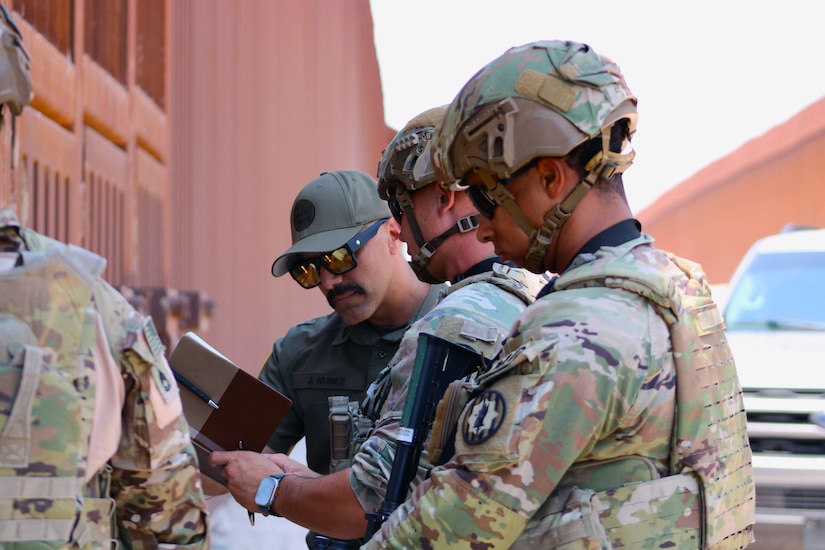
Two soldiers speak to a person in a baseball cap outside, with a large structure and vehicle in the background and another person nearby.

"My experiences in past deployments and working in Europe have reinforced the importance of partner collaboration — a principle directly applicable to our current mission with Border Patrol," said Army Lt. Col. Cris Gasperini, commander of the 1st Battalion, 41st Infantry Regiment, 2nd Stryker Brigade Combat Team, 4th Infantry Division, assigned to JTF-SB. "The integration of our organic assets with those of Border Patrol has been exceptionally effective, demonstrating the necessity of a whole-of-government approach to border security." 

The task force's integration has proven critical to operations across the southern border's diverse terrain. Along the 1,954 miles of the border lie cities, deserts, thick vegetation, rivers and rural communities. 

The varied terrain along the border presents distinct security challenges. These are addressed through both the organic assets of JTF-SB and the complementary capabilities of interagency partners. 

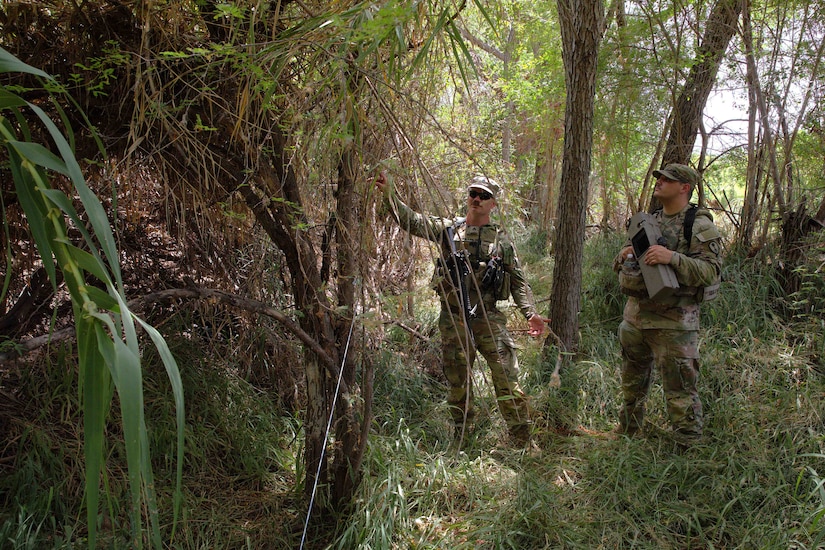
Two soldiers wearing camouflage military uniforms look at a brush covered area while standing in a forest.

The AN/MPQ-64 Sentinel radar is one of the unique capabilities that the task force uses to address these security challenges at the border and enable U.S. Border Patrol's law enforcement role while also providing defensive capabilities against small unmanned aerial systems. 

The U.S. Border Patrol El Paso Sector, which oversees 268 miles of the southern border in Texas and New Mexico, is one of nine sectors that has seen the benefits of an integrated approach with the task force. 

Three people sit in a metal boat on a small body of water under blue skies with trees and tall grass in the background.
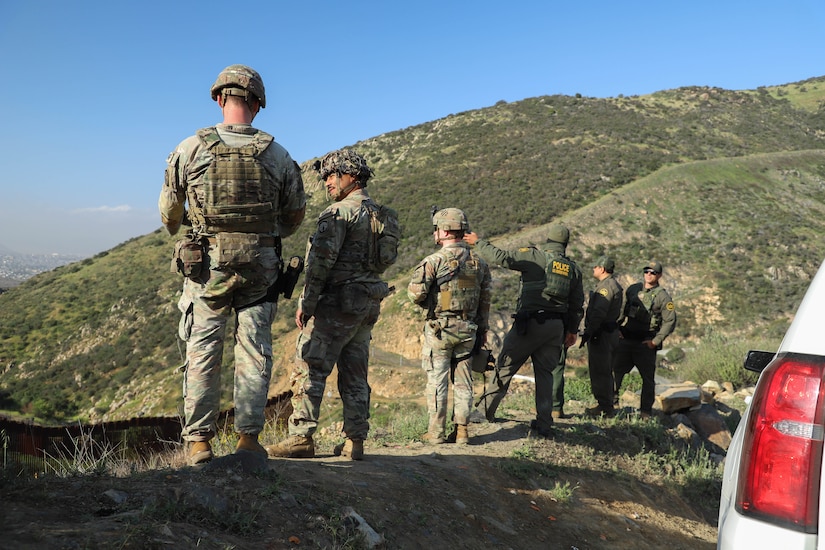
Three soldiers wearing camouflage military uniforms stand on a hill next to three other people in green police uniforms. One of the men is pointing toward the valley below.
"The Border Patrol in El Paso focuses on collaboration with various agencies and the Department of War's JTF-SB to enhance border security to target hostile drones and the challenges they pose," said Walter N. Slosar, chief patrol agent with the El Paso Sector. "Enhanced detection capabilities between JTF-SB and U.S. Border Patrol give us full spectrum capabilities to track, identify and mitigate aerial threats." 

JTF-SB and U.S. Border Patrol remain committed to strengthening this vital partnership and continued innovation in the face of evolving threats with a broad range of capabilities. This collaboration serves as a model for future interagency cooperation and underscores the importance of a unified approach to national security. 

Friday, September 19, 2025

A Single Bullet Earns Three-Time Convicted Felon More Than Eight Years in Federal Prison

SAVANNAH, GA: Charles Harmon Porter, 54, of Savannah, Georgia, was sentenced to 100 months in federal prison plus three years of supervised release after pleading guilty to possession of ammunition by a convicted felon, said Margaret E. Heap, U.S. Attorney for the Southern District of Georgia.

As described in court documents and at sentencing, on the night of May 29, 2023, Porter—a three-time convicted felon with prior convictions for offenses including terroristic threats, possession of cocaine, and obstruction of law enforcement—used a handgun to shoot his female roommate during a domestic dispute at their residence on Alma Street in Savannah. After the shooting, Porter fled the residence and discarded the handgun at an unknown location, ensuring that it would never be found. Officers with the Savannah Police Department responded immediately to the scene of the shooting and quickly identified Porter as the perpetrator. They obtained a warrant for his arrest, located him at another residence in Savannah, and took him into custody within hours of the shooting. While Porter was being booked at the Chatham County jail, a single round of ammunition was found in his pocket. An ammunition examiner with the Bureau of Alcohol, Tobacco, Firearms, and Explosives (ATF) determined that the round had been manufactured outside of the state of Georgia, which made Porter’s possession of the round a federal crime. Porter was indicted in federal court for possession of ammunition by a convicted felon and pleaded guilty to the charge earlier this year.

At Porter’s September 4 sentencing hearing, the United States presented evidence proving that Porter possessed the round in connection with the shooting, which the Court agreed amounted to attempted murder.

“The sentencing of Charles Harmon Porter reaffirms that this office will vigorously prosecute violent criminals who illegally possess firearms or ammunition down to the very last bullet as part of our commitment to public safety. We wish the victim the best in her continued recovery,” said U.S. Attorney Heap.

"Every bullet represents a potential threat to public safety; we will continue to work diligently to prevent firearms from falling into the wrong hands," said Acting ASAC Robert Davis.

The case was investigated by the ATF and the Savannah Police Department and prosecuted for the United States by Assistant United States Attorney Timothy P. Dean.

A related state charge of aggravated assault remains pending against Porter in Chatham County Superior Court.

Tuesday, September 16, 2025

DEA Dismantles MS-13 Cell in Nashville

WASHINGTON – Today, the U.S. Drug Enforcement Administration and our partners successfully dismantled an MS-13 cell operating within Nashville, Tennessee.

After a 9-month investigation, a series of court-authorized search warrants were conducted this morning throughout the metropolitan Nashville area, resulting in the arrests of at least 17 members and associates of MS-13 across three states, including Tennessee, California, and Oklahoma. In addition, investigators also seized bulk quantities of marijuana, counterfeit pills, cocaine, THC vapes, liquid psilocybin, and multiple firearms, including assault rifles.

“These arrests represent a critical milestone in DEA’s mission to dismantle drug trafficking organizations operating in the United States and around the globe – prioritizing those designated by President Trump as Foreign Terrorist Organizations,” said DEA Administrator Terrance Cole. “MS-13 has left a trail of violence and devastation across communities nationwide. The residents of Nashville are safer today now that these dangerous individuals will be held accountable for their destructive actions. Today’s enforcement actions are not the last. More will follow, and we will not stop until MS-13 is no longer able to inflict harm on our communities.”

“The actions taken today against MS-13 are the first of what will be many strikes against those who prey on the weak in our society,” said Louisville Field Division Special Agent in Charge Jim Scott. “The DEA and our law enforcement partners will not allow foreign terrorist organizations to operate in our communities. We will hunt you down and bring you to justice.”

MS-13 is a violent international criminal gang that emerged in Los Angeles during the 1980s. Over the years, it has expanded its influence, establishing strongholds in El Salvador, Guatemala, and Honduras, while infiltrating communities across all fifty U.S. states. Fueled by its deep involvement in the illegal drug trade, MS-13 is notorious for its ruthless tactics, including extortion, human trafficking, assault, and murder, to maintain control over its territory. With thousands of members operating within the United States, MS-13 remains a public safety and national security threat.

We encourage anyone with information about MS-13 or other criminal organizations to report tips anonymously through the DEA Tip Line.

Today’s operation was made possible through the collaboration of DEA’s Louisville Field Division with Army Criminal Investigation Division; the Bureau of Alcohol, Tobacco, Firearms, and Explosives; the Federal Bureau of Investigation; U.S. Marshals Service; U.S. Immigration and Customs Enforcement; Metropolitan Nashville Police Department; Tennessee Highway Patrol; local Tennessee drug task forces 23rd Judicial Drug Task Force and 19th Judicial Drug Task Force; and the Tennessee Bureau of Investigation.

Moving forward as part of a larger whole-of-government approach to dismantling drug trafficking organizations and protecting U.S. communities, DEA is committed to working with the Homeland Security Task Force (HSTF) and other federal partners to ensure current and future operations advance broader U.S. efforts to combat designated terrorist organizations and transnational organized crime.

Monday, September 08, 2025

Guarding the City: Legal Boundaries of Deploying the National Guard for Anti-Crime Efforts

Tennessee National Guardsman patrols D.C.

Deploying the National Guard to cities as part of anti-crime initiatives has become a contentious topic in contemporary American governance. Recently, proposals to deploy National Guard units in cities like Shreveport, Nashville, and New Orleans—initiated by national leaders—have brought legal considerations to the fore. This essay examines the legal framework governing the Guard’s domestic deployment, explores contemporary examples, and evaluates the risks and implications inherent in such use of military forces in civilian law enforcement. Ultimately, the analysis shows that while the Guard may be lawfully utilized under state authority in support roles, federal deployment aimed at direct law enforcement demands scrupulous legal justification—particularly under the Posse Comitatus Act and Insurrection Act—to avoid constitutional violations and erosion of civil liberties.

Legal Framework for Guard Deployment

To understand the legality of deploying National Guard troops to cities in anti-crime efforts, one must distinguish among the three principal statuses under which Guard units operate: State Active Duty (SAD), Title 32, and Title 10.

Under State Active Duty (SAD), the governor commands the Guard under purely state law. Posse Comitatus restrictions do not apply, but State constitutions, statutes, and civil-rights protections still impose limits on the use of military personnel in civilian contexts. Governors have historically utilized this authority to deploy Guard units for disaster response or public safety support.

Under Title 32 status, units remain under state control but receive federal funding. Posse Comitatus generally does not apply, though mission assignments must remain within law-enforcement support roles, such as logistics, perimeter security, or surveillance assistance. Direct policing actions—searches, arrests—are generally off-limits unless authorized.

Under Title 10 (federalized) status, Guard units are treated as part of the United States Armed Forces, which triggers the Posse Comitatus Act (PCA). The PCA prohibits federal military personnel from engaging in civilian law enforcement activities, barring explicit congressional authorization or constitutional exceptions. Thus, deploying federalized Guard units for anti-crime missions typically demands invocation of statutory exceptions—most notably, the Insurrection Act.

The Insurrection Act allows the President to deploy federal troops—including federalized Guard—to suppress insurrections, enforce federal law, or protect civil rights, but only under narrowly defined circumstances, such as when states are unable or unwilling to maintain law and order. Without such conditions, a Title 10 deployment aimed at routine crime control risks violating constitutional boundaries and undermining principles of civilian governance.

Precedents and Illustrative Cases

Historically, federal deployments under the Insurrection Act include interventions during desegregation crises—such as enforcing school integration in Little Rock, Arkansas—as well as urban unrest, such as the 1992 Los Angeles riots. In those instances, the severity of the situation and the failure of local law enforcement necessitated federal involvement under existing legal authority.

Closer to the present, the June 2025 Los Angeles protests following ICE raids offer a compelling recent example. The federal government, by presidential order, federalized the California National Guard and deployed thousands of troops, along with active-duty Marines, into Los Angeles under Joint Task Force 51. Critics—including the Governor of California—contended that the move was premature and politically motivated. In September, a federal judge ruled that this deployment violated the Posse Comitatus Act, issuing a statewide injunction preventing further military involvement in civilian law enforcement in California (Newsom v. Trump) (see Newsom v. Trump decision). Legal commentators cautioned that the deployment represented an alarming extension of executive authority into civilian policing, effectively positioning the President as the head of a national police force (Newsom v. Trump ruling). The case exemplifies how federal Guard deployment without proper legal justification can breach foundational legal limits.

Contemporary Debates: Shreveport, Nashville, and New Orleans

In early September 2025, the debate reignited when former President Trump proposed deploying National Guard troops to combat crime in several cities, regardless of local consent or declining crime trends. Notable among these are:

  1. Shreveport, Louisiana: Despite being in a Republican-led state whose governor supported the plan, local officials and citizens strongly opposed deployment. The Shreveport Police Chief warned that the city’s limited force—many of whose officers also serve in the Guard—would be further depleted if the Guard were called up. Residents expressed a preference for investments in community programs, enhanced police recruitment, and better compensation over military presence. One mother of a recent murder victim emphasized practical skills development for youth as vital to crime prevention, rather than troop deployments. Critics viewed the proposal as politically motivated, pointing to disproportionately higher homicide rates in states that consistently supported Trump. (Reuters, 2025)
  2. Nashville, Tennessee: Representative Andy Ogles called for Guard deployment, asserting the city was overrun by "international gangs," despite worsening crime claims. The mayor rejected this characterization as absurd and politically performative, stressing that neither he nor law enforcement requested such deployment, and noting that violent crime was on the decline. (Axios, 2025; WSMV, 2025)
  3. New Orleans, Louisiana: Trump suggested federal law-enforcement and Guard deployment to New Orleans. However, local leaders pushed back, citing reductions in violent crime (including a 22 percent drop in homicides) and successful collaboration between community and federal agencies. Critics labeled the move politically driven and unnecessary. (AP News, 2025; Washington Post, 2025)

These examples reflect a pattern: proposals for Guard deployment used as symbolic crime-fighting gestures—despite insufficient local need or consent—risk legal and political backlash. When states decline or localities reject the deployments, the legality becomes especially tenuous unless supported by statutory authority or constitutional grounds.

Legal and Practical Risks of Federal Guard Deployment

Deploying federalized Guard units (Title 10) for anti-crime missions without qualifying as an insurrection or emergency involves serious legal risks. The Posse Comitatus Act restricts military involvement in civilian law enforcement, and misuse can lead to federal injunctions, as seen in California. Courts may interpret such deployments as unconstitutional power grabs—even if justified rhetorically as restoring order.

Furthermore, there are practical and operational challenges. Guard members deployed under Title 10 operate under military command structures, often unfamiliar with domestic policing protocols. Dual-status command complexity, deconfliction with local police, and lack of specialized training may increase risk of escalation, confusion, and civil rights violations. In Shreveport, for example, law enforcement noted that calling up Guard members could disrupt policing capacity when those same individuals serve both roles.

Finally, civil liberties and community trust are at stake. Militarized appearances of soldiers patrolling city streets can erode trust, intimidate communities, and chill exercise of free speech and assembly rights. Legal liabilities—including Fourth Amendment challenges—are amplified if deployments cross into enforcement territory, suppress dissent, or result in misuse of force.

Alternative Policy Approaches via State Authorities

A safer, more lawful route for Guard deployment lies in governor-led, state-controlled missions under SAD or Title 32 status. When Guard units are used in clearly defined supportive roles—such as securing perimeters, managing logistics, or providing specialized surveillance—they can add capacity without violating federal restrictions. Such deployments must include transparent mission definitions, time-limited scope, oversight mechanisms, and community input to maintain legitimacy.

In parallel, investments in community policing, youth services, technology enhancements, and police recruitment—rather than martial optics—offer more sustainable impact on crime reduction. Furthermore, federal cooperation, such as task forces or grants, can enhance local enforcement without resorting to armed military deployments.

Conclusion

Deploying National Guard troops to cities for anti-crime purposes occupies a delicate legal and political space. State-level deployments under governors’ authority can be lawful and constructive—when strictly limited to support tasks and aligned with civil-rights protections. However, federalizing the Guard under Title 10 as a means to conduct policing operations risks running afoul of the Posse Comitatus Act and established jurisprudence. The landmark ruling in California, deeming such deployment unlawful, serves as a warning about the reach of executive power. Recent proposals targeting cities like Shreveport, Nashville, and New Orleans underscore the tension between symbolic displays of force and substantive public safety measures. The path forward must respect legal constraints, protect democratic norms, and prioritize community empowerment over militarized solutions.


References

AP News. (2025, September). Trump suggests sending National Guard troops to New Orleans next. AP News.

Axios. (2025, September). Ogles calls for National Guard in Nashville, where violent crime is declining. Axios.

Newsom v. Trump (2025). Ruling on deployment of National Guard in California. U.S. District Court Northern District of California.

Reuters. (2025, September). Residents of high-crime city in Republican-led Louisiana oppose Trump’s troop plan. Reuters.

Washington Post. (2025, September). Trump floats sending law enforcement to New Orleans, in a friendlier state. The Washington Post.

WSMV. (2025, September). Mayor fires back on calls for National Guard in Nashville. WSMV.