Friday, February 13, 2026

Man Who Intentionally Set Fire To San Jose Post Office Pleads Guilty To Arson

SAN JOSE – Richard Tillman, 44, pleaded guilty in federal court today to setting fire to the Almaden Valley U.S. Post Office located on Crown Boulevard in San Jose in the early hours of July 20, 2025.

Tillman, who is originally from San Jose, was initially charged by a criminal complaint in July 2025, and indicted by a federal grand jury on Aug. 7, 2025, on one count of malicious destruction of government property.

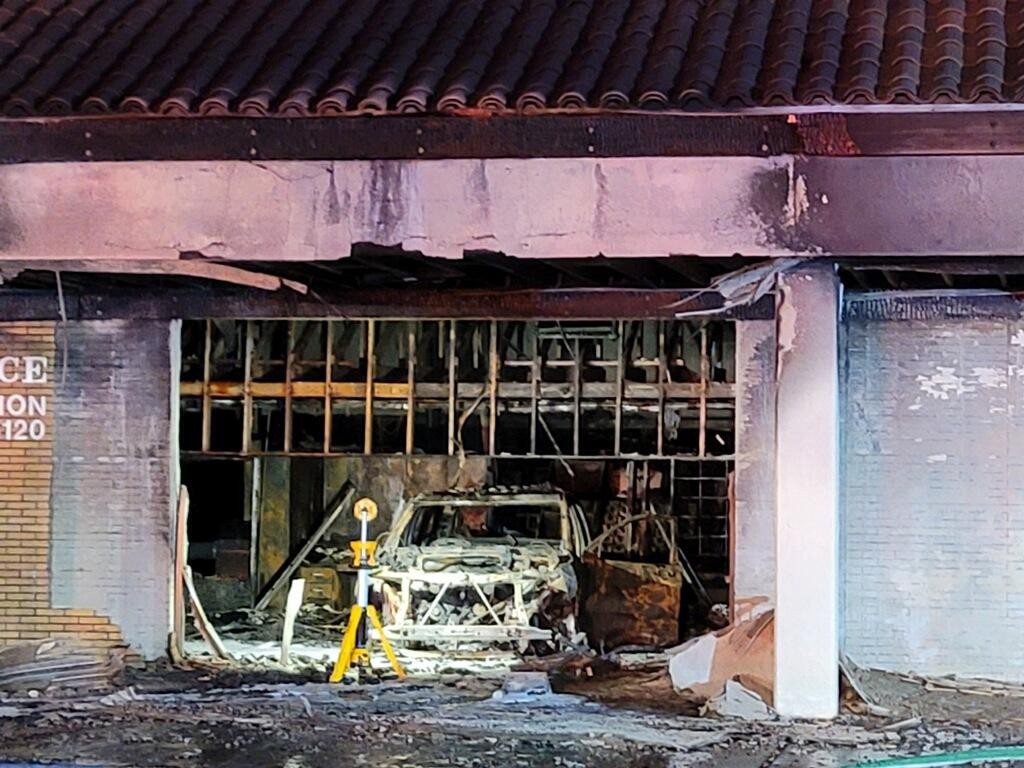
In pleading guilty, Tillman admitted that he intentionally set the fire in order to “make a point to the United States government.” In preparation for the fire, Tillman purchased firelogs and lighter fluid. He then drove to the Post Office with firelogs in the vehicle, backed the vehicle through the building’s front door, exited the vehicle, spread lighter fluid throughout the vehicle, threw a lit match into the vehicle, and exited the Post Office. The fire quickly spread from the vehicle to the Post Office, completely destroying its lobby, as depicted below. Prior to July 20, 2025, the lobby of the Post Office was open to the public during business hours for retail transactions and access to post office boxes. The fire rendered the lobby unusable, and it has not been available to the public since then.

The burned remains of the Almaden Valley Post Office

United States Attorney Craig H. Missakian, U.S. Postal Inspection Service (USPIS), San Francisco Division Inspector in Charge Stephen M. Sherwood, Bureau of Alcohol, Tobacco, Firearms, and Explosives (ATF) Special Agent in Charge John Wester, and FBI Special Agent in Charge Sanjay Virmani made the announcement.

Tillman is currently in federal custody. His sentencing hearing is scheduled for April 27, 2026, before U.S. District Judge Edward J. Davila. Tillman faces a maximum sentence of 20 years in prison, a minimum sentence of five years in prison, and a fine of $250,000 for the charge of malicious destruction of government property by fire in violation of 18 U.S.C. § 844(f)(1). Any sentence will be imposed by the court after consideration of the U.S. Sentencing Guidelines and the federal statute governing the imposition of a sentence, 18 U.S.C. § 3553.

Assistant U.S. Attorney Michael G. Pitman is prosecuting the case with the assistance of Sahib Kaur. The prosecution is the result of an investigation by the USPIS, ATF, FBI, and the San Jose Police Department. The U.S. Attorney’s Office appreciates the assistance of the Santa Clara County District Attorney’s Office. 

Friday, February 06, 2026

Parolee Who Shot Police Officer While Resisting Arrest Sentenced to 15 Years in Federal Prison

GRAND RAPIDS, MICHIGAN – U.S. Attorney for the Western District of Michigan Timothy VerHey today announced that Andrial Ortiz, 30, from Lansing, was sentenced to 15 years in prison for being a felon in possession of a firearm.

U.S. Attorney VerHey said, “Andrial Ortiz was a felon who was not allowed to possess a gun, and the moment he did he used it to shoot a police officer.  My office was happy to prosecute this case. We accept the 15-year sentence as a just response.  I hope everyone reading this will take a minute to remember and appreciate that we ask law enforcement officers to risk their lives on a regular basis.”

Police pulled Ortiz over while investigating a road rage incident.  Ortiz was on parole for selling drugs, unarmed robbery, and larceny.  Police searched his car and found drugs.  When they attempted to arrest Ortiz, he violently resisted.  During the struggle, he was able to remove guns from two of the officers’ waistbands. He fired one of the guns, striking a patrol officer in the leg.

“Ortiz’s conduct was reckless, violent, and showed a complete disregard for the lives of the officers involved,” said ATF Detroit Field Division Special Agent in Charge James Deir. “As a convicted felon, he was prohibited from possessing firearms, yet this defendant violently resisted arrest, disarmed officers, and fired a weapon, seriously injuring a patrol officer. This sentence reflects the seriousness of that violence and sends the right message to drug trafficking convicted felons in our community who attack law enforcement: if you do this, pack your bags because you’re going to prison for an extended period of time.”

The Michigan State Police, Lansing Police Department, and the Bureau of Alcohol, Tobacco, Firearms, and Explosives investigated this case. Assistant U.S. Attorneys Olivia Ghiselli and Jonathan Roth prosecuted it.

This case is part of Project Safe Neighborhoods (PSN), a program bringing together all levels of law enforcement and the communities they serve to reduce violent crime and gun violence, and to make our neighborhoods safer for everyone. On May 26, 2021, the Department launched a violent crime reduction strategy strengthening PSN based on these core principles: fostering trust and legitimacy in our communities, supporting community-based organizations that help prevent violence from occurring in the first place, setting focused and strategic enforcement priorities, and measuring the results. For more information about Project Safe Neighborhoods, please visit Justice.gov/PSN.

Illegal Immigrant from Mexico Sentenced to 4 Years in Federal Prison for Throwing Molotov Cocktail at LASD Deputies During Anti-ICE Riot

LOS ANGELES – An illegal immigrant from Mexico was sentenced today to 48 months in federal prison for lighting and throwing a Molotov cocktail at law enforcement during an anti-immigration enforcement riot in Paramount last year.

Emiliano Garduño Gálvez, 23, of Paramount, was sentenced by United States District Judge André Birotte Jr. 

Gálvez pleaded guilty in October 2025 to one count of possession of an unregistered destructive device and one count of obstructing, impeding, or interfering with law enforcement during a civil disorder. He has been in federal custody since June 2025.

“This defendant’s reckless behavior threatened the lives and safety of law enforcement officers and that of a lawful protester,” said First Assistant United States Attorney Bill Essayli. “My office remains steadfast in its efforts to prosecute and punish those who commit acts of violence against others.”

On June 7, 2025, in Paramount, Gálvez was present during a civil disorder, a public disturbance involving acts of violence by an assemblage of more than three people that caused immediate danger of and resulted in damage to property or other people. 

Specifically, groups of individuals in Paramount amassed around federal personnel, and later local law enforcement, all of whom were lawfully engaged in the performance of their official duties. The demonstration’s purpose was to protest the federal enforcement of immigration laws in Los Angeles County.

For several hours, the group threw objects, including rocks or chunks of cinder blocks, at federal and local law enforcement, lit objects on fire, and set off fireworks in the direction of law enforcement. Law enforcement declared the protest an unlawful assembly. 

The civil disorder interfered with a federally protected function, namely, the coordination of federal agencies’ personnel and preparation for immigration enforcement activities. Rioters also caused The Home Depot, a local business, to temporarily close, and they stole store products during the disorder.

The streets in this area were blocked by the civil disorder and objects individuals lit on fire, affecting access to The Home Depot and other businesses in the area.

Hiding behind a stone wall, Gálvez lit and threw a Molotov cocktail towards Los Angeles County Sheriff’s Department (LASD) deputies who were on duty in Paramount during the civil disorder. Gálvez admitted he threw the Molotov cocktail intending to obstruct, interfere with, and impede the sheriff’s deputies who were lawfully engaged in their official duties.

The Molotov cocktail Gálvez threw landed in a grassy area near the foot of a protestor in the crowd and approximately 15 feet from LASD deputies. Gálvez had never registered this Molotov cocktail, nor any destructive device, with the National Firearms Registration and Transfer Record. He then fled the area.

“[Gálvez] threw an incendiary device capable of killing someone,” prosecutors argued in a sentencing memorandum. “And his destructive device came far closer to injuring a civilian holding a sign, as opposed to [Gálvez’s] intended target – the sheriff’s deputies.”

The Bureau of Alcohol, Tobacco, Firearms and Explosives investigated this matter with the assistance of the FBI and LASD.

Assistant United States Attorney Jenna W. Long of the National Security Division prosecuted this case.

This case is part of Operation Take Back America, a nationwide initiative that marshals the full resources of the Department of Justice to repel the invasion of illegal immigration, achieve the total elimination of cartels and transnational criminal organizations (TCOs) and protect our communities from the perpetrators of violent crime.

Wednesday, February 04, 2026

DEA Operation Meltdown Shuts Down Hundreds of Illegal Online Pharmacies

WASHINGTON – Today, the U.S. Drug Enforcement Administration, with the cooperation of the U.S. Attorney’s Office for the Eastern District of New York, announced the seizure of more than 200 website domains tied to an India-based transnational criminal organization (TCO) working within the United States and allegedly responsible for at least six fatal and four non-fatal overdoses. The TCO tied to these illegal online pharmacies has been under investigation by DEA’s Rocky Mountain Field Division since 2022.

Beginning on January 27, 2026, DEA field offices throughout the United States conducted multiple operations leading to the arrest of four individuals along with the issuance of five Immediate Suspension Orders (ISO) and one Order to Show Cause (OTSC), both of which are administrative actions taken against DEA registrants in order to protect the public from dangers to public health or safety. These actions were in addition to the U.S. Government shutting down more than 200 online pharmacies accused of filling hundreds of thousands of orders of diverted pharmaceuticals and counterfeit pills without valid prescriptions.

Under the Controlled Substances Act (CSA), DEA regulates the handling, storage, and distribution of controlled substances in the custody of pharmacies. The CSA stipulates that pharmacies are only authorized to dispense controlled substances upon receipt of a valid prescription, issued for a legitimate medical purpose, by an individual practitioner acting in the usual course of his or her professional practice.

Investigators determined the operators of these online pharmacies and their co-conspirators were illegally dispensing and shipping diverted medications, without valid prescriptions, to customers throughout the United States, violating the CSA and dangerously infiltrating a closed system of distribution intended to keep patients safe.

Over the course of this investigation, DEA identified thousands of customers who purchased medication through these online pharmacies. Subsequently, DEA has sent more than 20,000 letters to the public requesting information in support of this ongoing investigation.

“This case demonstrates how foreign-based traffickers exploit our healthcare system, hide behind the internet, and use people inside the United States to move dangerous drugs under the guise of legitimate commerce,” said DEA Administrator Terrance Cole. “Illegal online pharmacies put poison in American communities. They sell counterfeit and unapproved pills and do not care who gets hurt or who dies. Actions like this save lives. They protect the American people. If you run these sites, supply them, move the money, ship the product, or help them operate, we will find you, we will dismantle your operations, and we will hold you fully accountable under U.S. law.”

Leveraging its global reach, DEA actively collaborates with our Government of India law enforcement partners to identify, investigate, and dismantle dangerous criminal organizations that engage in these types of illegal drug trafficking operations. Through joint operations, the DEA will continue to pursue significant enforcement actions against illicit pharmaceutical distributors at the source and remains steadfast in its efforts to disrupt the flow of illicit pharmaceuticals that threaten public health and safety of American citizens.

DEA issued a Public Service Announcement in 2024 warning Americans about an increase in illegal online pharmacies. Many of these online pharmacies sold and shipped counterfeit pills made with fentanyl to unsuspecting customers in the United States who believed they were purchasing legitimate medications from legitimate pharmacies.

Illegal online pharmacies often use U.S.-based website addresses and professional-looking designs to appear legitimate when, in fact, they are not. These companies operate illegally, deliberately deceiving American customers into believing they are legally purchasing safe, regulated medications. Many of the sites taken down as part of Operation Meltdown claimed to be legitimate, based in the U.S., and FDA-approved, but DEA’s investigation determined operators of these sites were often working with drug traffickers to fulfill online orders with counterfeit pills or diverted pharmaceuticals. These counterfeit medications are often made with fentanyl or methamphetamine and taking them can lead to serious health risks, including harmful side effects, ineffective treatment, and even death.

DEA’s One Pill Can Kill campaign reminds the public that the only safe prescription medications are those prescribed by a licensed medical provider and dispensed by a trusted pharmacy.

As online pharmacies increase in popularity, patients are encouraged to remain vigilant when purchasing medication online. It can be difficult to identify an illegal online pharmacy, so here are some possible red flags that may indicate an online pharmacy is not legitimate:

  • Sells prescription drugs without requiring a valid prescription from a healthcare provider
  • Offers much cheaper prices than what is typically seen in the market
  • Lists prices in a foreign currency
  • Does not contain proof of a valid pharmacy state license or DEA registration 
  • Medicine arrives in broken or damaged packaging or in a foreign language
  • Medicine does not have an expiration date or is expired 
  • Medicine looks different from what you have received in the past from your trusted pharmacist

Consumers may visit the U.S. Food and Drug Administration’s BeSafeRx campaign page for information on how to safely buy prescription medication online and how to locate a state-licensed online pharmacy. You can also contact your state board of pharmacy to verify a pharmacy’s license. 

This case is being prosecuted by the U.S. Attorney’s Office for the Eastern District of New York.

Friday, January 30, 2026

Hudson Valley Law Enforcement Symposium – Federal, State, And Local Officials Gather To Combat Violent Crime, Narcotics Traffickers, And Child Sex Offenders

On January 27, 2026, over 100 federal, state, and local law enforcement officials gathered at the Orange County Government Center to discuss their efforts to combat crime on behalf of the people of New York.  Participants included, among many others, the U.S. Attorneys for the Southern and Northern Districts of New York, leaders of the Federal Bureau of Investigation (“FBI”), Homeland Security Investigations (“HSI”), the Drug Enforcement Administration (“DEA”), the Bureau of Alcohol, Tobacco, Firearms and Explosives (“ATF”), District Attorneys and Sheriffs from Albany County, Rockland County, Orange County, Westchester County, Dutchess County, Greene County, and Rensselaer County, and senior leaders of the New York State Police. 

The presentations and discussions focused on combining resources across offices and departments to combat the greatest threats to the quality of life and safety of the good people of the Hudson Valley.  Areas identified as requiring a collective effort included:

  • Removing gun-toting career criminals from our streets;
  • Dismantling sophisticated narcotics production and distribution enterprises, including the violent transnational gangs that have invaded communities across the Hudson Valley;
  • Protecting our children from sexual predators.  

Several case studies involving multi-agency efforts that led to highly successful prosecutions were discussed with an eye toward greater cooperation in the future.  The participants also discussed community engagement and community priorities, including “hot spots” where the need for a combination of federal, state, and local resources is most acute.  

“It is invaluable to hear directly from our state and local partners,” said U.S. Attorney for the Southern District of New York Jay Clayton.  “Our principal objective is to deliver a better quality of life, including safe streets, for the people of the Hudson Valley, and we can best achieve that objective if we work in concert with our state and local partners.  Together, we have brought—and will continue to bring—our most violent and most dangerous criminals to justice.”

“Public safety does not stop at district or county lines,” said Acting United States Attorney for the Northern District of New York John A. Sarcone III.  “This symposium underscores the power of strong partnerships among federal, state, and local law enforcement to confront the most serious threats facing our communities—violent crime, narcotics trafficking, and the exploitation of children.  By sharing intelligence, coordinating resources, and aligning our priorities, we are better positioned to dismantle criminal organizations, protect the most vulnerable, and deliver real results for the people we serve.”

“Drugs, guns, and violent crime are endemic public safety concerns that know no boundaries,” said Orange County District Attorney David M. Hoovler. “In order to best protect the residents of Orange County from these ever-present dangers, we must work with our law enforcement partners, near and far.  I am grateful not only for all of the law enforcement professionals who attended the symposium, but also for the commitment to work together to serve the residents of the Hudson Valley.  This historic event highlights the importance of collaboration in effective law enforcement in the 21st century.”

“This meeting was a tremendous opportunity to gather officials from federal, state, and local law enforcement agencies to share information and ideas on how we can leverage our resources to identify, investigate, and bring to justice the dangerous criminals bringing harmful narcotics and weapons into our communities,” said Special Agent in Charge of the FBI Albany Field Office Craig Tremaroli.  “I’m incredibly grateful to all the partners who made the time to attend this important discussion, and I look forward to working together to achieve our shared goal of keeping all our communities safe.”

“DEA New York remains steadfast in our commitment to working alongside our federal, state, and local law enforcement partners to target those looking to distribute illicit narcotics throughout the Hudson Valley region,” said DEA New York Enforcement Division Special Agent in Charge Farhana Islam.  “These symposiums provide us the opportunity to gather and collaborate with our partners, which helps strengthen our resolve to enhance public safety and helps protect our communities from drug poisonings which are harming our neighbors.”

“HSI New York was honored to stand shoulder-to-shoulder with our fellow law enforcement leaders at the Hudson Valley Law Enforcement Symposium, united by our shared commitment to protecting our communities,” said HSI New York Acting Special Agent in Charge Michael Alfonso.  “Bringing together the strength and expertise of federal, state, and local partners is how we turn the tide against violent crime, drug traffickers, and those who prey on our children.  When we unite our resources and resolve, we deliver real results—making the Hudson Valley a safer place for every New Yorker.”

“We appreciate our U.S. Attorneys for hosting and participating in this collaborative effort,” said Special Agent in Charge of ATF’s New York Division Bryan DiGiralamo.  “ATF’s Crime Gun Intelligence, when combined with strong partnerships across all levels of law enforcement, enhances investigations and plays a critical role in reducing violent gun crime and keeping our communities safe.”

“Special thanks to our United States Attorneys for the Southern and Northern Districts of New York, and the Orange County District Attorneys’ Office, for bringing together our federal, state and local law enforcement partners for this meeting,” said DEA Northeast Regional Associate Chief of Operations Frank Tarentino.  “The DEA is committed to working with all our law enforcement partners across the region in targeting those drug trafficking organizations and individuals who are responsible for the most harm.  This is the DEA’s focus, both here and abroad, and we will continue this fight until we have a fentanyl-free America.”  

Sunday, January 25, 2026

Pensacola Man Pleads Guilty to Threatening to Kill a Pensacola Police Detective

PENSACOLA, FLORIDA – Tamal W. Jenkins, 19, of Pensacola, Florida, pleaded guilty in federal court for interstate threatening communication with intent to extort. The plea was announced by John P. Heekin, United States Attorney for the Northern District of Florida.

U.S. Attorney Heekin said: “My office has zero tolerance for acts of violence and threats directed toward law enforcement. We will continue to back up the brave men and women who keep our streets safe with aggressive prosecutions against anyone who dares to threaten their safety.”

Court documents reveal that in July 2025 the Pensacola Police Department arrested suspects in a homicide investigation. Within days of the arrest, one of the Pensacola Police Detectives involved in the investigation received an electronic message making threats against her life for taking a suspect into custody. Law enforcement traced the threatening messages back to a device belonging to Jenkins.       

Jenkins faces up to 20 years’ imprisonment upon sentencing, which is scheduled for April 14, 2026, at 9:00 a.m. at the United States Courthouse in Pensacola before United States District Judge T. Kent Wetherell, II.  

The case involved a joint investigation by the Bureau of Alcohol, Tobacco, Firearms & Explosives and the Pensacola Police Department.  The case is being prosecuted by Assistant United States Attorney David L. Goldberg.

This case is part of Operation Take Back America a nationwide initiative that marshals the full resources of the Department of Justice to repel the invasion of illegal immigration, achieve the total elimination of cartels and transnational criminal organizations (TCOs), and protect our communities from the perpetrators of violent crime, human and drug trafficking.

Saturday, January 17, 2026

Federal Judge Sentences Robeson County Murder Suspect Who Shot and Ran Over Two Sheriff’s Deputies to 45 Years in Federal Prison


Shawn Tobin Locklear, Jr.

NEW BERN, N.C. –A Maxton man, Shawn Tobin Locklear, Jr., who was only 20 years old at the time, tried to kill two Robeson County Sheriff’s Deputies by shooting them and running them over with their own patrol car. Last year, he pleaded guilty to using a gun during a crime of violence and possessing a machine gun while selling drugs. A federal judge sentenced him to 45 years in federal prison for these crimes.

After officers arrested Locklear for armed robbery while using a gun, a state court judge released him in March 2022. A few months later in November 2022, while Locklear roamed free on bond despite his first gun crime, Robeson County Sheriff Deputies arrested him for murder and robbery charges. He allegedly used a gun to commit that murder. Shockingly, in May 2023, a state court judge released Locklear on bond while he awaited trial on those murder charges. A few months later in September of 2023, Locklear allegedly committed domestic violence crimes by choking his sister because he accused her of stealing one of his guns. When she called 911, he cut off his ankle monitor and fled the scene. While investigating those crimes, officers seized marijuana, cocaine, crack, and firearms, including machine guns, from Locklear’s car.


Shawn Tobin Locklear, Jr. - Guns

Two months after that latest crime spree, Robeson County Sheriff Deputies located Locklear, on November 7, 2023. As they attempted to arrest him, Locklear busted out his house and scurried into the woods. When two deputies located him on the other side of the woods, their bodycam footage showed him hiding behind a tree. As the deputies commanded him to show his hands and surrender, Locklear first showed his left hand on the left side of the tree. Suddenly, without warning, Locklear popped out on the right side of the tree with his gun drawn and unleashed a blaze of bullets. His barrage struck both deputies several times in the legs and gutshot. Wounded and shocked, the deputies crawled to cover behind their patrol car. As one deputy reloaded, Locklear sprinted up and dove into the driver’s seat of the patrol car. He gunned it in reverse, running over one deputy and almost crushing both. During the skirmish, the deputies shot Locklear. Locklear left the deputies to die, bleeding in the dirt.

The deputies called EMS to dispatch an ambulance to provide emergency care. Locklear intercepted the ambulance speeding to those deputies, stopping it in the middle of the road. He commandeered the ambulance for himself and absconded to the hospital. Thankfully, other Robeson County deputies responded, loaded their wounded brothers into the bed of a pickup truck, and rushed them to the same hospital. They arrested Locklear in the hospital. 

“Every day our law enforcement heroes steady themselves in the mirror, suit up in uniform, leave anxious families behind, and walk out of their homes to valiantly stand between our law-abiding citizens and the violent, anti-social scoundrels who care only about feeding their greed and violence,” said U.S. Attorney Ellis Boyle. “This demon should not have walked freely in our community after his first crimes in March 2022, and certainly not after the 2023 crimes. He is not fit for society, and our families don’t need to worry about him shooting more victims for the next 45 years. We all owe a debt of gratitude to the brave, steadfast public servants who put their lives on the line to remove this scourge from our community. Make no mistake, threats of violence and actual attacks on our law enforcement officers will not be tolerated in North Carolina, whether the weapon is a gun or a two-thousand-pound vehicle. As always, our thanks extend to the dedicated and professional deputies in this case, literally heroes who faced down death, and the other law enforcement partners who collaborated with the U.S. Attorney’s Office to force this villain to spend his next 45 years surrounded by concrete and steel. We also applaud Judge Flanagan’s appropriate sentence, which will keep the citizens and children in our community safe for decades.” 

“Today’s sentence brings accountability for a violent and deliberate attack on law enforcement. By the grace of God, the two deputies who were shot and ran over with a stolen patrol car survived, and we remain deeply grateful for their courage, resilience, and recovery. This outcome sends a clear message that violence against those who serve and protect our communities daily will not be tolerated, and those responsible will be held fully accountable,” said Sheriff Burnis Wilkins.

“The safety of our communities is strongly supported by the brave men and women in law enforcement,” said Special Agent in Charge Alicia Jones. “An attack on an officer is an attack on the community, and ATF will continue to deliver every resource we can to prevent this type of violence against our law enforcement partners.”

“The Robeson County District Attorney’s Office is grateful to the Eastern District of North Carolina U.S. Attorney’s Office’s efforts on this case and look forward to partnering in the future to have a robust federal presence to promote safety in our community,” said Robeson County District Attorney Matt Scott. “One exciting example of this partnership is the imminent hiring of a Special AUSA from Robeson County District Attorney’s Office to further pursue state and federal criminal convictions focused on keeping our community safe.”

The Robeson County Sheriff’s Office and the ATF investigated the case, and AUSAs Ashley Foxx and Robert Dodson prosecuted the case. Locklear still faces state charges for attempted murder and other crimes in Robeson County.

A copy of this press release is located on the EDNC USAO website. Related court documents and information can be found on the EDNC USAO website or on PACER by searching for Case No. 7:24-CR-33-FL-BM. 

Wednesday, January 07, 2026

NCIS Forensic Consultants Crack Toughest Cases With Advanced Technology, Creativity

 Jan. 7, 2026 | By Denise Caskey, Naval Criminal Investigative Service

Far outside of the world of Hollywood television and so-called "magic tools," such as photographic enhancements or instant DNA results, Naval Criminal Investigative Service forensic consultants focus on the real science of evidence — finding the key details that help bring investigations to the finish line and provide prosecutors with what they need to see justice served. 

A digital model of a military ship is shown.

The reality is that most of the tools used by fictional forensic consultants don't exist. There is no centralized, searchable military database cataloging the fingerprints or DNA for every service member. A DNA profile can take months to process. Even under ideal conditions, zooming in on a surveillance image rarely produces a clear license plate number. 

According to Special Agent Garrett Radke, a forensic consultant stationed at NCIS Resident Agency Marine Corps Base Camp Pendleton, California, the notion that valuable, clear-cut evidence will be found at a crime scene is often unrealistic. 

"It's such a mess of mixed profiles and mixed prints that you really can't discern which is the one that would be relevant," Radke said. "It happens a lot with weapons. It's virtually impossible for us to do anything with a military weapon, for example, because [there are] literally hundreds of people who have touched that weapon." 

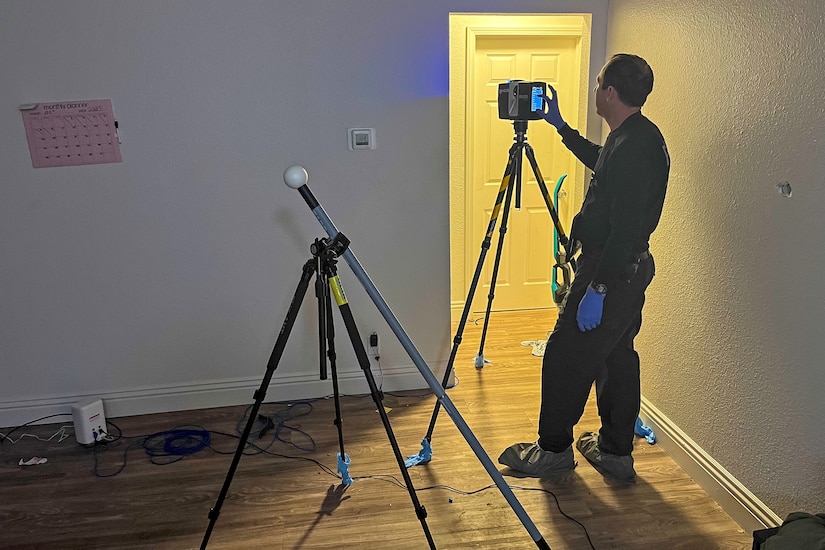
Despite the lack of cinematic shortcuts, NCIS forensic consultants remain at the forefront of their field using sophisticated 3D imaging technologies, such as the FARO terrestrial laser scanner, unmanned aircraft system imaging and other cutting-edge technologies to bring order to often chaotic and complex crime scenes. 

A man stands in a room while using imaging equipment.

The FARO system uses lasers to create a map of its surroundings with an accuracy of about 1 millimeter at a distance of 10 meters. The data can then be used to generate 3D graphics and virtual "fly through" videos, helping juries understand the spatial relationship of evidence within a scene. 

Following the catastrophic 2020 fire aboard USS Bonhomme Richard, forensic graphics specialists used imagery collected with FARO to create a 3D model of the area where the fire occurred, as well as the suspect's alleged route of travel from the lower decks to the living quarters. The model was used by the prosecution and defense teams to assess whether a key witness could have seen what he claimed to have seen. The model ultimately showed that a wall would have obstructed the witness's view. 

Radke is also one of four NCIS drone pilots certified by the Federal Aviation Administration, War Department and NCIS to operate drones around crime scenes, including within the restricted airspace of military bases under special authorization. 

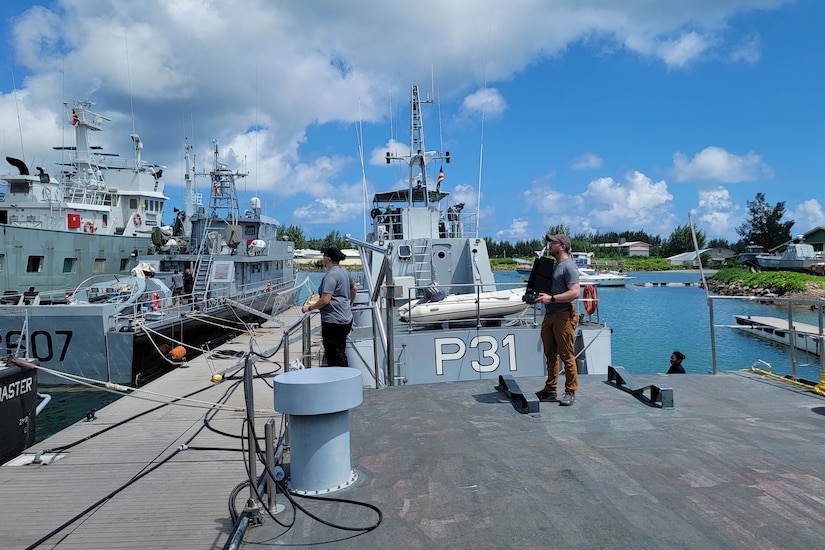
Drones, Radke said, serve as "eyes in the sky" for operations, especially in large or difficult-to-access areas. They can also fly in grid patterns, capturing images that can be stitched together or integrated into FARO models using photogrammetry, a technique that produces 3D representations from photographs. 

Two people stand on a dock near small military vessels.

The use of drones recently proved instrumental in a death investigation after a body was found in a courtyard surrounded by tall barracks buildings. According to Radke, who responded as one of the forensic consultants, there was initially no clear indication of how the individual had died or how the body had reached the location. 

"There were wounds on the body, but nothing that appeared fatal and no wounds consistent with a fall from a significant height," he said. "We found blood in several locations that could have indicated the person was killed elsewhere, then transported and dumped in the courtyard, suggesting homicide. However, by using a drone to examine the roof of the nearby [building], I discovered a sledgehammer, a 27-foot skid mark that looked like something heavy had slid off the roof, and footwear impressions matching the shoes worn by the decedent." 

Using the evidence and the autopsy results, NCIS determined the death was accidental, caused by a fall. 

Forensics, Radke said, is rooted in the scientific method but still leaves room for creativity and innovation. Designing experiments, testing scenarios and developing unique strategies of retrieving evidence are all part of the process. In one case, Radke even used a pool skimmer and rake to retrieve evidence from a roof safely. 

"It wasn't ideal and certainly not textbook," he said, "but it was much safer. We were there because someone had died falling off that roof — it didn't make sense for any of us to risk the same." 

Two people stand on a hydraulic lift and hold a long pool skimmer.

NCIS forensic work is a careful balance of creativity, technology and traditional evidence collection, ensuring every scene is documented to the highest standard. Even when answers aren't found right away, preserved evidence remains ready for future breakthroughs. Using tools like FARO, drones, virtual reality and mobile device LiDAR, paired with scientific expertise, can turn even the most complex cases into successful investigations that deliver justice for victims and their families. 

Forensic consultants are essential to the NCIS mission of investigating major crimes involving Navy Department personnel and assets. While many arrive with crime scene or forensic science backgrounds, others — like Radke — begin their forensic careers at NCIS. His opinion is that the best way to become a forensic consultant is to be involved in the work. 

"Be an active part of the major case response team, go to scenes, go to autopsies and consider the NCIS Forensic Associate Program," he said. "It's designed to identify and develop special agents interested in becoming forensic consultants." 

A career as an NCIS forensic consultant, Radke said, can be very rewarding for those who think beyond the standard investigative steps and embrace creative problem-solving. 

Tuesday, December 30, 2025

Guardsmen Keep District Safe While Patrolling in Public Eye

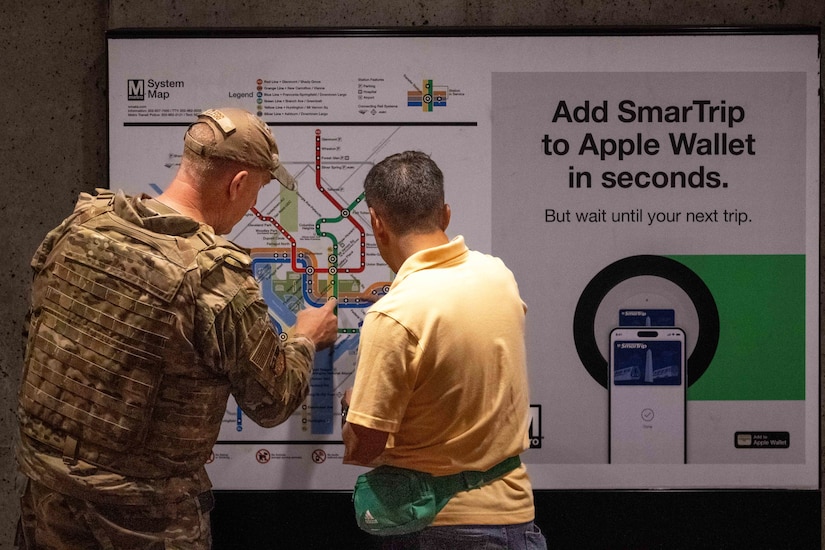
On a chilly December day, Army Sgt. 1st Class Zachary Metz, a platoon sergeant assigned to 289th Engineering Vertical Construction Company, conducts a presence patrol near the Smithsonian Metro station in Washington. Metz patrols alongside Air Force Tech. Sgt. Richard Kramer, a security forces airman assigned to the 172nd Airlift Wing.

An airman helps a person in civilian clothing navigate a train map with different colors on it on a sign indoors.

Both are members of the Mississippi National Guard, serving together in the nation's capital as part of a multistate effort supporting public safety and domestic resilience as part of the D.C. Safe and Beautiful Task Force, Joint Task Force District of Columbia mission.

Their presence is part of a broader effort to strengthen security, reinforce public trust and support civil authorities in high-visibility areas, key components of homeland defense and community resilience during periods of increased risk. 

"We're trying to reduce crime and maintain a visible presence," Kramer said.

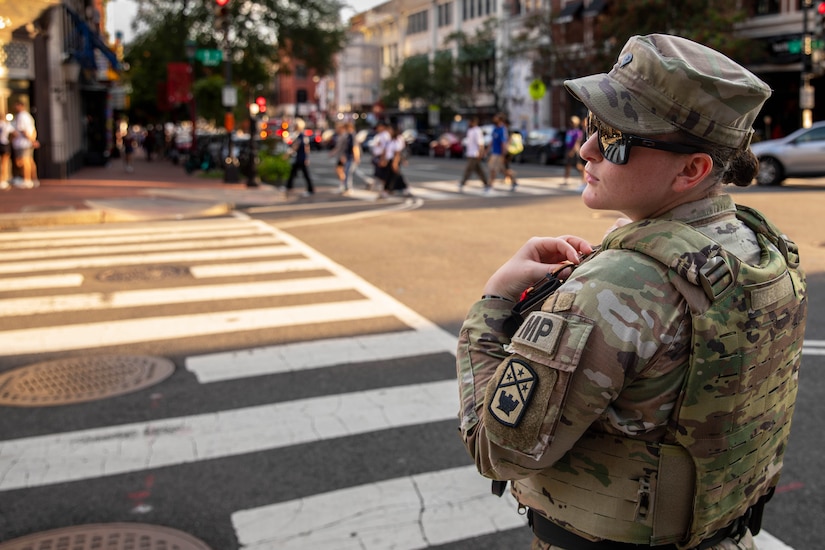
Since August, National Guard members from multiple states have patrolled high-traffic locations across the district, including Metrorail stations, the National Mall and popular tourist destinations. Their mission emphasizes visibility, deterrence and rapid response. They are also assisting with emergencies ranging from medical aid to providing safe escorts when requested by the public.

Many of the service members supporting the mission are early in their careers, some serving their first enlistment.

A guardsman stands on a street corner during daytime as pedestrians cross a road lined with buildings and a vehicle waits to turn in the background.


"Some of these soldiers have only been in the Army one or two years," Metz said. "This is a great opportunity for them to grow in uniform and learn what professionalism looks like in a real-world environment."

That professionalism is tested daily. Guardsmen routinely engage with the public, receiving expressions of gratitude from residents and visitors while also encountering individuals who disagree with the mission.

The deployment has carried real risk. On Nov. 26, two West Virginia National Guard members — Army Spc. Sarah Beckstrom, 20, and Air Force Staff Sgt. Andrew Wolfe, 24 — were ambushed in a targeted shooting near Farragut Square, just blocks from the White House. Beckstrom died from her injuries the following day. Wolfe survived and continues his recovery.

The attack underscored the dangers associated with domestic operations and the seriousness of the mission.

"You have to stay professional and alert at all times," Kramer said. "You're a soldier first, and you have to keep your head on a swivel."

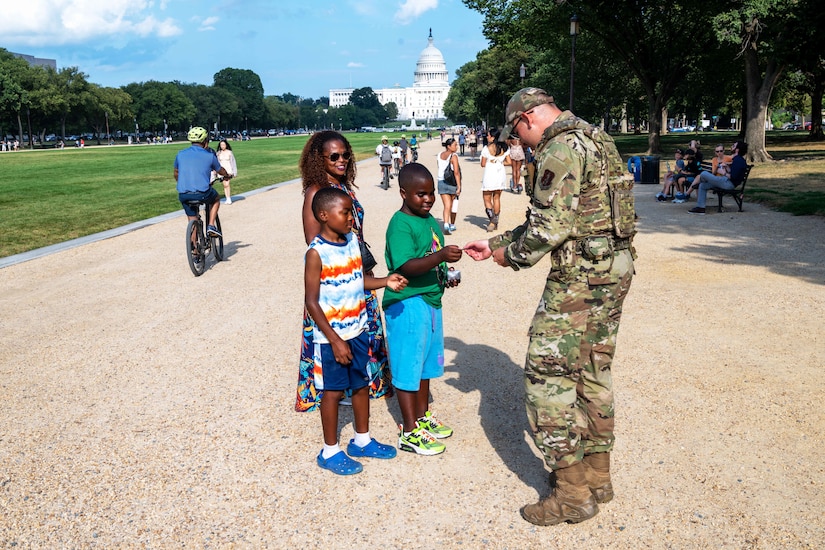
An airman hands something to a child as another child and parent watch on a rocky surface near a monument on a sunny day.


Despite those challenges, leaders say the mission offers invaluable leadership development that cannot be replicated in training environments. Without a rigid playbook, service members learn to assess risk, communicate effectively and make decisions under pressure while representing the military to the American public.

"If you're going to be mobilized, this is a great opportunity," Metz said. "The flip side is that you're in the public eye more than you ever will be. This isn't the same as deploying overseas — you're interacting with the community every day."

Through their daily patrols, these troops bridge military service and civilian life — supporting local authorities, strengthening public confidence and developing the next generation of leaders.

"We're doing good things by helping the local community," Kramer said. "Changing hearts and minds one day at a time."

Sunday, December 28, 2025

Ten Criminal Justice Stories That Defined 2025 in the United States

In 2025, criminal justice in the United States was shaped by dramatic shifts in crime rates, contentious policy changes, high-profile prosecutions, and renewed national attention on public safety. These ten stories reflect a year of both progress and ongoing challenges.

1. Historic Decline in Violent Crime Nationwide
Preliminary data from 2025 revealed a substantial drop in violent crime, including one of the largest single-year declines in the nation’s murder rate. Compared to 2024, total murders fell nearly 20 percent, with notable decreases in major urban centers such as New York City, Chicago, and Washington, DC. Property crimes and aggravated assaults also declined, contributing to perceptions of improving public safety amid broader efforts to address violence. This trend, the most significant drop in homicides in decades, has influenced debates over policing strategies and public policy goals. (New York Post)

2. Local Success: Prince George’s County Sees Sharp Homicide Drop
At the county level, Prince George’s County, Maryland, reported a more than 30 percent decrease in homicides in 2025 compared to the previous year. Police attributed improvements to targeted outreach programs, enhanced crime analysis, and collaboration with community partners. While challenges such as domestic violence persisted, the overall crime reduction demonstrated the impact of localized, data-driven policing efforts. (The Washington Post)

3. Enforcement Surge and Crime Divergence in Major Cities
Despite the national decline, some metropolitan areas experienced localized increases in certain violent crime categories. A voluntary survey by law enforcement agencies found that places like Omaha, Atlanta, and Los Angeles County saw upticks in specific crime types even as overall trends improved. These mixed patterns underscored the complex relationship between national data and local realities, prompting ongoing examination of policing, community conditions, and resource allocation. (New York Post)

4. Alabama Man With Lengthy Criminal History Sentenced to Life Without Parole
In one of the year’s most notable prosecutions, a man in Alabama with a decades-long history of violent and drug-related offenses was sentenced to life in prison without the possibility of parole for the beating and rape of a woman he had been dating. Prosecutors emphasized that the sentence marked a decisive end to a long pattern of criminal behavior and represented a victory for public safety and victims’ rights advocates. (People.com)

5. Campus Violence Spurs Federal Safety Review at Brown University
The tragic mass shooting at Brown University in December 2025 brought renewed national scrutiny to campus safety protocols. The U.S. Department of Education launched a comprehensive review of the institution’s emergency response systems, communication strategies, and compliance with federal safety laws. The incident reignited discussions about the balance between open campus environments and the need for robust security measures. (Reuters)

6. Federal Charges After National Guard Shooting Near the White House
A high-profile criminal case unfolded when a suspect charged in the November shooting of two National Guard members near the White House faced an expanded federal indictment. New charges could allow prosecutors to seek the death penalty, underscoring the severity of the alleged attack and the legal complexities surrounding crimes against military personnel in a security-sensitive jurisdiction. (AP News)

7. Justice Department Challenges Local Gun Control in Washington, D.C.
The U.S. Department of Justice filed a lawsuit against Washington, DC, claiming that the city’s ban on registering AR-15s and other semiautomatic rifles violated constitutional rights. The legal challenge highlighted ongoing tensions between federal interpretations of the Second Amendment and local efforts to implement aggressive gun-control measures. The case could influence similar disputes nationwide as municipalities seek to regulate firearms in the interest of public safety. (The Washington Post)

8. California’s Proposition 36 Reshapes State Criminal Justice Policy
In 2025, California began implementing Proposition 36, a voter-approved measure that toughened penalties for certain repeat theft and drug offenses while also mandating treatment or incarceration options for offenders. Early enforcement data showed thousands of charges under the new law, raising debates about its effectiveness, potential impacts on jail populations, and the balance between punishment and rehabilitation. (California Courts Newsroom)

9. Regional Reforms and Local Law Enforcement Models
Across several states, law enforcement and criminal justice leaders continued to explore new community-oriented policing models and reforms aimed at strengthening trust and reducing violence. Analysis from advocacy organizations highlighted efforts to shift focus toward crisis intervention, mental health co-response units, and preventative strategies that address underlying causes of crime rather than relying solely on traditional enforcement. These developments reflected evolving attitudes toward public safety and community engagement. (GIFFORDS)

10. Broader Conversations on Crime Reporting and Public Safety Policy
With nationwide crime trends improving, policymakers, researchers, and public safety officials engaged in deeper examinations of crime reporting methods, data interpretation, and systemic factors influencing criminal justice outcomes. Debates about underreporting, measurement differences between survey-based and police-reported statistics, and the role of socioeconomic conditions in shaping crime patterns informed legislative discussions and academic inquiry throughout the year. (PolitiFact)


Conclusion

The criminal justice landscape of 2025 was shaped by a combination of striking declines in violent crime, contentious legal battles, high-profile prosecutions, policy experimentation, and sustained public debate about the best paths forward. While improvements in safety data provided cause for optimism, localized variations and emerging challenges highlighted the complexity of creating equitable, effective justice systems. As the nation moves into 2026, these stories will continue to influence how policymakers, law enforcement, and communities understand and respond to crime in the years ahead.


Friday, December 19, 2025

Body Cameras and Blind Spots: What Transparency Still Can’t Capture

Body-worn cameras were sold to the public with a simple promise: sunlight. Record the encounter, settle the dispute, protect the innocent, expose the guilty, and restore trust one clip at a time. In a nation hungry for certainty, the camera looked like an antidote to rumor and outrage.

But the longer cameras have been on the street, the clearer a harder truth becomes. Cameras can increase transparency, but they do not automatically create accountability. They generate evidence, but they do not automatically generate wisdom. And they record events, but they do not reliably capture the full reality of what happened, why it happened, and what should change next.

Transparency is necessary. It is just not sufficient.

The promise and the reality

Federal guidance and evidence reviews have consistently described body-worn cameras as tools with real potential benefits and equally real implementation risks. Policies about activation, access, retention, privacy protections, training, and supervision are not side issues; they determine whether cameras function as public accountability tools or drift into becoming just another surveillance system that mostly strengthens the state’s case while leaving the public with selective visibility (U.S. Department of Justice, 2014; National Institute of Justice, 2018). Civil liberties groups have made the same point from the other direction: without strict policies and meaningful public access rules, cameras can expand government recording of civilians in their most vulnerable moments while still failing to deliver transparency when the community demands it (American Civil Liberties Union, n.d.).

The research record is also sobering. Large-scale studies and systematic reviews do not support the idea that cameras reliably reduce force or complaints across the board. Outcomes vary by department, by policy design, by activation compliance, and by local culture (Lum et al., 2020; Yokum et al., 2019). That variability is not a technical glitch. It is the central lesson.

A camera is not a reform. It is a tool, and tools amplify the intentions and habits of the hands that use them.

Blind spot 1: the camera’s perspective is not the truth

Body camera footage feels definitive because it looks like reality. But it is reality from one angle, at one height, with one field of view, under one set of lighting conditions, shaped by motion, stress, and physics. A lens can miss what is outside the frame. A microphone can distort distance, tone, and timing. A sudden turn can blur the critical half-second the public cares about most.

Even when the video is clear, perspective is a trap. A body camera sits on the officer, not on the suspect, not on the bystander, not on the victim. It is closer to a first-person narrative than an objective map. That matters because policing is often about what an officer reasonably perceived in the moment, not what a viewer can calmly interpret later with the benefit of replay.

This is one reason research has not found consistent, universal behavioral change from cameras alone. Cameras do not eliminate ambiguity; they often relocate it into debates about angles, audio, and interpretation (Lum et al., 2020; Yokum et al., 2019).

Blind spot 2: activation is policy, but compliance is culture

One of the most consequential details in any camera program is also the least cinematic: when it turns on, and whether it stays on. Departments write rules; humans follow them unevenly. Footage can be missing at precisely the moment trust is most fragile: a use-of-force encounter, a search, a sudden escalation. Even with good policy, compliance depends on supervision, discipline, training, and a culture that treats cameras as accountability devices rather than personal threats.

This is why leading implementation guidance treats activation rules and auditing as core design requirements, not administrative afterthoughts (U.S. Department of Justice, 2014). The blind spot is not simply “the camera was off.” The blind spot is the organizational environment that made “off” possible without consequence.

Blind spot 3: transparency for whom?

A camera program always raises an uncomfortable question: who gets to see what, when, and why?

If the public can only view footage when the department decides it is appropriate, transparency becomes conditional. If victims and families must fight for access, transparency becomes a privilege. If footage is released only when it supports an official narrative, cameras become a public relations instrument. If footage is broadly released without privacy safeguards, transparency becomes exploitation.

This tension is not theoretical. Body cameras capture people on the worst day of their lives: domestic violence victims, mentally ill individuals in crisis, children at chaotic scenes, the deceased, the grieving. Policy has to balance public accountability with human dignity (American Civil Liberties Union, n.d.; U.S. Department of Justice, 2014). But the balance is often negotiated after the incident, under political pressure, and with uneven rules that vary by jurisdiction.

A transparent system cannot be one where the public only sees what it is allowed to see, and only when it is convenient.

Blind spot 4: cameras don’t capture the “before” and “after”

A use-of-force clip starts when the camera starts. But the outcome often depends on what came earlier: dispatch information, prior calls to that address, known history, the officer’s fatigue after a 16-hour shift, the suspect’s mental state, the tactical decisions made minutes before the first physical contact.

Cameras also struggle to capture what happens later: the quality of medical aid, the integrity of reporting, the consistency of internal review, the fairness of discipline, the learning extracted from the event, and whether the agency changes training or policy as a result. Transparency is not merely footage. Transparency is the full lifecycle of accountability: incident, documentation, investigation, outcome, and reform.

Studies that look broadly at outcomes like complaints and use of force suggest that cameras alone do not reliably transform that lifecycle. They may help in some contexts, do little in others, and sometimes produce mixed or null results (Lum et al., 2020; Yokum et al., 2019). That isn’t a failure of the camera. It is a warning about expecting technology to substitute for governance.

Blind spot 5: the story changes the officer, too

There is another dimension the public rarely sees: how cameras shape officer behavior psychologically, not just behaviorally. Constant recording can feel like constant judgment. In some agencies, officers report hesitation, second-guessing, or performance anxiety. In others, officers report feeling protected against false complaints. Both can be true.

The key point is that cameras add a new audience to every encounter: supervisors, prosecutors, defense attorneys, journalists, juries, and internet strangers. That audience can improve professionalism, but it can also intensify risk aversion or create incentive to narrate the encounter for the camera rather than engage the human in front of them. The lens changes the interaction.

Research findings that vary across settings are consistent with this: cameras interact with local norms, incentives, and enforcement practices in ways that differ dramatically from one department to another (Lum et al., 2020).

Two real-life situations, one lesson

Consider two common scenarios.

A late-night traffic stop escalates fast. The video shows a driver refusing commands and the officer raising their voice. Viewers argue over whether the officer “started it.” But the camera does not capture what the officer saw in the driver’s hands, what dispatch warned about, or what prior stops in that area taught that officer to fear. The footage becomes a national argument, yet the core questions remain unresolved: training, tactics, supervision, and whether the stop could have been handled differently in the first place.

Now consider a domestic violence call inside a small apartment. The camera captures a victim’s face, a child crying, a chaotic living room, and a suspect being handcuffed. The footage is powerful evidence in court—but it is also an intimate recording of someone’s trauma. If released broadly, it can shame the victim and discourage future calls for help. If withheld entirely, the public may suspect a cover-up. The camera creates evidence and new ethical dilemmas at the same time (American Civil Liberties Union, n.d.; U.S. Department of Justice, 2014).

These are not edge cases. They are everyday policing. And they show why “more video” is not the same as “more truth.”

What transparency still can’t capture, and what must come next

Body cameras are best understood as one instrument in a larger accountability system. They work when they are embedded in a framework that includes:

  • Clear activation rules with real enforcement, plus routine auditing (U.S. Department of Justice, 2014).
  • Balanced access policies that protect privacy while ensuring public accountability is not optional (American Civil Liberties Union, n.d.).
  • Training and supervision that treat footage as a learning tool, not merely evidence or liability protection (National Institute of Justice, 2018).
  • Independent, credible review processes that can interpret footage within a full evidentiary record, not as a standalone morality play (National Institute of Justice, 2018).
  • A cultural commitment to integrity that outlives the newest device.

The deeper challenge is this: transparency is not a technological achievement. It is a civic agreement.

A camera can show you what happened. It cannot, by itself, explain why it happened, whether it was justified, whether it was wise, whether it was preventable, or what must change so it happens less often. Those answers still come from leadership, policy, training, oversight, and a public willing to demand more than a clip.

The blind spots remain. Not because cameras are useless—but because truth, in policing, has always been larger than what a lens can hold.

References (APA)

American Civil Liberties Union. (n.d.). Police body cameras. American Civil Liberties Union.

Lum, C., Koper, C. S., Wilson, D. B., Stoltz, M., Goodier, M., Eggins, E., Higginson, A., & Mazerolle, L. (2020). Body-worn cameras’ effects on police officers and citizen behavior: A systematic review. Campbell Systematic Reviews, 16(3), e1112.

National Institute of Justice. (2018, November 14). Body-worn cameras: What the evidence tells us. National Institute of Justice.

U.S. Department of Justice, Office of Community Oriented Policing Services. (2014). Implementing a body-worn camera program: Recommendations and lessons learned.

Yokum, D., Ravishankar, A., & Coppock, A. (2019). Evaluating the effects of police body-worn cameras: A randomized controlled trial. Proceedings of the National Academy of Sciences of the United States of America, 116(21), 10329–10332.
Monday, December 15, 2025

The Ten Minutes that Decide Justice: Crime Scene Mistakes that Shape Verdicts

Long before a jury is sworn in, justice is already being tested—often in silence, confusion, and haste.

Modern criminal investigations project an image of near-scientific certainty. Body-worn cameras record encounters, DNA can identify a suspect from a single cell, and digital devices quietly log movements, contacts, and timelines. Yet despite this technological confidence, a stubborn truth remains: the outcome of many criminal cases is still determined in the first ten minutes after first responders arrive. Those minutes, shaped by stress, urgency, and human judgment, often matter more than anything that follows.

Recent reviews by the U.S. Department of Justice and the Innocence Project show that basic crime scene errors continue to play a measurable role in wrongful convictions, acquittals, and dismissed cases. These failures are not relics of the past. They are present-day problems unfolding in an era that should know better.

Crime scenes are non-repeatable events. Once altered, contaminated, or partially ignored, they cannot be recreated. While detectives, analysts, and prosecutors may spend months assembling a case, the foundation they inherit is set almost immediately. The first officer, medic, or supervisor on scene becomes the unintentional architect of the investigation.

One of the most persistent errors is the failure to secure a scene quickly and broadly. In recent officer-involved shooting reviews and mass-casualty after-action reports, investigators repeatedly note that perimeters were drawn too narrowly or too late. Shell casings, vehicles, and witnesses often existed just outside the initial boundary, later discovered only after contamination or loss. National Institute of Justice guidance continues to emphasize establishing a wide perimeter first and narrowing it later, yet real-world pressures frequently reverse that logic.

Closely related is the breakdown of entry and exit control. Body-worn camera footage now routinely documents multiple responders entering scenes without logging their presence or purpose. Each untracked entry weakens the chain of custody and gives defense counsel an opening to question whether evidence was planted, moved, or compromised. Courts do not require proof of misconduct—only reasonable doubt about integrity.

Evidence contamination remains another critical failure point. Gloves, masks, and protective equipment are widely available, yet cross-contamination still occurs through unnecessary handling, poor movement discipline, or simple impatience. The President’s Council of Advisors on Science and Technology has warned that forensic reliability is inseparable from collection practices. DNA evidence does not fail in laboratories nearly as often as it fails at scenes.

Witness management has grown more complicated in the age of smartphones and social media. When witnesses are not separated immediately, their accounts can unintentionally synchronize. Group conversations, text messages, and online posts reshape memory in real time. By the time formal statements are taken, independent recollections may already be lost, a problem now cited in multiple appellate decisions involving credibility disputes.

Digital evidence introduces new fragility. Phones left unlocked, vehicles left powered down incorrectly, and surveillance systems overwritten by automatic loops have all erased critical timelines in recent cases. The National Institute of Standards and Technology has repeatedly stressed that digital evidence must be isolated and preserved immediately, yet many first responders still treat it as secondary to physical objects.

Perhaps the most dangerous error is cognitive bias. Early assumptions—about motive, guilt, or narrative—can quietly guide decisions about what matters and what does not. DOJ civil rights investigations have noted how premature conclusions influence scene handling, witness questioning, and documentation. Once a story forms, contradictory evidence is more likely to be overlooked or minimized.

In court, these mistakes rarely appear dramatic. They surface slowly, through cross-examination and expert testimony, as credibility erosion. Prosecutors may still have facts, but juries are asked to trust processes. When those processes appear careless or inconsistent, verdicts follow suit. Justice does not fail loudly; it unravels incrementally.

Why do these errors persist? Training exists. Policies exist. The gap lies in performance under pressure. First responders operate in environments defined by urgency, emotion, and competing priorities. Yet the law does not grade on difficulty. It evaluates outcomes and procedures, not intentions.

Reframing the role of the first responder is essential. Beyond emergency care and scene safety, they are custodians of future truth. The restraint to pause, observe, and control may feel counterintuitive in moments of chaos, but it is precisely that discipline that separates successful prosecutions from compromised ones.

The promise of modern justice rests not only on science and technology, but on fundamentals that have changed little in a century. Control the scene. Preserve what exists. Document what you see. The first ten minutes still decide what the next ten years will look like in court.


References

Department of Justice, Office of Justice Programs. (2024). Crime scene investigation standards and protocols. Washington, DC.

Federal Bureau of Investigation. (2023). Crime scene processing and evidence integrity guidelines. Washington, DC.

Innocence Project. (2024). Contributing factors to wrongful convictions in the United States. New York, NY.

National Institute of Justice. (2023). Crime scene investigation: A guide for law enforcement. Washington, DC.

National Institute of Standards and Technology. (2024). Digital evidence and forensic science standards. Gaithersburg, MD.

President’s Council of Advisors on Science and Technology. (2023). Forensic science in criminal courts: Ensuring scientific validity. Washington, DC.

United States Department of Justice, Civil Rights Division. (2024). Law enforcement accountability and evidence handling reviews. Washington, DC.

Friday, December 12, 2025

Gloucester man who threatened deputies sentenced to three years in prison for unlawfully possessing firearms

NEWPORT NEWS, Va. – A Gloucester man was sentenced yesterday to three years in prison for being a felon in possession of a firearm. The federal district court ordered the three-year sentence to run consecutively to the five-year sentenced imposed by the Commonwealth of Virginia earlier this year for offenses related to the federal conviction.

According to court documents, following the arrest of his adult son in August 2023 by the Gloucester County Sheriff’s Office (GCSO), Allen Dowell, 59, posted videos on social media threatening deputies and their families with violence if they were involved in his son’s arrest.

An investigation into Dowell’s threats revealed several videos posted to social media in which Dowell possessed a firearm and described his marijuana cultivation practices at his residence. As a previously convicted felon, Dowell is prohibited from possessing firearms or ammunition. On Sept. 1, 2023, GCSO and the Virginia State Police arrested Dowell at his residence. From the residence, investigators recovered 20 firearms, approximately 1,000 cartridges of ammunition, an assortment of firearm parts and accessories, suspected silencers/suppressors, and over 400 marijuana plants.

“This case demonstrates how the convergence of multiple criminal acts heightens the danger to our communities,” said Lindsey Halligan, U.S. Attorney for the Eastern District of Virginia. “A convicted felon cultivating a Schedule I narcotic while stockpiling firearms and ammunition felt emboldened to threaten deputies and their families in retaliation for doing their jobs. This conduct is precisely why we remain committed to holding individuals like Allen Dowell accountable when they choose to disregard the law.”

“Today’s sentence sends a clear message: those who endanger our communities with illegal firearms and narcotics, and who attempt to intimidate law enforcement through threats, will be held fully accountable” said ATF Special Agent in Charge Anthony Spotswood. “We are committed to keeping our neighborhoods safe, and we will not tolerate violence, criminal activity, or efforts to undermine the safety of law enforcement.”

In January 2025, the Circuit Court of the County of Gloucester sentenced Dowell to five years for multiple convictions of obstruction and resisting arrest by threat/force after Dowell barricaded himself in his home while armed during the Sept. 1, 2023, standoff with GCSO and the Virginia State Police. Dowell’s three-year federal sentence will begin once his Virginia sentence is served.

Assistant U.S. Attorneys Peter G. Osyf and Alyson C. Yates prosecuted the case.

Detroit Man Charged with Carjacking, Attempted Murder of ATF Special Agents

DETROIT – Terrance Markyce Davis, 33, of Detroit, Michigan, was indicted by a federal grand jury for carjacking, assaulting and attempting to murder ATF Special Agents, and weapons offenses, United States Attorney Jerome F. Gorgon Jr. announced today.

Gorgon was joined in the announcement by James Deir, Special Agent in Charge of the Bureau of Alcohol, Tobacco, Firearms and Explosive, Detroit Field Division, Chief Todd Bettison, Detroit Police Department, and Colonel James F. Grady II, Director, Michigan State Police.

According to court documents, between November 5, 2025, and November 13, 2025, Davis fired shots into several houses and cars in Detroit, seriously injuring one person. On November 14, 2025, ATF Special Agents obtained an arrest warrant, charging Davis in connection with felon in possession of ammunition for one of those shootings. When agents attempted to arrest Davis, he fled in his vehicle. While fleeing from agents, Davis carjacked a person and exchanged gunfire with ATF agents. Michigan State Police Troopers eventually disabled the stolen vehicle that Davis was driving, and Davis fled on foot, armed with a handgun. Davis was shot by Detroit Police Officers and taken into custody. Preliminary ballistics testing shows that the firearm Davis had in his hands while he ran from police was the same firearm used to shoot at ATF Agents, and the same firearm used in the shootings between November 5 and November 13.

“This man is an agent of chaos,” said U.S. Attorney Gorgon. “He tore through our city streets, raising hell. We are thankful for the brave men who put a stop to the defendant’s rampage.”  

“Terrance DAVIS is a poster child for the work being done by ATF across the state of Michigan.  He is a predator armed with an illegal firearm that ATF and its partners identified through NIBIN, said ATF Detroit Field Division Special Agent in Charge James Deir. “Carjacking, assaulting, and attempting to murder ATF federal agents strike at the very heart of our community and its public safety. When individuals are alleged to commit violence at this level, we will respond decisively with sound policing techniques and strategies using every lawful tool to bring these urban terrorists to the federal justice system.”       

An indictment is only a formal charging document and is not evidence of guilt. A defendant is entitled to a fair trial in which it will be the government’s burden to prove guilt beyond a reasonable doubt.

This case was investigated by the Bureau of Alcohol, Tobacco, Firearms and Explosive, Detroit, Police Department, and the Michigan State Police. The case is being prosecuted by Assistant U.S. Attorneys Andrew R. Picek and John Turrettini.

ATF National Response Team Investigates Roswell Air Center Fir

ROSWELL, New Mexico – The Bureau of Alcohol, Tobacco, Firearms and Explosives (ATF) has deployed its National Response Team (NRT) to Roswell, New Mexico, to investigate a large structural fire at the Roswell Air Center.

On Dec. 5, the Roswell Fire Department arrived to find the building heavily involved in fire. The blaze burned for several hours and destroyed the structure. After consulting with other local agencies, the Roswell Fire Department requested ATF’s National Response Team to assist with the investigation of the origin and cause of the fire.

“This fire spread across 40,000 square feet of hangar space at the Roswell Air Center, resulting in a total structural loss,” said ATF Acting Special Agent in Charge Shawn Stallo. “The rapid deployment of the NRT brings critical federal resources to support our local public safety partners as we work side by side to determine the fire’s origin and cause in the days and weeks ahead.”

“I appreciate the NRT rapid response to Roswell as well as the opportunity to work with such a highly specialized team,” said Roswell Fire Department Chief Steve Chavez.

The team consists of Special Agents, Special Agent Certified Fire Investigators, Special Agent Certified Explosives Specialists, Fire Protection Engineers, Electrical Engineers, Forensic Chemists, Intelligence Research Specialists, Digital Forensic Specialists, a Medic and an Ignitable Liquid or Explosive Detection K-9 with handler.

Since its inception in 1978, the NRT has responded to 942 incidents, including four activations this fiscal year alone. The NRT’s rapid-response structure enables it to generally deploy within 24 hours, bringing in state-of-the-art technology, including unmanned aerial systems, 3-D scanning, forensic mapping and portable labs, to aid in fire and explosion origin and cause determinations.

The NRT has a proven track record of handling the nation’s most tragic and complex fire and explosive incidents. Past deployments include:

  • The Palisades Fire: A major wildfire in early January 2025 in Los Angeles County, burned over 23,000 acres, devastating the Pacific Palisades.
  • The Maui Wildfire Disaster: One of the deadliest U.S. fires in over a century, requiring an intricate investigation due to high winds and rapid fire spread.

  • Conception Dive Boat Fire: A fatal fire near Santa Barbara where the NRT helped uncover key evidence leading to safety reforms in marine operations.

Thursday, December 11, 2025

Guard Keeping Streets Safe, Protecting Federal Property, Say DOW Leaders

War Department leaders provided an update during a Senate Armed Services Committee hearing in Washington today on the National Guard's mobilization and responsibilities in supporting homeland defense. 

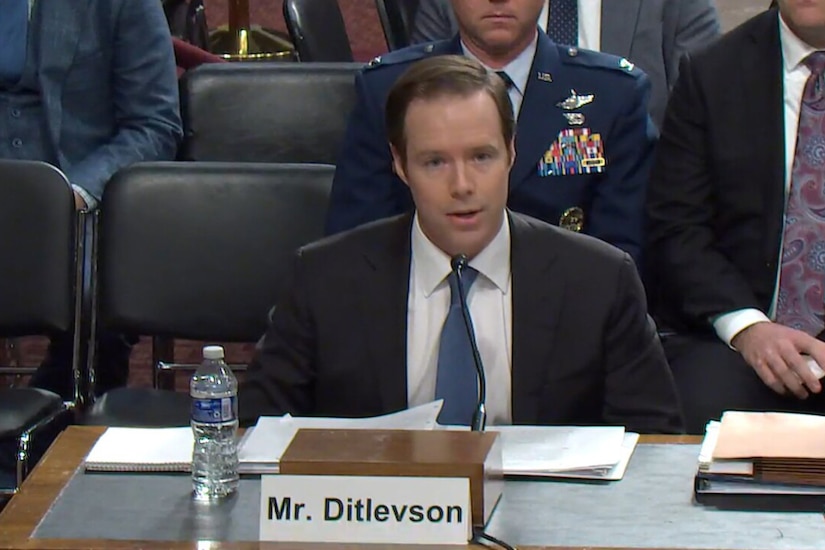
Currently, the National Guard is deployed under both Title 10 and Title 32 authorities, providing support for missions, including federal protection in California, Illinois and Oregon, support to federal law enforcement in Tennessee and restoring law and order in Washington, said Mark R. Ditlevson, principal deputy assistant secretary of war for homeland defense and Americas security affairs.

A man in business attire sits at a table and speaks into a microphone.

Ditlevson noted that the department is committed to ensuring all National Guardsmen are properly trained and equipped for these missions.  

"We emphasize de-escalation techniques, respect for civil liberties and adherence to the rules for the use of force. We also work closely with state governments and other federal agencies to ensure a coordinated and effective response to domestic challenges," he said.  

In addition to transparency and accountability in all activities, Ditlevson said providing peace of mind is also critical. 

"Americans must know that they can walk home at night, that they can take their children to the playground, that they can exist without fear of being attacked," he said.

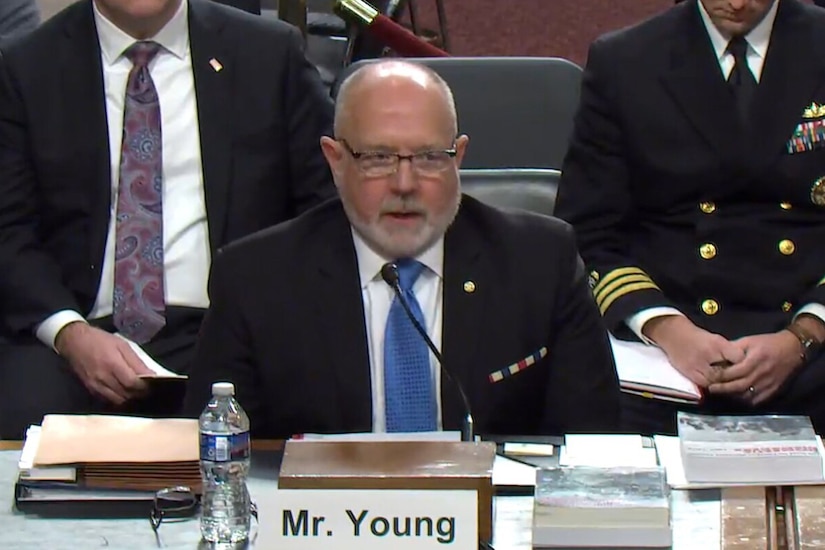
A man in business attire sits at a table and speaks into a microphone.

War Department Principal Deputy General Counsel Charles L. Young III said the overarching concern is to ensure that communities remain safe places where citizens can enjoy their constitutionally protected rights in peace and where federal officers can perform their valid federal functions without fear of physical harm.

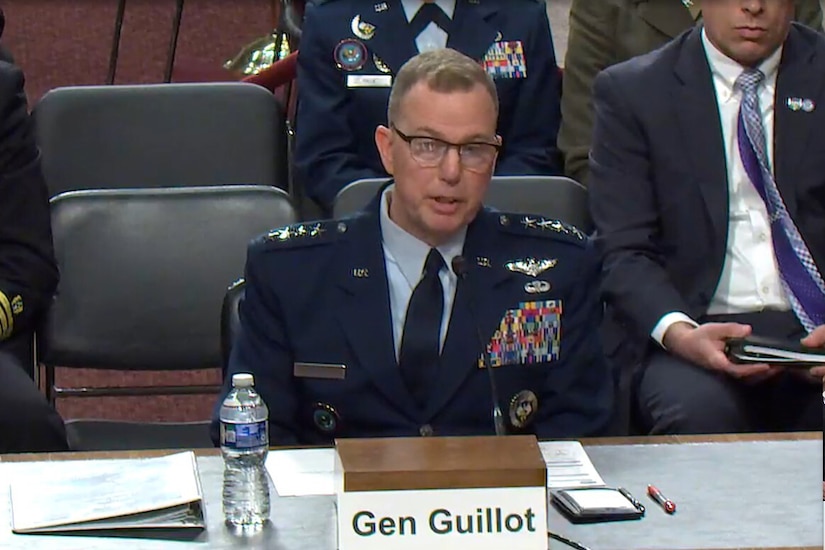
Air Force Gen. Gregory M. Guillot, commander of North American Aerospace Defense Command and U.S. Northern Command, said that every service member participating in federal protection missions is thoroughly trained on their authorities and limitations.  

"It is essential that everyone involved in this mission understands precisely what they are authorized to do, but perhaps more importantly, what they are authorized not to do," he said.

A man in a military dress uniform sits at a table and speaks into a microphone.

Title 10 troops are prohibited from conducting traditional law enforcement activities, including arrest, seizure, search or evidence collection in connection with the enforcement of laws, Guillot said, adding that their mission is to take reasonable measures to prevent the destruction of federal property and protect federal personnel from harm. 

"Service members may temporarily restrain civilians, conduct cursory searches or take other similar measures to ensure safety of the persons on the property," he said. 

Friday, December 05, 2025

York Man Who Impersonated A Deputy U.S. Marshal Sentenced To Over Three Years In Prison

HARRISBURG - The United States Attorney’s Office for the Middle District of Pennsylvania announced that Jaimie Lynn Cummings, age 52, of York County, Pennsylvania, was sentenced on December 2, 2025, to 40 months’ imprisonment by United States District Judge Kelli N. Neary for impersonating an officer of the United States and a firearms offense.

According to United States Attorney Brian D. Miller, Cummings was sentenced for falsely impersonating a Deputy U.S. Marshal and illegal possession of a short-barreled firearm. Cummings previously pleaded guilty those charges.  The charges arose from a September 20, 2023, incident where Cummings appeared at the Northern York Regional Police Department wearing what purported to be a U.S. Marshal badge, tactical gear, tactical clothing, and a firearm.  After representing himself to police as a deputy U.S. Marshal, local law enforcement recognized that he was not a law enforcement officer. Cummings left the police station but was later stopped by police.  Police found in his car and in his home an assortment of firearms, ammunition, and rifles less than sixteen inches in length. Cummings possessed the short-barreled rifles illegally. 

When imposing sentence, Judge Neary noted Cummings’s criminal history, his personal circumstances, and the seriousness of the conduct.  

The case was investigated by the Bureau of Alcohol, Tobacco, Firearms and Explosives (ATF) and the Northern York Regional Police Department. Assistant United States Attorney Michael A. Consiglio is prosecuting the case.