Saturday, May 09, 2026

Graduation: ATF Gang Resistance Education and Training Program Provides Philadelphia Students Lasting Life Skills

PHILADELPHIA — Special Agent in Charge Eric DeGree of the Bureau of Alcohol, Tobacco, Firearms and Explosives’ Philadelphia Field Division announced the graduation of 27 Tacony Charter Academy fifth graders from Gang Resistance Education and Training (G.R.E.A.T.) this week.

“Congratulations! The life skills you learned in the G.R.E.A.T. program will serve you and your community for a lifetime,” said DeGree. “For more than three decades our program provided students the opportunity to meet and engage with our law enforcement officers in a learning environment and learn valuable skills to strengthen our communities for generations.”

The G.R.E.A.T. youth and community outreach program was launched in 1991 to proactively combat violent crime. It uses community-oriented policing tactics and community outreach to change perceptions about law enforcement, one student at a time. In Philadelphia, G.R.E.A.T. program instructors have focused on helping eliminate delinquency, youth violence, and gang membership.

A student noted they enjoyed “learning new things and learning how to be kind to each other.” Another student said “My favorite part was the skits, because they were fun and effective, because they taught us rules and it connected to the instruction we got from Officer Dan.”

“Getting the students to recognize their potential and the impacts they have already made in their community has been extremely rewarding,” said G.R.E.A.T. instructor and ATF Special Agent Daniel Leskowicz.

“It’s been awesome watching my students take the abstract "community" concepts we talk about in Social Studies and actually use them to solve real-world problems,” said their teacher, Connor Kealey. “Instead of just reading about civic duty, they’re living it—learning how to communicate, handle conflicts, and have each other's backs. The shift in my classroom's energy toward respect and maturity has been incredible to witness. I’m so proud to see them growing into such thoughtful, responsible leaders!”

The G.R.E.A.T. curriculum includes violence prevention, conflict resolution techniques, decision-making, goal setting, and problem-solving. The elementary school curriculum is a six-week interactive session for fourth and fifth graders with an emphasis on family involvement. Students are taught how to set goals, resist peer pressure, respect differences, resolve conflicts and understand how gangs can negatively impact their quality of life. They also learn the importance of becoming responsible members of their communities.

Felon on Federal Supervised Release Sentenced for Having Gun in Car While Meeting with Probation Officer

CHARLOTTE, N.C. – A previously convicted felon on federal supervised release was sentenced to prison again yesterday for illegally possessing a firearm, announced Russ Ferguson, U.S. Attorney for the Western District of North Carolina. William Sedrick Rollerson, 58, of Charlotte, was sentenced to a total of 108 months in prison; 60 months in prison for violating supervised release conditions, followed by an additional and consecutive term of 48 months in prison for the new illegal possession of a firearm offense, which will all be followed by two years of supervised release.

“Supervised release exists to rehabilitate those who have served time in prison, help them reintegrate into society, and to keep a close eye on them to ensure they do not return to their life of crime,” said U.S. Attorney Ferguson. “It appears Mr. Rollerson very quickly returned to his life of crime, and he will therefore serve a sentence for his crime and an additional sentence for violating the conditions of his supervised release.”

According to court documents and court proceedings, Rollerson was on federal supervised release following completion of a lengthy prison term for a prior conviction in the Western District of North Carolina. Among the conditions of his supervised release, Rollerson had regular appointments at the federal probation office and was subject to drug testing. On April 24, 2025, Rollerson drove to the federal courthouse in Charlotte to meet with a federal probation officer. During the meeting, Rollerson was told he had tested positive for cocaine use. Rollerson denied using cocaine and offered various explanations about the positive drug test. Court records show that probation officers searched Rollerson’s vehicle, where they found a Taurus .40 caliber semi-automatic pistol loaded with eight rounds of ammunition in the magazine and one round in the chamber. A set of digital scales, baggies, an unknown gray powdery substance, and an additional .40 caliber magazine were also found in Rollerson’s vehicle.

On September 18, 2025, Rollerson pleaded guilty to possession of a firearm by a felon. He is in federal custody and will be transferred to the custody of the Federal Bureau of Prisons upon designation of a federal facility.

The U.S. Probation Office conducted the investigation with the assistance of the U.S. Bureau of Alcohol, Tobacco, Firearms, and Explosives.

Assistant U.S. Attorney David Kelly with the U.S. Attorney’s Office in Charlotte prosecuted the case.

This case is part of Operation Take Back America, a nationwide initiative that marshals the full resources of the Department of Justice to repel the invasion of illegal immigration, achieve the total elimination of cartels and transnational criminal organizations (TCOs), and protect our communities from the perpetrators of violent crime.

Friday, May 01, 2026

Chicago Tribune Op-Ed by Andrew S. Boutros and Christopher C. Amon: The New Dawn of Federal Anti-Violence Initiatives in Chicago

“It’s Halloween, and somebody is going to die tonight.” Those were the chilling words of a Chicago gang member who made good on his threat by firing a hail of bullets into a car on Halloween night in 2009 in Chicago’s Humboldt Park neighborhood. A passenger in the car was shot multiple times and died. It’s a tragedy we sadly see all too often in Chicago. It also was entirely preventable.

I, Andrew S. Boutros, was then a new assistant U.S. attorney in Chicago when I received a call from an experienced federal agent about a large-scale case that had just been reassigned. Turns out the gang member who committed the drive-by murder had been under federal investigation for months. Prior to Halloween, federal agents coordinated undercover firearm purchases from him and referred the matter for federal prosecution. Federal agents had identified the defendant as highly dangerous and volatile, but the U.S. attorney’s office had opted not to charge him then while prosecutors looked for more evidence. The agent soon came to meet with me, and he did not mince words. I heard him; he was right.

Working alongside another assistant federal prosecutor returned multiple indictments charging nearly two dozen members of that violent gang and others. All defendants were convicted and sent to prison. But should the case have sat for as long as it did in the quest for better evidence and case building? After all of our experience, the answer to that question is almost always: No.

As I, Andrew, embark on my second year leading the Chicago U.S. attorney’s office and working closely with many law enforcement partners, including Christopher Amon, special agent in charge with the Bureau of Alcohol, Tobacco, Firearms and Explosives, I can now do something about cases that trouble me, such as what happened in Humboldt Park in 2009.

We, Andrew and Christopher, decided to chart a different course, which we will describe here.

With dozens of newly minted federal criminal prosecutors coming on board in Chicago, many with deep experience handling violent crime cases in federal and state courts around the country, we are building the team to do it. Indeed, we will do it, all while we continue to prosecute corrupt public officials, narco-terrorists, drug traffickers, large-scale fraud, corporate crime, government benefit schemes, child predators, human traffickers and other worthy federal targets. Just scroll through our office’s news releases from last year and this year — including the first-ever annual report we issued in January: Under fresh office-wide leadership, we are doing significantly more with far fewer resources.

On the violent crime front, there has long been a perception from some in Chicago that federal prosecutors must turn to large-scale conspiracy cases against street gangs as a centerpiece of urban violence reduction. The theory is intuitive: Dismantle the organization, incapacitate its leadership and send a deterrent message that reverberates across the streets. These noteworthy prosecutions, often built under racketeering or similar statutes, are resource-intensive, multiyear undertakings that culminate in sweeping indictments, dramatic news conferences and lengthy sentences. They are also, as a primary strategy for reducing today’s street violence, not the principal tool for the job.

If the goal is reducing shootings this week, next month or even this year, the overwhelming evidence based on empirical research and law enforcement experience — including Christopher’s more than two decades of experience in multiple cities — as well as common sense, points toward rapid, targeted and responsive interventions that interrupt violence in real time.

This is the strategy that gets results quicker. It’s the strategy that reduces violent crime and saves lives. It means measuring success not by the size of an indictment but by the absence of violence and, even more pointedly, the prevention of violence. And with the summer months ahead, it’s the strategy that will drive our violent crime initiatives at the federal level here in Chicagoland.

Long-term federal gang and violence cases are built deliberately and painstakingly. Investigations often take years, involving wiretaps, informants, controlled drug and firearm transactions, financial tracing and coordination across agencies. Arrests and charges often occur long after the individuals contributed to cycles of violence and retaliation. That means by the time an indictment is returned, the factual narrative typically reflects a backward-looking account of conduct that may stretch over a decade. That retrospective orientation is inherent to the model. It is designed to tell a comprehensive story of enterprise criminality, not to disrupt the next retaliatory shooting.

Violence, however, operates on a different clock. Most shootings are not the product of hierarchical gang directives or long-term conspiracies; they are reactive, situational and often impulsive. A slight, a social media post, a perceived encroachment on territory, a dispute involving a girlfriend can escalate into lethal violence in hours or even minutes. The individuals involved are frequently known to local law enforcement and community members. What is missing is not information. What is needed is clear deterrence and accountability through immediate arrest, detention and prosecution of worthy targets. Arresting and federally charging a dangerous felon in possession of a firearm before he shoots someone are far more effective — and decent — actions than prosecuting that defendant for murder after he has already killed somebody.

There is also a mismatch in scale. Long-term federal gang and violence prosecutions are designed to take down organizations. But as the data shows, violence is largely concentrated among a small number of individuals and increasingly smaller, yet no less violent and lethal, groups of street gangs and crews. Strategies that focus on rapid, targeted intervention operate at the right level of analysis and on the right timeline. They are not about building perfect courtroom cases; they are about preventing the next act of violence.

When it comes to dangerous offenders, simple and straightforward gun cases spearheaded through violent crime prevention centers like ATF’s Chicago Gun Intelligence Center and charged swiftly by federal prosecutors can do more with less to immediately curb violence in Chicago. As the head of ATF Chicago, I, Christopher, have seen firsthand that by leveraging technology such as ballistic evidence, law enforcement can identify the true drivers of violence to intervene early and disrupt the violence cycle. In doing so, we can focus on individuals with extensive criminal histories who illegally possess guns as well as those linked to prior shootings.

Federal law can also serve as a backstop when state prosecutions face complicated legal or factual scenarios, such as self-defense. In those instances, perpetrators can be charged under federal firearms statutes that carry a maximum 15-year prison sentence.

Critically, real-time prosecutions also are far less resource-intensive. A single long-term federal gang case can consume enormous prosecutorial, investigative and judicial resources. Agents are tied up for years. Prosecutors devote substantial time to managing multidefendant litigation, complex evidentiary records and massive volumes of discovery. Even successful prosecutions may not bring about the desired force-multiplier effects. Convictions have frequently resulted in retrials for one reason or another. Lengthy prison sentences imposed years after the crime may not influence other individuals making split-second decisions in volatile situations.

Meanwhile, those same law enforcement resources, if redeployed toward proactive intervention such as gun prosecutions and rapid-response initiatives, can produce swift, predictable justice that is more immediate, measurable, exact and effective in reducing violence, even if they lack major headlines, courtroom drama, celebrated outcomes and obvious career advancement.

Rapid-response strategies are not ad hoc; they depend on structured, robust collaboration among law enforcement partners and prosecutors. In Chicago, when it comes to anti-violence work, we are lucky to have first-rate federal agents and experienced federal, state and local leadership in place at all those levels, including FBI Special Agent in Charge Doug DePodesta, Drug Enforcement Administration Special Agent in Charge Todd Smith, Homeland Security Investigations Special Agent in Charge Matthew Scarpino, U.S. Marshal LaDon Reynolds, Chicago police Superintendent Larry Snelling, Illinois State Police Director Brendan Kelly, Cook County Sheriff Thomas Dart, Cook County State’s Attorney Eileen O’Neill Burke, Illinois Attorney General Kwame Raoul and many others.

This shift in mindset took hold in the federal law enforcement community many years ago, even if it has not made its way to some former prosecutors and others who practiced decades ago or never really practiced in this space at all. Those who reminisce about large-scale, multiyear violence prosecutions often speak of a bygone era when prosecutors and defendants operated with beepers, typewriters, fax machines, Dictaphones and cassette players — as opposed to the lightning speed of social media, encrypted messaging apps, drones and other forms of modern technology, such as computers, the internet and smartphones.

The Chicago U.S. attorney’s office and the ATF’s Chicago Field Division play a key role in providing investigative and prosecutorial muscle for tough-on-crime enforcement that quickly disrupts the cycle of violence and leads to safer streets and fewer victims. The next shooting will not be prevented by a case that will be indicted three years from now. It will be prevented by what happens in the next 24 to 72 hours.

The tragic murder of that young man in Humboldt Park years ago is a prime example of what we speak. But his senseless death has informed the thinking of today’s law enforcement leaders, who are working, strategizing and innovating to try to prevent such tragedies from happening again.

Against that backdrop, at the U.S. attorney’s office and ATF, our collective focus squarely resides in acting now, all while upholding the most cherished traditions of our storied offices.

Andrew S. Boutros is United States Attorney for the Northern District of Illinois. Christopher C. Amon is Special Agent in Charge of the Chicago Field Division of the U.S. Bureau of Alcohol, Tobacco, Firearms, and Explosives. This Op-Ed was published in the Chicago Tribune on April 29, 2026. 

Las Vegas Homeland Security Task Force Hosts Cryptocurrency Panel

Seven people sitting at tables and one person standing at podium in front of panel attendees

LAS VEGAS – The Las Vegas Homeland Security Task Force held a panel discussion Monday on criminal charging and asset forfeiture involving cryptocurrency, as well as how digital currency continues to evolve. The panel brought together federal and local law enforcement partners to share information, discuss recent cases, and strengthen coordination in identifying and stopping criminal activity involving cryptocurrency.

Panelists discussed trends in cryptocurrency-related crimes, tools used to investigate these cases, and the legal process for seizing digital assets. The group also talked about the challenges posed by transnational criminal organizations that use cryptocurrency to move and hide illegal proceeds, and ways agencies can continue working together to address those threats and recover funds for victims.

“The Homeland Security Task Force underscores our shared commitment to eliminating criminal cartels, foreign gangs, transnational criminal organizations, and human smuggling and trafficking rings,” said First Assistant U.S. Attorney Sigal Chattah for the District of Nevada Sigal Chattah. “Cryptocurrency is evolving, but our task force partners are using every available tool to disrupt money laundering and seize funds for victims.”

“The FBI, along with its local, state, and federal partners have seen actors, across the full spectrum of threats that we investigate, to include criminal, counterintelligence, counterterrorism, and cyber threats, leverage the encryption and anonymity that virtual currency offers,” said Special Agent in Charge Christopher S. Delzotto for the FBI Las Vegas Field Office. “For these actors, virtual currency is just another layering technique, used to obfuscate who the true beneficial owners are. We are committed to any tool and partner that assists us in tracing the money, which illuminates networks and identifies opportunities for asset forfeiture.”

“Cryptocurrency can move quickly,” said Special Agent in Charge John Wester, San Francisco Field Division, Bureau of Alcohol, Tobacco, Firearms and Explosives (ATF). “ATF is happy to be a part of this panel and discussion. Technology is constantly evolving, and it is important that members of law enforcement stay knowledgeable about new technology/platforms that may be involved in federal investigations.”

“Cryptocurrency is increasingly being adopted by Transnational Criminal Organizations, as it provides the capability to rapidly and safely transfer capital across borders through an encrypted blockchain,” said Brandon Lesky, Assistant Special Agent in Charge of the Drug Enforcement Administration’s Las Vegas District Office. “We’ve seen this play out in some of our drug investigations. Mexican cartels and other global criminal networks, for example, trade bulk cash for cryptocurrency to facilitate global drug trafficking. Cryptocurrency has become a borderless financial tool. These new tools undoubtedly complicate detection. This is why we must align our efforts and pool resources. This symposium provided an opportunity for law enforcement to collaborate with federal prosecutors and improve their strategy for tracking and prosecuting financial crimes.”

“As cryptocurrency has become an integral part of the global financial system, its mainstream presence unfortunately makes it an attractive vehicle for opportunistic criminals,” said IRS Criminal Investigation (IRS-CI) Phoenix Field Office Assistant Special Agent in Charge Dave Lowe. “But at their core, all financial crimes have the same bones. This is why IRS-CI remains committed to our foundational strength: following the money. By combining our deep financial expertise with cross-agency collaboration, we are uniquely positioned to deconstruct even the most complex transactions to identify stolen funds and hold bad actors accountable.”

Participants included representatives from the U.S. Attorney’s Office, Bureau of Alcohol, Tobacco, Firearms and Explosives, Drug Enforcement Administration, Federal Bureau of Investigation, Homeland Security Investigations, Internal Revenue Service–Criminal Investigation, United States Marshals Service, and the Las Vegas Metropolitan Police Department.

Thursday, April 30, 2026

The Smiley Face Killers and the Anatomy of a Modern Myth

In the early 2000s, a controversial theory emerged suggesting that a series of young men found drowned in waterways across the United States were victims of a coordinated network of serial killers. Dubbed the “Smiley Face Killers” theory, the idea rested in part on the reported presence of smiley face graffiti near some of the recovery sites. Promoted by a small group of retired law enforcement officials, the theory gained traction through books, documentaries, and media coverage. Yet despite its persistence in public discourse, the theory has been widely rejected by federal and local law enforcement agencies. Examined through a criminal justice lens, the Smiley Face Killers narrative offers a compelling case study in the formation and endurance of modern myths.

At the center of the theory are claims advanced by retired detectives Kevin Gannon and Anthony Duarte, along with criminal justice professor Gilbertson. They argued that dozens of drowning deaths shared common characteristics: victims were typically college-aged males, last seen after consuming alcohol, and later found in bodies of water. In some instances, investigators or proponents of the theory noted the presence of graffiti—occasionally including smiley faces—near where bodies were recovered. These elements were interpreted as evidence of a coordinated effort by organized offenders operating across jurisdictions (Gannon, Duarte, & Gilbertson, 2010).

However, these claims have been met with substantial skepticism from the broader law enforcement community. The Federal Bureau of Investigation conducted a review of the alleged pattern and found no evidence supporting the existence of an organized group responsible for the deaths. According to the FBI, the cases lacked the forensic, geographic, and behavioral consistencies typically associated with serial homicide. Instead, many of the incidents were consistent with accidental drownings involving alcohol consumption and environmental hazards (Federal Bureau of Investigation, 2008).

The divergence between the theory and official findings highlights a critical issue in criminal justice: the distinction between pattern recognition and evidentiary proof. Humans are inherently predisposed to identify patterns, even when those patterns arise from coincidence rather than causation. In the Smiley Face Killers narrative, the clustering of similar victim profiles and circumstances created a framework that invited interpretation. Yet similarity alone does not establish linkage. Without corroborating forensic evidence—such as common offenders, shared methods, or credible witness accounts—the pattern remains speculative.

The role of the smiley face symbol itself is particularly significant in understanding the theory’s appeal. Symbols carry psychological weight, especially when they juxtapose innocence with harm. The smiley face, widely associated with positivity and simplicity, becomes unsettling when linked to death. This contrast enhances memorability and emotional impact, reinforcing the narrative in the public imagination. Importantly, graffiti featuring smiley faces is common in urban environments, and investigators have noted that many of the markings cited in the theory were not unique, temporally connected, or definitively related to the incidents in question (Snopes, 2019).

Authority also plays a key role in myth formation. The Smiley Face Killers theory gained credibility in part because it was advanced by individuals with law enforcement backgrounds. Even in retirement, professional affiliation can lend weight to claims, particularly when presented to a public audience unfamiliar with investigative standards. When combined with media exposure, these claims can evolve from hypotheses into widely accepted narratives, despite lacking institutional support.

Media amplification further contributes to the endurance of such myths. True crime programming, books, and online platforms often prioritize compelling narratives over methodological rigor. Repetition of the theory across multiple outlets increases familiarity, and familiarity can be mistaken for validity. As a result, the Smiley Face Killers concept has persisted in public discourse long after being dismissed by primary investigative agencies.

From an investigative standpoint, the theory also underscores the challenges of interpreting equivocal deaths. Drownings, particularly those involving alcohol, often present limited physical evidence. Environmental factors such as current, temperature, and terrain can obscure timelines and complicate determinations. In such contexts, the absence of clear explanations can create space for alternative narratives to emerge. These narratives, while not supported by evidence, fulfill a psychological need for coherence and intentionality.

The Smiley Face Killers theory ultimately illustrates how myths can develop within the intersection of uncertainty, symbolism, and authority. It demonstrates that in the absence of definitive answers, patterns can be constructed, meanings assigned, and conclusions drawn that extend beyond the available evidence. For criminal justice professionals, this serves as a reminder of the importance of adhering to evidentiary standards, resisting premature conclusions, and maintaining clear distinctions between hypothesis and proof.

At a broader level, the persistence of the Smiley Face Killers narrative reflects a fundamental aspect of human cognition: the desire to impose order on ambiguity. While this impulse can drive investigative inquiry, it can also lead to overinterpretation when not grounded in empirical validation. The challenge for both investigators and the public is to recognize the difference between a compelling story and a substantiated conclusion.

References

Federal Bureau of Investigation. (2008). FBI sees no evidence of “Smiley Face Murder Theory.” Retrieved from FBI press statements and field reports.

Gannon, K., Duarte, A., & Gilbertson, L. (2010). Case studies in drowning forensics. CRC Press.

Snopes. (2019). Are the “Smiley Face Killers” real? Snopes Media Group.

Friday, April 17, 2026

Orangeburg Man Pleads Guilty to Burning a Puppy Alive

COLUMBIA, S.C. Desmond Levon Brown, 29, of Orangeburg, has pleaded guilty to animal crushing, which includes burning, under the Preventing Animal Cruelty and Torture Act (PACT Act). This is the first known PACT Act Conviction in South Carolina.  

Evidence obtained in the investigation revealed that on Dec. 18, 2024, the Orangeburg County Sheriff’s Office received reports of a Facebook Live video showing Brown throwing a puppy into a fire that day. Deputies discovered the deceased puppy in a wooded area near the incident location. Federal law enforcement obtained the Facebook video, which showed Brown holding the puppy above the fire, dropping it into the fire, and repeatedly kicking the puppy into the fire, burning it alive. Further evidence showed that the fire, which was started by Brown’s associate, was made using a brand of rum that was imported from the Caribbean and bottled in Kentucky. After his arrest, Brown was recorded on jail calls admitting to burning the puppy.

“Brown’s gruesome torture of a puppy was heinous,” said U.S. Attorney Bryan Stirling for the District of South Carolina.  “He showed no mercy in his crime, and we look forward to his sentencing.  Our office will lead the fight to protect the welfare of animals in South Carolina.”

Brown faces a maximum penalty of seven years in federal prison. He also faces a fine of up to $250,000, restitution, and three years of supervision to follow the term of imprisonment.  United States District Judge Mary Geiger Lewis accepted the guilty plea and will sentence Brown after receiving and reviewing a sentencing report prepared by the U.S. Probation Office.

If you know of suspected animal fighting or other animal welfare violations, please report them at https://www.justice.gov/enrd/webform/animal-welfare/report-suspected-animal-welfare-violation

This case was investigated by the Bureau of Alcohol, Tobacco, Firearms and Explosives and the Orangeburg County Sheriff’s Office. Assistant U.S. Attorney Elle E. Klein is prosecuting the case.

Friday, April 10, 2026

White House Honors National Guard-Supported Counterdrug Operations

The White House Office of National Drug Control Policy recognized personnel assigned to National Guard counterdrug programs for their support to 10 award-winning law enforcement investigations during a ceremony in Washington, April 2. 

A group of people wearing formal military uniforms, and a few in business attire, pose for a photo inside a ballroom with a blue glow and chandeliers.

 
The investigations were part of the High Intensity Drug Trafficking Area program, a White House-led effort that brings together federal, state, local and tribal law enforcement to target major drug-trafficking networks across the United States. 
 
"We're celebrating our High Intensity Drug Trafficking Area groups and recognizing the men and women on the front lines of this fight every day, ensuring our children and our communities are safe," said Sara Carter, director of the White House Office of National Drug Control Policy. 
 
Nine National Guard counterdrug programs contributed to the investigations, supporting efforts to disrupt drug-trafficking networks and improve public safety. 
 
Twenty-seven National Guard members attended the ceremony and stood alongside their law enforcement and community partners. The awards recognized outstanding law enforcement efforts to combat drug trafficking and related criminal activity nationwide.

These awards underscore the power of partnerships in the ongoing fight against drug trafficking and related crime."
Air Force Gen. Steven S. Nordhaus, National Guard Bureau chief

National Guard personnel support these investigations by working directly with law enforcement agencies that are embedded in multijurisdictional task forces. They analyze data, identify key criminal network nodes and help build cases that lead to arrests and the disruption of larger threat networks, said Air Force Col. Laurie Rodriguez, National Guard Bureau counterdrug division chief. 
 
The National Guard Counterdrug Program provides criminal analysts, reconnaissance and strategic community engagement support to all 33 High Intensity Drug Trafficking Area programs. 
 
"Our guard members act as force multipliers and provide support that enhances the integration of state, local, tribal and federal law enforcement agencies with the detection, interdiction and disruption of drug trafficking and transnational criminal organizations," Rodriguez said. 
 
The program, which operates in all 50 states, three territories and the District of Columbia, supports law enforcement agencies with analysis, training and operational coordination. Many of these investigations span multiple states and require close coordination between agencies.
 
Participating National Guard counterdrug programs include Alabama, California, Connecticut, Indiana, Kentucky, New Mexico, Texas, the U.S. Virgin Islands and Washington. 
 
"These awards underscore the power of partnerships in the ongoing fight against drug trafficking and related crime," said Air Force Gen. Steven S. Nordhaus, National Guard Bureau chief. "Together, with our partners, we're fighting to protect our children and our communities from drug-trafficking threats. Just last year, guard counterdrug operations helped remove $15 billion in illicit narcotics from American communities. We remain committed to this vital mission."

U.S. Attorney, ATF Offer Law Enforcement Training on Firearms Trends

MARTINSBURG, WEST VIRGINIA – U.S. Attorney Matthew L. Harvey will open a one-day training about firearms intelligence and trends offered by the Bureau of Alcohol, Tobacco, Firearms and Explosives (ATF) and the Jefferson County Sheriff’s Office in Eastern Panhandle today.

“I commend the ATF for keeping our law enforcement partners on the cutting edge of firearms tracing and technology that is critical to solving gun crimes and preventing further violence,” said U.S. Attorney Matthew L. Harvey. “With effective firearms investigations, we can ensure that those committing violent crimes are held accountable.”

“This eight-hour training course is designed to enhance the capabilities of our law enforcement partners and prosecutors in investigating and prosecuting firearm-related violent crime” said ATF Special Agent in Charge John Nokes. “Participants will receive instruction on the latest crime gun investigative tools and techniques, including firearms tracing, emerging firearm and 3D-printing technologies, and advanced resources such as ATF’s National Integrated Ballistic Information Network (NIBIN).”

ATF Crime Gun Intelligence-Building a Bulletproof Case will include crime gun trends, effective firearms tracing, and offer a demonstration of the National Integrated Ballistic Information Network (NIBIN) machine. NIBIN offers national tracing of expended shell casings and ammunition, connecting crimes across the nation by an individual firearm.

The training is free and open to law enforcement, offering 8 hours of education credits through LEPS. It will be held at Jefferson High School in Shenandoah Junction, West Virginia Thursday, April 9 from 9:00 a.m. to 5:00 p.m.

Repeat Drug Offender Faces Life After Pointing Gun at Police During Chase

ALBANY, Ga. – A South Georgia resident with three prior felony convictions for drug distribution is facing up to life in prison after he pointed a loaded gun at a Southwest Georgia police officer as he attempted to flee arrest.

Quentin Hall, 30, of Valdosta, pleaded guilty to one count of possession with intent to distribute cocaine and one count of possession of a firearm in the furtherance of a drug trafficking crime before Senior U.S. District Judge W. Louis Sands on April 8, 2026. Hall faces a maximum imprisonment of life. A sentencing date will be determined by the Court. There is no parole in the federal system.

“Armed repeat offenders will face steep federal penalties when they choose to endanger the community with ongoing criminal conduct, especially when possessing firearms,” said U.S. Attorney William R. “Will” Keyes. “This case highlights the constant danger police encounter as they work to keep our streets safe and uphold the law. I commend the Moultrie police officer and all dedicated law enforcement personnel who put themselves in harm’s way to protect our communities and work for justice.”

"This case underscores the importance of collaboration between agencies, as we work tirelessly to protect our communities from harm,” said ATF Atlanta’s Acting Special Agent in Charge Robert Davis.

According to court documents and statements referenced in court, Hall was pulled over for a traffic violation on Nov. 26, 2024, on 7th Avenue in Moultrie, and didn’t immediately pull over, but instead continued driving and entered the Art Center Apartments. While the car he was driving was still moving, Hall jumped out and ran away holding a bookbag.

A Moultrie Police Department officer chased after Hall; Hall threw his bookbag as he ran, then lost his balance and fell to the ground. Hall ignored the officer's verbal commands to lie on the ground and not move, but pulled out a black handgun, pointed it at the officer, and said to “go on” before he turned and ran. The chase continued, with Hall again falling and dropping the gun before picking it up and continuing to run. He ran behind a stairway and eventually surrendered to officers.

Law enforcement retrieved the firearm that Hall had pointed at the police officer, which had a round in the chamber. Inside Hall’s backpack, officers found several small baggies containing cocaine and other drugs. Later, Hall admitted to officers that the drugs belonged to him and that the gun was not his, but a family member’s. He said he blacked out when he pointed the gun at the officer. Hall told officers that he was on parole and had been out of prison for 16 months.

Hall has three prior drug distribution state convictions, two in Colquitt County, Georgia, and one in Bulloch County, Georgia. It is illegal for a convicted felon to possess a firearm.

This case is part of Operation Take Back America, a nationwide initiative that marshals the full resources of the Department of Justice to repel the invasion of illegal immigration, achieve the total elimination of cartels and transnational criminal organizations and protect our communities from the perpetrators of violent crime.

The Moultrie Police Department and the Bureau of Alcohol, Tobacco, Firearms and Explosives (ATF) investigated the case.

Assistant U.S. Attorneys Monica Daniels and Tamara Jarrett are prosecuting the case for the Government.

Friday, April 03, 2026

Former BIA Officer Pleads Guilty to Sexual Abuse of a Minor and Lying to Investigators

Murrell Deela, a former Bureau of Indian Affairs (BIA) officer, pleaded guilty today to sexual abuse involving a minor and to lying to federal investigators.

“Rather than serve and protect those within the Northern Cheyenne Indian Reservation, the defendant used his position of power to sexually assault a minor entrusted to his care, and then he lied and attempted to conceal his crime,” said Assistant Attorney General Harmeet K. Dhillon of the Justice Department’s Civil Rights Division. “The minor victim suffered harm that cannot be quantified, but this Justice Department will hold accountable those who violate positions of public trust and prey on the citizens they have sworn to protect.”

“The outcome reflects the victim’s courage in coming forward,” said Special Agent in Charge Jutin Gerken of the FBI Billings Field Office. “Any abuse of authority, especially against a minor, causes lasting harm and is a betrayal of everything law enforcement stands for. The FBI will continue working to ensure accountability for those who exploit positions of trust to harm others.”

According to records filed in the case, on Aug. 7, 2024, Deela, then 29 years old, was on duty and acting in his official capacity as a BIA officer in the Northern Cheyenne Indian Reservation, when he encountered the minor. The minor victim was apprehended and placed in the back of Deela’s patrol vehicle. Instead of driving the teenager to her family’s house, Deela drove the minor to an alternate location. Deela then proceeded to engage in sexual acts with the minor victim without the victim’s consent. The minor victim disclosed the victimization the following day, and the FBI’s analysis of the evidence provided additional facts that corroborated the minor’s outcry.

Several days after the incident, Deela was instructed to bring his patrol vehicle to the BIA station for evidence collection. Hours prior to the scheduled report time, Deela reported that his patrol vehicle was on fire. The patrol vehicle and its video system were severely burned.  An investigation by the Bureau of Alcohol, Tobacco, Firearms and Explosives (ATF) determined the patrol vehicle was set on fire intentionally.

Following the incident, Deela wrote a false report omitting that he had driven the minor victim to the alternate location. When interviewed by the Federal Bureau of Investigation (FBI), Deela falsely told agents that he drove the minor directly to her family’s home and had not made any other stops. When confronted with evidence, Deela later admitted that he had driven the minor to an alternate location.

The case was investigated by the FBI and ATF. Assistant U.S. Attorney Richard Lee for the District of North Dakota and Senior Sex Crimes Counsel Tara Allison and Trial Attorney Taylor Payne of the Justice Department’s Civil Rights Division are prosecuting the case.

2025: Best of CGIC Award Recipients

ATF’s Crime Gun Intelligence Center (CGIC) of Chicago hosted its 2025 Year in Review meeting with partner agency executives. At the conclusion of the meeting, ATF Chicago Field Division Special Agent in Charge Christopher Amon, joined by each awardee’s agency head, presented this year’s 2025: Best of CGIC awards to individuals who have demonstrated an unwavering commitment to the pursuit of justice and the mission of the Crime Gun Intelligence Center of Chicago. Below are this year’s award recipients:

Officer Patrick Fahey Jr.
CGIC of Chicago Investigator of the Year

Intelligence Research Specialist Daniel P. Golden
CGIC of Chicago Intelligence Research Specialist of the Year

Legal Assistant Denise Descamp
Exceptional Organizational Leadership and Commitment to the Mission of the CGIC of Chicago

Supervisory Legal Assistant Kristin Golfis
Exceptional Organizational Leadership and Commitment to the Mission of the CGIC of Chicago

Assistant U.S. Attorney William Dunne
CGIC of Chicago Prosecutor of the Year

Assistant State's Attorney Anne Kelly
CGIC of Chicago Prosecutor of the Year

Deputy Chief Andrew Whitfield
CGIC of Chicago Prosecutor of the Year

Saturday, March 28, 2026

Brothers from D.C. Charged with Multiple Counts in Shooting of U.S. Park Police Officer

WASHINGTON – Asheile Foster, 22, and Darren Foster, 21,  brothers who reside in the District of Columbia, were charged today in U.S. District Court in connection with the March 23 shooting of a U.S. Park Police Officer, announced U.S. Attorney Jeanine Ferris Pirro.  

The Foster brothers face counts of Assault on a Federal Officer, Assault With Intent to Kill While Armed, Possession of a Firearm During a Crime of Violence, Aggravated Assault While Armed, Assault with a Dangerous Weapon, and Possession of a Firearm During a Crime of Violence. The Fosters made their first appearances today before Magistrate Judge Moxila A. Upadhyaya who scheduled a detention hearing for tomorrow, March 26.  

Subject in white hoodie with AK-style rifle.
“Those who target law enforcement officers will be identified, apprehended, and held accountable,” said U.S. Attorney Pirro. “Asheile Foster, 22, and Darren Foster, 21, fled the scene, but were quickly apprehended by law enforcement. This office will prosecute them to the fullest extent of the law to ensure they face the consequences they deserve.” 

According to court documents, multiple law enforcement agencies responded about 7:30 p.m. on March 23 to Queens Stroll Place SE and 51st Street SE for a report of a shot U.S. Park Police officer.  

The USPP officer had been sitting in an unmarked Tesla Model Y, conducting surveillance on Asheile Foster, who had just departed the U.S. Park Police Anacostia Operations Facility after retrieving personal property stemming from his arrest the previous day.  

Diamondback DB-15 recovered near shooting scene.
As the USPP officer sat in his vehicle, two men approached. The men fired several shots in his direction. At least one of the bullets struck the officer in the shoulder. The officer radioed for help, calling out that he’d been hit. 

Investigators arrived from the Bureau of Alcohol, Tobacco, Firearms and Explosives and the Department of Forensic Sciences. They scoured the scene and recovered 32 shell casings.  

Officers canvassed the neighborhood and discovered a black backpack wedged in a fence. The bag contained a Diamondback DB-15 (marked "Cal. Multi") AR-style rifle with no stock. The DB-15 was loaded with 15 rounds of .300 blackout caliber ammunition in the magazine and one round in the chamber. 

Police located Darren Foster, took him into custody, and interviewed him shortly after midnight the morning of March 24. Asheile Foster was taken into custody about 6:30 a.m. March 24 as he left a nearby residence. A search of the home’s attic revealed a Glock 19, 9mm pistol loaded with 17 rounds of ammunition in the magazine and one round in the chamber. 

This case is being investigated by the U.S. Park Police, the ATF Washington Field Division, The Department of Forensic Sciences, and the Metropolitan Police Department. It is being prosecuted by Assistant U.S. Attorney Benjamin Helfand. 


Wednesday, March 25, 2026

Corrections Outbreak Response

Location: Virtual / Estimated Duration: 45 minutes

Enroll in this e-course

This e-course provides an overview of infectious disease outbreaks in correctional and detention facilities and describes the critical role correctional nurses and others play in an outbreak investigation.

Everyday Correctional Emergency Management Webinar Series – Episode 2

Registration Starts: March 12, 2026 / Registration Ends: June 23, 2026
Location: Virtual

Apply for this NIC program

The purpose of this webinar series is to strengthen a shared understanding of nationally recognized emergency management principles and to explore how those principles can be meaningfully integrated into everyday correctional operations, leadership practices, and decision-making processes.
Learn More

Tuesday, March 24, 2026

Hegseth Lauds Parity in Pay, Benefits for Guardsmen, Praises Memphis Crime Reduction

During a roundtable review of crime reduction in the city of Memphis, Tennessee, yesterday, Secretary of War Pete Hegseth lauded President Donald J. Trump's announcement that some National Guardsmen currently deployed around the U.S. will soon receive deployment pay and benefits equal to those of active-duty troops.

A man in a business suit stands indoors, surrounded by dozens of men and women in military camouflage uniforms, while posing for a photo.

Speaking at the Memphis Air National Guard base during a gathering of senior leaders representing the Memphis Safe Task Force — an anti-crime, federal intervention force involving the National Guard and a host of federal agencies — Hegseth thanked the president for assuring that qualified guardsmen throughout the U.S. will be treated the same as their deployed, active-duty counterparts.

"Thank you for agreeing to sign that declaration for the Memphis troops, the D.C. troops [and] the troops on our border. They'll now be paid and get benefits just like folks on active duty; thank you for that, Mr. President," Hegseth said to Trump, shortly after the president made the announcement.

Hegseth added that Trump's declaration is an important step in demonstrating how serious the War Department is about its mission of combating big-city crime throughout the U.S.

Four men and one woman, all wearing business attire, sit in a row at a long table on a stage. Behind them is a large sign that reads, "Making America Safe Again." One of the men is talking and gesturing with his hand.

"Every American is entitled — without exception — to safe, clean and beautiful cities. Cities where you can walk in peace; cities where law enforcement can do their job, and, to that end, the War Department stands shoulder to shoulder with state and federal partners so that our streets can be defended once again," Hegseth said.

Initiated via Trump's signing of a presidential memorandum, Sept. 15, 2025, and modeled after lessons learned from the Make the District of Columbia Safe and Beautiful initiative that Trump launched in August 2025, the Memphis Safe Task Force works alongside local police to increase patrols, seize illegal weapons and target street crime.

The roundtable provided task force leadership with the opportunity to showcase a series of statistics demonstrating the success of the anti-crime initiative in Memphis.

A man in a business suit stands in a room, gesturing with his right hand as he speaks to men and women in camouflage military uniforms with their backs to the camera.

Gadyaces S. Serralta, director of the U.S. Marshals Service, said 7,342 arrests have been made, including 44 homicide arrests, 812 drug arrests and 757 gang-related arrests.

He added that the task force has seized more than 1,200 illegal firearms and that 150 missing children have been located.

Additionally, just over 600 illegal aliens have been apprehended throughout Memphis as of this month.

A man in a blue suit poses with troops for a photo in a red-painted room indoors.

"Thank you for working tirelessly to protect this state and restore law and order. … Your presence has led to a massive reduction in crime — a reduction the good citizens of Memphis deserve," Hegseth told the guardsmen and law enforcement officers in attendance.

Following yesterday's roundtable, Hegseth took time to visit the men and women assigned to the 164th Airlift Wing of the Tennessee Air National Guard.

While there, Hegseth praised the guardsmen for their service to their home state and to their country as a whole.

The secretary of war and three other leaders applaud the president as they stand at a table in front of a blue background.

"Not enough people know the dynamic nature of what you undertake on a daily basis, [but] I get a chance to 'look under the hood' and see it a little bit when you look at the logistics and the coordination that it takes to sustain what's happening in Operation Epic Fury," Hegseth said, referencing the National Guardsmen who are mobilized overseas in support of the current operations against the Iranian regime.

"Ultimately, I couldn't be more grateful for the commitment that all of you make. … It's [the War Department's] job to serve you and just know that at every step — in every way that we can — we're here to have your back," he added.

Friday, March 20, 2026

Philadelphia Students Graduate from ATF Gang Resistance Education and Training Program

PHILADELPHIA — Special Agent in Charge Eric DeGree of the Bureau of Alcohol, Tobacco, Firearms and Explosives’ Philadelphia Field Division announced the graduation of 27 Tacony Charter Academy fifth graders from Gang Resistance Education and Training (G.R.E.A.T.) last week.

Congratulations to Mr. Jones's 5th grade Tacony Charter Elementary School class! G.R.E.A.T. Graduation

“I congratulate Tacony Charter Academy’s G.R.E.A.T. graduates and wish you the best as you apply your newly developed skills,” said DeGree. “This program has strengthened our community for more than three decades, providing our students essential life skills and the opportunity to meet and engage with our law enforcement officers in a learning environment.”

The G.R.E.A.T. youth and community outreach program was launched in 1991 to proactively combat violent crime. It uses community-oriented policing tactics and community outreach to change perceptions about law enforcement, one student at a time. In Philadelphia, G.R.E.A.T. program instructors have focused on helping eliminate delinquency, youth violence and gang membership.

One of the students noted how they learned how to be kind for each other, help others when they need help, and why to be grateful.

Another student said, “This program is GREAT, it lives up to its name!” They added that they learned “how to respect others, calming down when your mad, telling a trusted adult when someone is bullying, using body language and communication, including others when you are playing, making good decisions, not being a bystander, not including yourself in violence, and helping others.”

“Every class you learn something new,” said G.R.E.A.T. instructor and ATF Special Agent Daniel Leskowicz. "This class really asked important questions about everyone’s role in the community.”

“I think the G.R.E.A.T. program is awesome!” said their teacher, Leah Jones. “It teaches students to be good citizens and leaders who can make positive choices and show kindness to others. My students and I really enjoyed the meaningful lessons!”

The G.R.E.A.T. curriculum includes violence prevention, conflict resolution techniques, decision-making, goal setting and problem-solving. The elementary school curriculum is a six-week interactive session for fourth and fifth graders with an emphasis on family involvement. Students are taught how to set goals, resist peer pressure, respect differences, resolve conflicts and understand how gangs can negatively impact their quality of life. They also learn the importance of becoming responsible members of their communities.

Information on the G.R.E.A.T. program, its mission, and impact on communities is online at www.atf.gov/resource-center/fact-sheet/gang-resistance-education-and-training-great-program.

U.S. Attorney’s Office Honors Law Enforcement Partners for Outstanding Investigative Work

 CLEVELAND – Federal, state, and local law enforcement investigations that ultimately led to successful outcomes throughout 2025 were recognized at the U.S. Attorney Office’s (USAO) Law Enforcement Awards ceremony held recently.

“Here in our Northern District of Ohio, we have unique relationship with our partners, and that’s not always the case in other regions,” said U.S. Attorney David M. Toepfer for the Northern District of Ohio. “It is my honor to recognize these men and women whose diligent investigations allow us to prosecute dangerous criminals to the fullest extent of the law. Criminal investigators can face roadblocks and dead ends. But because of the persistence of these professionals, and their unwavering commitment to protect and help victims, our office can ensure that justice is served.”

The awards recognized outstanding criminal investigations based out of each of the four Northern District’s offices in Toledo, Cleveland, Akron, and Youngstown. These recognitions spanned a range of cases including Department of Justice (DOJ) mission critical areas such as child sexual exploitation, drug trafficking operations, ransomware, and cybercrime.

Akron/Canton Region

Agent of the Year: FBI Special Agent Pete Mauro

The award was given for exceptional performance in several child exploitation cases that resulted in significant sentences for multiple defendants who distributed, received, produced, and possessed child pornography, thus taking dangerous predators off the street.

Task Force Officer (TFO) of the Year: FBI TFO Heather Blohm Stover, of the Medway Drug Enforcement Agency

The award was given to a local law enforcement officer who is a designated member of the FBI Task Force for her exceptional performance in two cases which involved child sex abuse and several cases involving illegal drug trafficking and firearms.

Partnership of the Year: The Bureau of Alcohol, Tobacco, Firearms, and Explosives (ATF), Operation Double Eagle

The award was given for exceptional performance in the takedown of an Akron drug trafficking operation that resulted in 17 indictments that charged thirty defendants with drug trafficking and firearms violations. Several defendants have already been sentenced to federal prison and other cases are still pending.

Cleveland Region

Agent of the Year: FBI Special Agent Jeff Kassouf

The award was given for exceptional performance in a multinational and extremely complex cybercrime investigation.

Task Force Officer of the Year: FBI TFO Craig Payne, of the Lorain Police Department

The award was given to a local law enforcement officer who is a designated member of the FBI Task Force for his exceptional performance in two drug trafficking investigations. One case resulted in criminal charges against 15 defendants of the Whitaker drug trafficking organization for possession with intent to distribute and distribution of controlled substances. The second case resulted in a sentence of 21 years in the Freddie Sanchez trial.

Partnership of the Year: FBI Special Agent Milan Kosanovich and FBI Special Agent Matt Richter            

The award was given for exceptional performance in a cryptocurrency fraud investigation where the victim lost approximately $425,000. The investigation resulted in a (civil) forfeiture case in federal district court. In the case, the United States forfeited a total of $947,883 and the victim was able to obtain full recovery.

Toledo Region

Agent of the Year: FBI Special Agent Alexander Hunt

The award was given for exceptional performance in a child exploitation case that resulted in criminal charges for coercion and enticement, and for receipt and distribution of child pornography. The investigation also led to the arrest of at least eight other individuals for child exploitation related offenses across Northwest Ohio.

Task Force Officer of the Year: United States Secret Service (USSS) TFO Justin Craig, of the Ohio State Highway Patrol

The award was given to a local law enforcement officer who is a designated member of the USSS Task Force and was given for his exceptional performance in a child exploitation case that resulted in a receipt and distribution of child pornography criminal charge that carries a mandatory minimum of five years in prison up to a maximum of 20.

Partnership of the Year: Northwest Child Exploitation and Human Trafficking Task Force

The award was given for exceptional performance in the investigation of a child exploitation case that resulted in the receipt and production of child pornography criminal charges and a sentence of 360 years, as well as a state prosecution for hands-on sex offenses.

Youngstown Region

Agent of the Year: ATF Special Agent Jason Petaccio

and

Task Force Officer of the Year:

DEA TFO Michael Bender, of the Adult Parole Authority

These two awards were given for exceptional performance in the investigation of a fatal shooting that occurred in Warren, Ohio, in August of 2025. SA Petaccio and TFO Bender’s work resulted in the apprehension of multiple suspects and criminal charges that carry up to 15 years in prison.

Partnership of the Year: Homeland Security Investigations/Mahoning Valley Law Enforcement Task Force

The award was given for exceptional performance in a drug investigation that resulted in criminal charges of possession with intent to distribute and distribution of a controlled substance and a sentence of 23 years.

District Agency of the Year

United States Marshals Service (USMS)

Under the Leadership of U.S. Marshal Pete Elliott, the USMS received an award for outstanding collaboration with other law enforcement partners. The USMS leads the Northern Ohio Violent Fugitive Task Force (NOVFTF), which is comprised of seven divisions that include Cleveland, Lorain, Painesville, Akron, Canton, Youngstown, Richland, and Toledo.  The NOVFTF finds and arrests dangerous fugitives in the Northern District of Ohio. In 2025, NOVFTF arrested 2,709 offenders, seized 106 firearms and over 3,400 rounds of ammunition, approximately $75,000, and over 7 kilograms of narcotics. In addition to apprehending fugitives, the USMS Missing Child Unit dedicates full-time investigators to locating missing and endangered youth. A dedicated team also locates and prosecutes sex offenders who fail to register as required.

Several regional agencies attended the recognition ceremony including:

  • Akron Police Department
  • University of Akron Police Department
  • Adult Parole Authority
  • The Bureau of Alcohol, Tobacco, Firearms, and Explosives (ATF)
  • Barberton Police Department
  • Drug Enforcement Administration (DEA)
  • Federal Bureau of Investigation (FBI)
  • FBI – Northweast Child Exploitation and Human Trafficking Task Force
  • High Intensity Drug Trafficking Area-Youngstown
  • U.S. Homeland Security Investigations
  • Lorain Police Department
  • Mahoning County Sheriff Office
  • Mahoning Valley Law Enforcement Task Force
  • Medway Drug Enforcement Agency
  • Ohio State Highway Patrol
  • Summit County Sheriff Office
  • Toledo Police Department
  • United States Marshal Service

Friday, March 13, 2026

ATF, FBI, Imperial PD Seek Tips in 2017 Homicide

ATF Contributes $5K to Joint Reward Bringing Total Reward to $15K in Yunique Puckett Murder

IMPERIAL, CA — The Bureau of Alcohol, Tobacco, Firearms and Explosives Los Angeles Field Division is contributing $5,000 toward a joint reward for information leading to the identification and arrest of those who were involved in the homicide of Yunique Marie Puckett (nee Dorme). In the early morning of Tuesday, Jan. 17, 2017, an arson investigation uncovered that a residential fire was set to mask the homicide of Yunique Puckett and destroy evidence.

“ATF is unwavering in its resolve to confront and bring to justice the violent criminals who employ firearms and acts of arson to victimize our communities,” said Special Agent in Charge Kenny Cooper. “Through strong collaboration with our dedicated local and federal law enforcement partners, ATF will continue to thoroughly investigate, positively identify, and vigorously prosecute these dangerous individuals ensuring stronger, safer communities.”

ATF’s Los Angeles Field Division, Federal Bureau of Investigation (FBI) San Diego Field Office, and Imperial Police Department are offering a $15,000 total reward. Please contact ATF, FBI, or Imperial Police Department to provide tips to investigators.

ATF is the is the federal agency primarily responsible for administering and enforcing the criminal and regulatory provisions of the federal laws pertaining to destructive devices, explosives, and arson. More information about ATF and its programs is available at www.atf.gov.

ATF Offers Reward in Great Northern Pawn Burglary

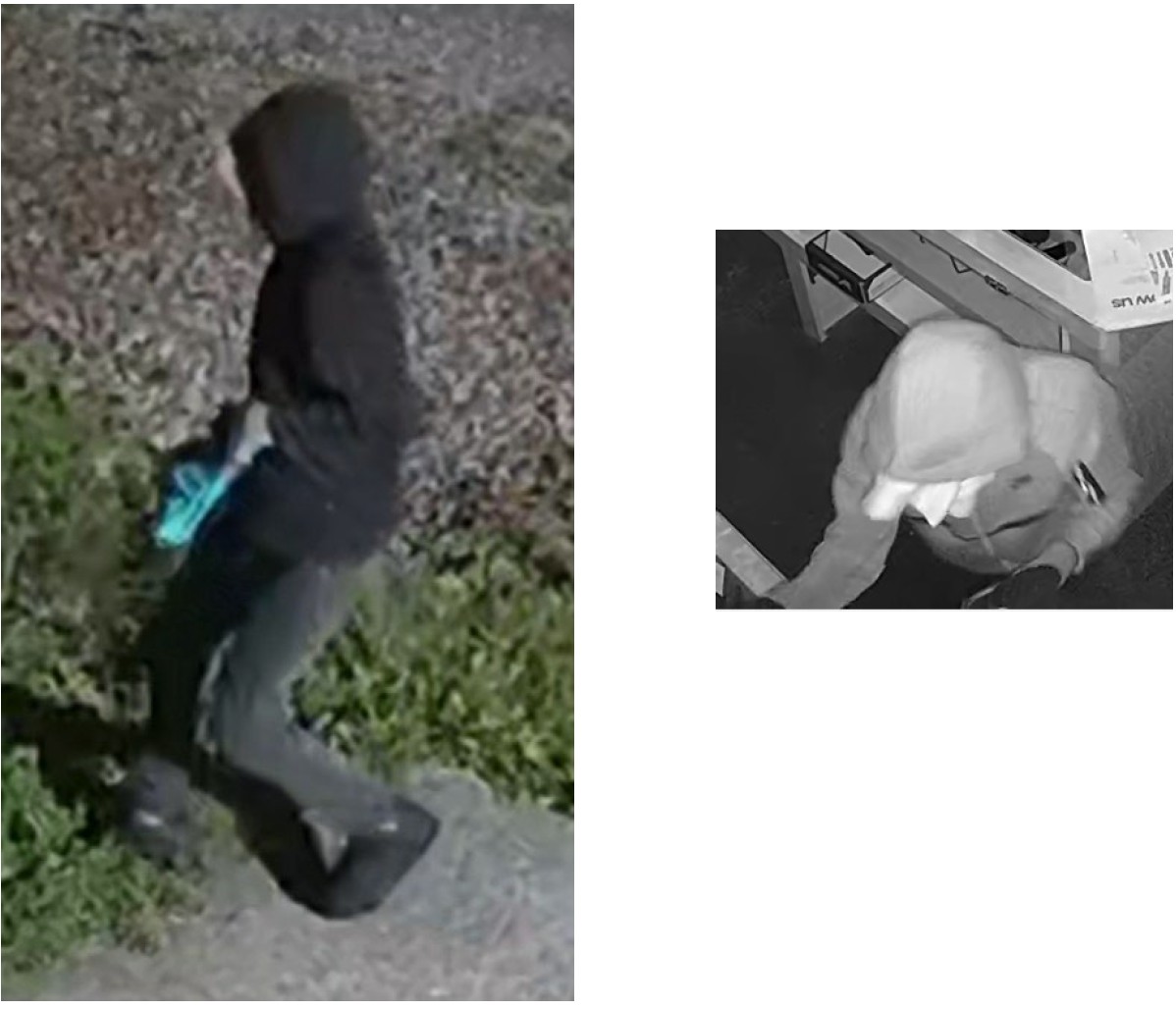
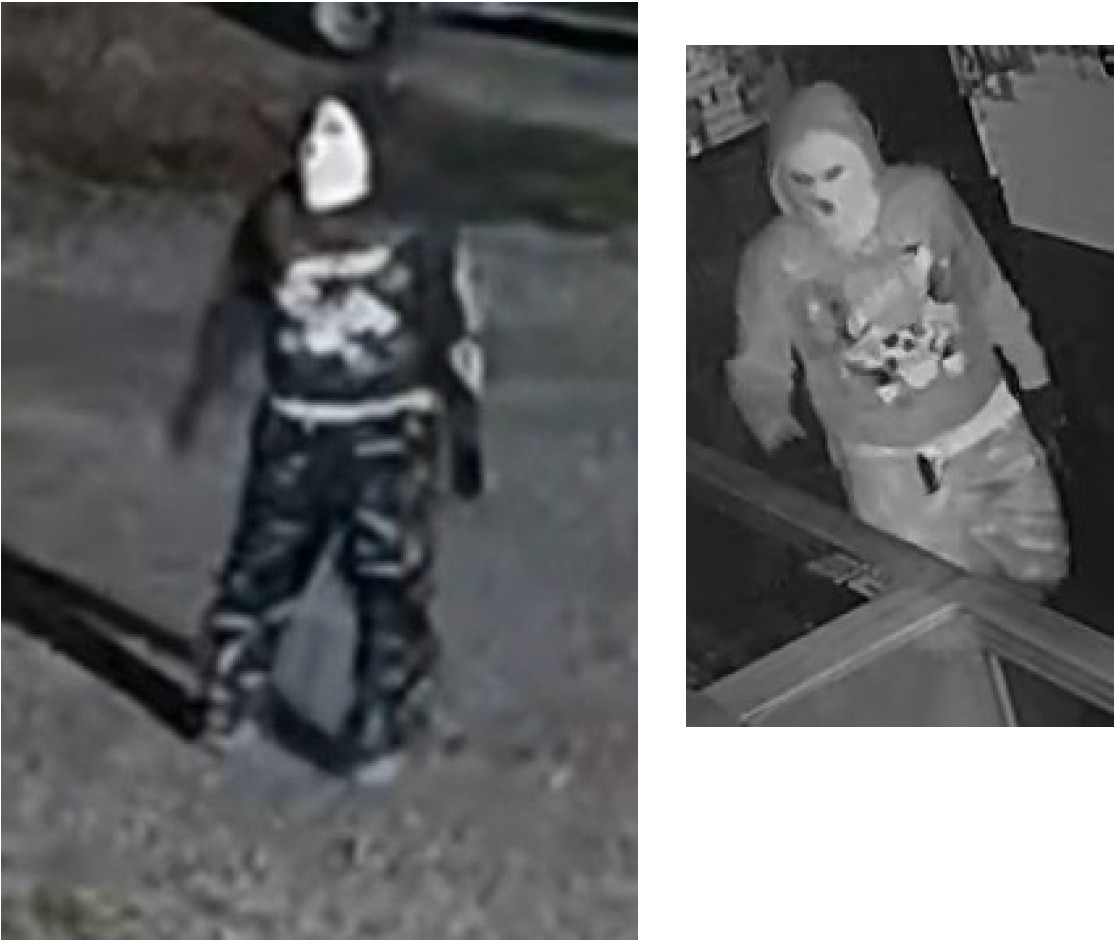
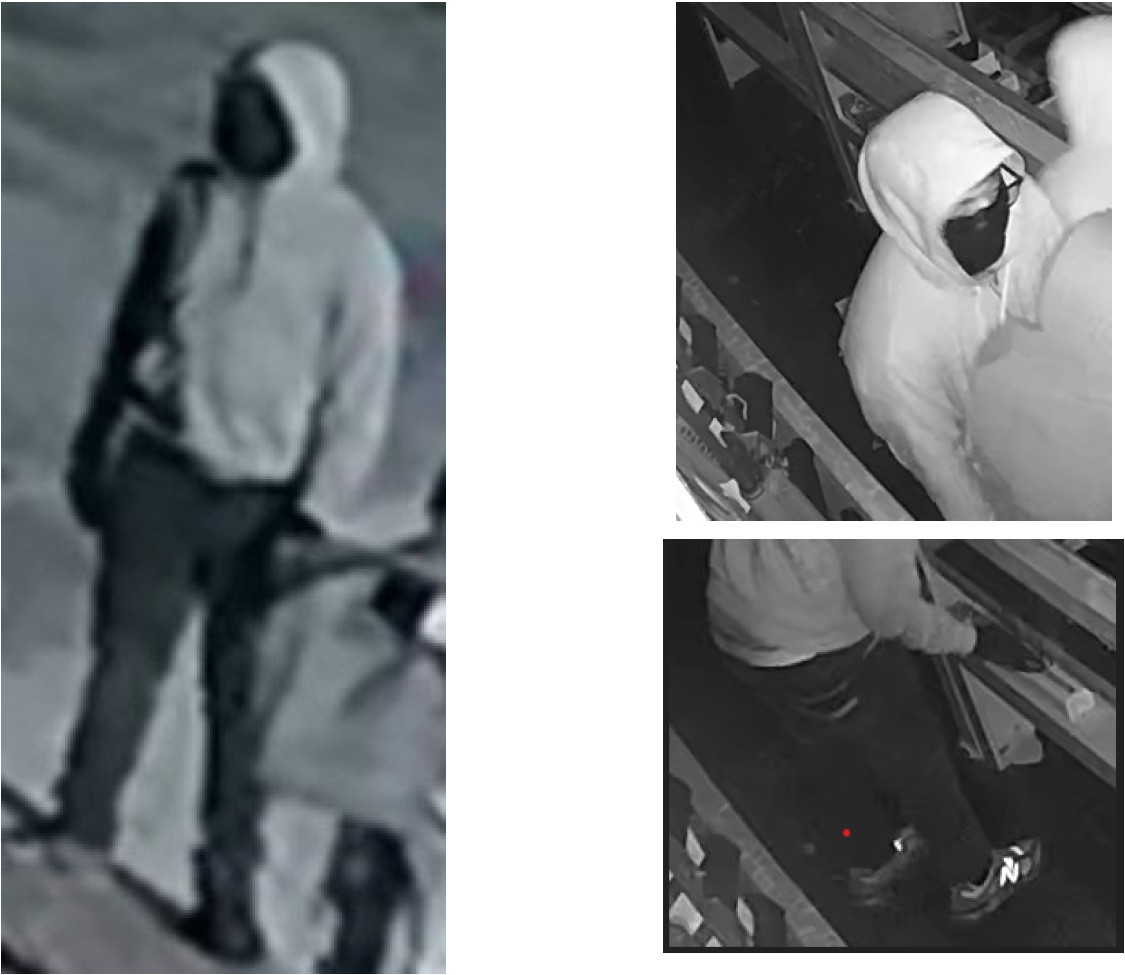
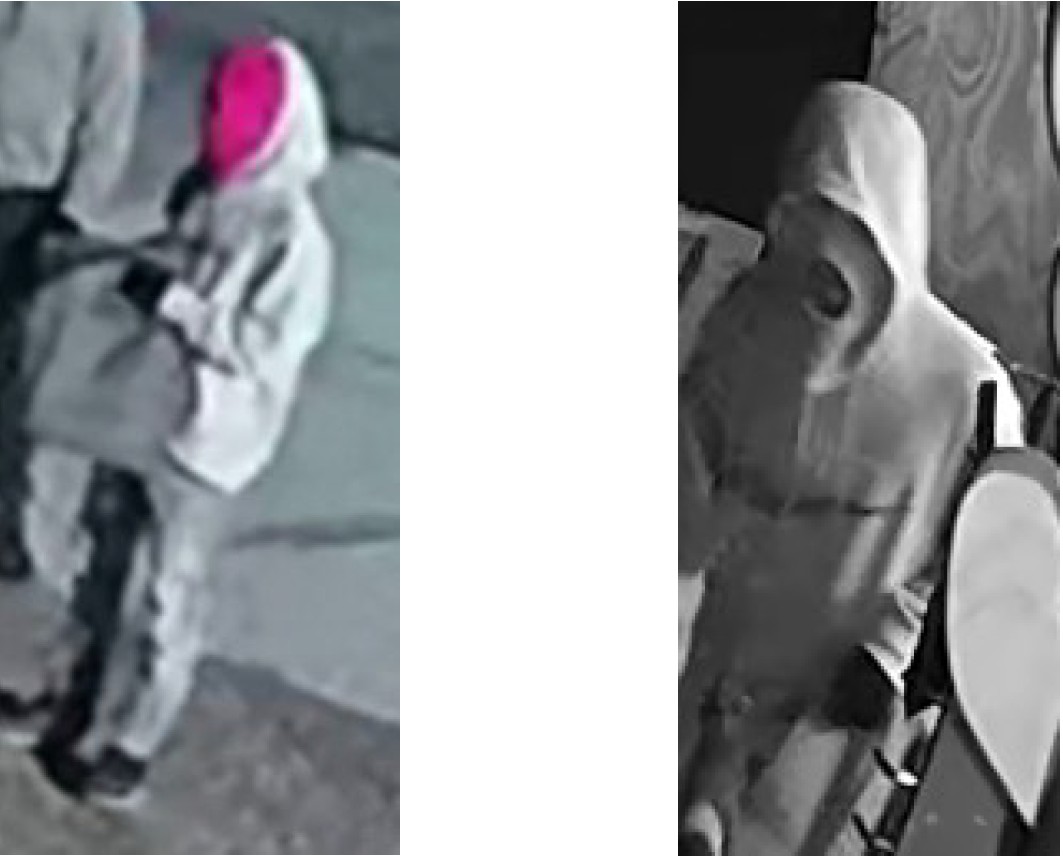
Bozeman, Mont. — The Bureau of Alcohol, Tobacco, Firearms and Explosives, Denver Field Division, in conjunction with the Bozeman Police Department and the National Shooting Sports Foundation, the trade association for the firearms industry are offering a reward of up to $5,000 for information leading to the arrest and conviction of those responsible for the burglary of Great Northern Pawn.

The burglary occurred on March 2 at 5:03 a.m. at Great Northern Pawn, located at 1012 N. 7th Ave. Bozeman, Montana. The suspect entered through a window, cut a cable lock and stole multiple firearms. The suspect shown is wearing a gray hoodie, dark pants, light blue underpants with a face mask. The investigation is being conducted jointly by the Bozeman Police Department and the ATF Denver Field Division, Billings Field Office.

Anyone with information about this burglary should contact ATF at (888) ATF-TIPS (1-888-283-8477) or the Bozeman Police Department at 406-582-2000. Information can also be sent to ATFTips@atf.gov or through ATF’s website at www.atf.gov/contact/atftips. Tips can be submitted anonymously using the Reportit® app, available from both Google Play and the Apple App store, or by visiting www.reportit.com.

ATF regulates the firearm industry and is the federal law enforcement agency with jurisdiction for investigating fires and explosions. More information about ATF and its programs is available at www.atf.gov.

Man Sentenced For Threatening to Murder Federal Agents

CHARLOTTE, N.C. – Johnathan Trent Thomas, 27, of Linwood, N.C., was sentenced today to 15 months in prison followed by two years of supervised release for making threats to murder federal officers to impede, intimidate, or interfere with the performance of their official duties, announced Russ Ferguson, U.S. Attorney for the Western District of North Carolina.

Mark Zito, Special Agent in Charge of Homeland Security Investigations (HSI) in North Carolina and South Carolina, joins U.S. Attorney Ferguson in making today’s announcement.

“Threatening the lives of law enforcement officers is a serious federal crime,” said U.S. Attorney Ferguson. “We take every threat against law enforcement seriously. Today’s case sends a clear message: those who threaten violence against law enforcement will be held accountable in federal court.”

“Ensuring the safety of our law enforcement officers is paramount,” said Special Agent in Charge Zito. “Threats of violence against federal agents and our local partners undermine the rule of law and jeopardize the security of our communities. HSI remains committed to working with our partners to investigate and bring to justice those who seek to intimidate or harm officers in the performance of their duties.”

According to filed court documents and court proceedings, on Wednesday, May 14, 2025, at approximately 12:00 p.m., a caller, later identified as Thomas, contacted the Charlotte Mecklenburg Police Department (CMPD) and threatened to kill Immigration and Customs Enforcement (ICE) agents and CMPD officers if immigration enforcement actions did not stop. During a second telephone call with a CMPD officer, Thomas warned that he was coming to Charlotte with armor piercing ammunition, night vision devices, and body armor to kill law enforcement officers and threatened to “shoot them all” if he observed anyone making arrests. Thomas was referencing arrests made previously by ICE federal agents on Albemarle Road in Charlotte.

Court documents show that Thomas stated that if a police officer pointed a gun at him, he was just going to open fire. He also said that he would “Swiss cheese” the officers if they were doing the same thing they did before, meaning making arrests.

Thomas additionally threatened that if law enforcement came to arrest him, he had Tannerite (an explosive) all around his house.  He threatened that he “could do a whole lot better than” April 29, 2024, the day four law enforcement officers were killed in the line of duty in Charlotte.

Thomas’s threats did not deter law enforcement, who not only arrested him, but executed a search warrant at Thomas’s residence, seizing three rifles, a handgun, and a variety of ammunition.  

According to court records, Thomas has an extensive history of threatening law enforcement, to include the Davidson County Sheriff’s Office and CMPD, and had previously followed CMPD officers in marked patrol cars while they were performing their official duties.

Thomas is in federal custody and will be transferred to the custody of the Federal Bureau of Prisons upon designation of a federal facility.

In making today’s announcement, U.S. Attorney Ferguson commended HSI for the investigation of the case and thanked the U.S. Attorney’s Office in the Middle District of North Carolina, the Bureau of Alcohol, Tobacco, Firearms and Explosives, the Davidson County Sheriff’s Office, the Waxhaw Police Department, and the Charlotte Mecklenburg Police Department for their assistance.

Assistant U.S. Attorneys David Kelly and Stephanie Spaugh of the U.S. Attorney’s Office in Charlotte prosecuted the case.

Saturday, February 28, 2026

Ohio Man Sentenced to Prison for Making Threats Against Law Enforcement and Illegal Gun Possession

TOLEDO, Ohio – A 34-year-old man has been sentenced to prison for making threats to harm law enforcement officers, advocating for a violent revolution against the federal government, and for illegally possessing a firearm.

Jerime Graham-Woods, of Mt. Vernon, Ohio, was sentenced to 42 months (3.5 years) in prison by U.S. District Judge James R. Knepp after pleading guilty last November to the following charges in the indictment:

  • Possession of a Firearm by a Prohibited Person; conviction for Domestic Violence in 2012.
  • Interstate Communications with a Threat to Injure

He was also ordered to serve three years of supervised release after imprisonment. 

According to court documents, from about June to September 2023, Graham-Woods made several threatening and hostile comments on a popular social media platform which advocated for violence against law enforcement and government officials. Some of these comments included the following: “I can’t wait to be a part of the violent revolution;” “I can’t wait to start shooting law enforcement;” “lotta bodies in my future;” and “I’m very much for shooting police.” Additionally, he made suggestive comments to others encouraging violent actions such as “start killing politicians,” “start killing federal agents,” “let’s just show the government what all of our guns are for. Stop talking and start loading,” and “start shooting.”

During the investigation into the dangerous threats, law enforcement discovered a video posted on a popular social media platform depicting Graham-Woods shooting a Heckler & Koch model MP5SD 9mm submachine gun at an indoor shooting range, which he was prohibited from possessing due to his prior misdemeanor domestic violence conviction.

This case was investigated by the Bureau of Alcohol, Tobacco, Firearms, and Explosives (ATF) and the FBI Toledo Resident Agency.

The case was prosecuted by Assistant United States Attorney Frank H. Spryszak for the Northern District of Ohio.

Friday, February 20, 2026

Tucson Airman and his Spouse Indicted for Defrauding the Department of War of Millions

TUCSON, Ariz. –A federal grand jury has returned an indictment, charging a Tucson couple with a years long scheme to defraud the U.S. Department of War of millions of dollars, while using the illicit proceeds to curate and maintain a luxurious lifestyle, announced U.S. Attorney Timothy Courchaine.

On Feb. 11, 2026, a federal grand jury in Tucson returned a 12-count indictment against U.S. Air Force Staff Sgt. Richard Stefon Ramroop, 35, and his spouse, Manuel George Madrid, 32, both of Tucson, for Conspiracy to Commit Theft of Government Property, Conspiracy to Commit Wire Fraud, Wire Fraud, and Money Laundering. 

“The defendants allegedly stole millions in taxpayer dollars from the U.S. Department of War to bankroll a lavish lifestyle, diverting critical resources away from their intended purpose,” said U.S. Attorney Timothy Courchaine. “Every dollar taken through fraud is a dollar denied to the mission it was meant to support. The U.S. Attorney’s Office and our federal and local law enforcement partners will hold accountable any individual who profits illegally at the expense of the American people.”

“Military servicemembers hold a unique position in our society, where they are entrusted with large amounts of taxpayer dollars to ensure the defense of our nation,” said IRS-CI Phoenix Field Office Acting Special Agent in Charge Jarom Gregory. “When a servicemember abuses their position for personal gain, it erodes trust in the tax system and harms the very citizens they have sworn an oath to protect. IRS Criminal Investigation will continue to investigate allegations of theft of taxpayer funds and government property, ensuring the integrity of our nation’s tax system.”

“This indictment reflects the outcome of a coordinated effort between AFOSI and our federal counterparts,” said Special Agent Richard Kautz, AFOSI Detachment 217 Commander. “Fraud of this level is not just a financial crime, it undermines public trust, diverts resources, and threatens the integrity of our force. Every dollar lost to fraud is a dollar taken away from the security of our nation.”

The indictment alleges that from January 2022 through on or about December 2025, Staff Sgt. Ramroop utilized his position in the pharmacy at Davis-Monthan Air Force Base to defraud the U.S. government by purchasing thousands of medical devices using taxpayer funds, and thereafter, stealing and reselling those devices with Madrid for their own personal gain.

According to court records from 2022 through 2025, bank accounts controlled by Ramroop and Madrid received over $11 million in fraud proceeds through wire transfers, Automated Clearing House (ACH) deposits, and other credits from companies engaged in the resale of medical test strips and devices. Meanwhile, the orders of these diverted medical devices cost the U.S. Department of War over $3 million.

The indictment also alleges that Ramroop and Madrid used the fraud proceeds to purchase luxury vehicles and real estate. Further, these purchases were allegedly made directly from the personal bank accounts of Ramroop and Madrid, the same bank accounts that had received fraud proceeds from the medical device sales.

For example, the proceeds were allegedly used to purchase, among other items, a million-dollar home in Tucson in February 2024, a new 2024 Porsche Cayenne Sport Utility Vehicle for $141,443.34 and a new BMW i7 Sport Utility Vehicle for $195,397.59.

According to the indictment, the vehicles, and others, were seized by law enforcement during the execution of a search warrant on Jan. 15, 2026.   

A conviction for Conspiracy to Commit Theft of Government Property carries a maximum penalty of up to 5 years imprisonment. Each conviction for Conspiracy to Commit Wire Fraud and Wire Fraud carries a maximum penalty of up to 20 years imprisonment. Each conviction for Money Laundering carries a maximum penalty of up to 10 years imprisonment.

U.S. Attorney Courchaine commended the investigatory efforts of IRS–Criminal Investigations (IRS-CI), the Air Force Office of Special Investigations (AFOSI) and members of the Homeland Security Task Force (HSTF) to include Homeland Security Investigations (HSI), the FBI, the Drug Enforcement Administration (DEA), the Bureau of Alcohol, Tobacco, Firearms and Explosives (ATF), the U.S. Marshals Service (USMS), the Counter Narcotics Alliance (CAN), and the Marana, Mesa, and Tucson Police Departments.

The U.S. Attorney’s Office for the District of Arizona, Tucson, is handling the prosecution.

An indictment is a formal accusation of criminal conduct. All defendants are presumed innocent until proven guilty beyond a reasonable doubt in a court of law.