Friday, October 30, 2026

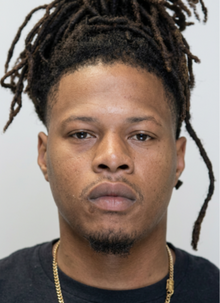
Detroit man pleads guilty to attempting to kill ATF special agents following ATF-led arrest with Detroit Police and Michigan State Police

DETROIT, MI — The Bureau of Alcohol, Tobacco, Firearms and Explosives, joins United States Attorney Jerome F. Gorgon Jr., Chief Todd Bettison, Detroit Police Department; and Colonel James F. Grady II, Director, Michigan State Police in announcing Terrance Markyce Davis, 34, of Detroit, Michigan, today pleaded guilty to the attempted murder of ATF Special Agents, which occurred during a heated chase with law enforcement in November 2025.

“Terrance Davis is a poster child for what ATF and its partners prioritize: identifying and apprehending serial shooters in our communities. Davis terrorized Detroit neighborhoods by repeatedly shooting into homes and vehicles. He then chose to shoot at ATF agents attempting to take him into custody. Our agents and law enforcement partners didn't back down,” said James Deir, ATF's Detroit Field Division Special Agent in Charge. “Davis tried to kill federal agents rather than surrender. In the end, accountability matters. Davis is now on the express train with only one stop: federal prison. I hope he packed a suitcase. Make no mistake, ATF will not be intimidated or deterred from pursuing violent criminals who believe possessing an illegal firearm makes them dangerous, invincible or above the law. It does not.”

“This defendant terrorized our streets and then tried to murder the federal agents who came to stop him,” Gorgon said. “The brave men and women of the ATF, Detroit Police and the Michigan State Police ended his rampage. And we are honored to fight with them against the violent criminals who threaten us all.”

With his guilty plea, Davis now faces a mandatory minimum sentence of 17 years in federal prison and a maximum possible sentence of life imprisonment. Davis will be sentenced on March 3, 2027.

Background on the Case

According to court filings and Davis’s admissions during the plea hearing, between November 5 and November 13, 2025, Davis fired multiple rounds into houses and vehicles across Detroit, seriously injuring one person. On November 14, 2025, ATF Special Agents obtained a warrant charging Davis with being a felon in possession of ammunition in connection with one of those shootings. When agents attempted to arrest him, Davis fled in his vehicle, carjacked a motorist, and exchanged gunfire with ATF agents.

Michigan State Police subsequently disabled the stolen vehicle, and Davis fled on foot while armed with a handgun. He was shot by Detroit Police officers and taken into custody.

Ballistics testing later confirmed that the firearm Davis was carrying as he fled was the same weapon used to shoot at ATF agents and the same firearm used in the earlier series of shootings.

This case was investigated by the Bureau of Alcohol, Tobacco, Firearms and Explosives, the Detroit Police Department, and the Michigan State Police. It is being prosecuted by Assistant U.S. Attorneys Andrew R. Picek, John Turrettini, and Jeremiah Smith.

ATF outlines priorities, engages law enforcement partners at IACP conference

Director highlights initiatives to combat violent crime, investigative tools, and updated NFA guidance

ORLANDO, Fla. -- Senior leaders from the Bureau of Alcohol, Tobacco, Firearms and Explosives joined law enforcement officials from across the country and abroad during the International Association of Chiefs of Police conference in Orlando Oct. 24-27. The four-day event brought together thousands of police executives, offering ATF a unique opportunity to highlight agency priorities, discuss emerging challenges, and reinforce longstanding partnerships to combat violent crime.

Led by Director Rob Cekada, ATF officials participated in multiple committee meetings focused on firearms, explosives, and law enforcement partnerships. Between sessions, they met individually with dozens of police chiefs, sheriffs, task force leaders, and international partners to discuss shared missions and operational needs.

Throughout those engagements, three themes consistently emerged:

ATF’s focus: Combating violent crime

Cekada reaffirmed that ATF’s central focus remains on countering violent crime by dismantling the individuals and criminal networks responsible for the unlawful use of firearms and explosives and for committing acts of arson. He also expressed appreciation for the Justice Department for providing the tools and support necessary to protect American communities.

“Our criminal enforcement mission must always be carried out while upholding the constitutional rights of law‑abiding Americans, especially those protected under the Second Amendment,” Cekada said. “ATF would only investigate a federal firearms licensee when there is evidence that they are in some way contributing to violent crime.”

Cekada also underscored the role of joint task forces, community engagement, and data‑driven strategies in addressing the evolving dynamics of gun violence in cities and rural communities across America.

Spotlight on eTrace: A critical intelligence tool for partners

A major point of discussion was eTrace, ATF’s secure, web‑based firearms tracing system, which enables law enforcement worldwide to identify a firearm’s manufacturer, its original purchaser, and potential trafficking patterns to end up at a crime scene.

In 2025, ATF conducted traces for approximately 674,000 firearms recovered at crime scenes on behalf of local, state and federal law enforcement partners, Cekada said.

“Tracing a firearm is a time‑consuming manual process,” Cekada said. “And despite what the critics suggest, there is no federal registry of gun owners to avoid the tedious task of searching for paperwork from specific firearms transactions.”

More than 10,000 law enforcement agencies across 52 countries have access to eTrace. Investigators can use trace information to identify potential shooters and gun traffickers and can also analyze violent gun crime trends in the United States and abroad. According to recent trace data, pistols remain the type of firearm most commonly associated with violent crime.

National Firearms Act: Updated transfer guidance

ATF recently issued guidance on how the agency will apply certain provisions of the National Firearms Act as it pertains to the passage of the One Big Beautiful Bill Act, signed into law in 2025. Cekada said his goal was to “provide a good path for the law to apply to all law-abiding Americans allowed to possess or manufacture a firearm.”

While the National Firearms Act remains in effect, ATF clarified that it will not enforce certain NFA approval, registration, tax-stamp and related requirements for short-barreled rifles, short-barreled shotguns, suppressors (silencers), and certain other concealable firearms classified under the law as “any other weapons.” Cekada emphasized that the updated guidance is intended to ensure lawful firearm owners understand their responsibilities while maintaining tools necessary to disrupt criminal misuse of NFA‑regulated items.

Thursday, October 29, 2026

Western Hemisphere Nations Meet to Advance Anti-Cartel Campaign Plan

Defense and security leaders from 19 nations across the Western Hemisphere worked to advance a campaign plan to dismantle dangerous transnational cartels and narco-terrorist networks during an Americas Counter Cartel Coalition forum in Santo Domingo, Dominican Republic, Oct. 27.

About two dozen men and women, some in business attire and others in various camouflage military uniforms, stand shoulder to shoulder and pose for a group photo. Behind them, a banner reads, "The Americas Counter Cartel Coalition," with various flags on either side.
Nearly a dozen men and women, some in business attire and others in various camouflage military uniforms, sit at two long tables with name placards in front of them and various flags behind them.
The forum convened senior defense ministers, military chiefs and public security leaders, including Marine Corps Gen. Francis L. Donovan, commander of U.S. Southern Command, and Eric Geressy, the senior advisor to the secretary of war for strategy. 
  
Dominican Republic President Luis Abinader also attended and addressed the attendees. 
 
During the forum, leaders spearheaded the development of an operational campaign plan and a governance charter. The goal is to establish how the coalition will coordinate multilateral cooperation, share information and intelligence, and conduct combined operations against narco-terrorist networks that threaten people, sovereignty and economic stability across the Americas and the Caribbean.  
  
During his opening remarks, Geressy highlighted the successes of Operation Southern Spear, stating that operations have degraded narco-terrorist maritime corridors by 64% in the western Caribbean, 58% in the eastern Caribbean and 40% across the Galapagos axis.

"Make no mistake about the nature of our enemy. Transnational cartels are violent extremist organizations. They operate as the al-Qaida and ISIS of the Western Hemisphere," he said.

Geressy warned the leaders that narco-terrorists are adapting to recent operational successes and are now using lawfare to "attempt to paralyze our decisions."

A man in business attire stands at a lectern and speaks inside a conference room as people on either side listen; behind him, a banner reads, "The Americas Counter Cartel Coalition."

"Having lost parity on the physical battlefield, these cartels have opened an asymmetric line of effort — lawfare. In military doctrine, lawfare is not a legitimate legal discourse. It is the calculated weaponization of legal systems to achieve kinetic and operational effects," he said.

Geressy said the terrorists want operators looking over their shoulders rather than looking down their sights, adding, "They want to collapse our operational tempo from the courtroom, because they cannot survive it in the battle space." 
  
Geressy told the leaders that the War Department will never tie a commander's hands by permitting criminal syndicates to exploit the United States' adherence to lawful warfare. 
  
"When your combined forces execute combined operations alongside the United States, you must know that your tactical commanders and service members will be shielded," he added.

Regional Leadership and Sovereignty

A man in a camouflage military uniform stands at a lectern and speaks inside a conference room while people on either side listen; behind him, a banner reads, "The Americas Counter Cartel Coalition." On his left, various flags are displayed on poles.

The Americas Counter Cartel Coalition launched at Southcom headquarters in Miami, where Secretary of War Pete Hegseth and defense and public security leaders signed an agreement pledging to work closely together to combat cartel and narco-terrorist networks in March.  
  
The Santo Domingo forum marks the coalition's third major milestone this year. The leaders met in Panama City in August to lay the groundwork for the operational frameworks agreed to this week.  
  
Moving forward, the coalition nations aim to aggressively target what the leaders call "criminal enablers" — the shadow networks that enable narco-terrorists to traffic drugs and spread violence throughout the Western Hemisphere through illicit financing, sophisticated logistics, arms procurement and public corruption.  
  
The Americas Counter Cartel Coalition supports the Shield of the Americas, led by heads of state and policy leaders working to strengthen the resilience of the Western Hemisphere through economic, security and multilateral cooperation. It defends coalition countries' economies and democratic governance against cartel and narco-terrorist threats, while also defending and promoting mutual respect for national sovereignty and self-determination.

Friday, October 23, 2026

ATF and HSTF 13-count superseding indictment returned after investigation into Sinaloa Cartel-linked weapons scheme

AMARILLO, Texas — United States Attorney for the Northern District of Texas Ryan Raybould announced that a federal grand jury returned a superseding indictment Sept. 24 charging Loyd Walter Hall, aka “Jamie Hall” and “James William,” and multiple co‑defendants with conspiring to provide firearms to the Sinaloa Cartel, trafficking controlled substances and engaging in a series of illegal straw‑purchase and firearms‑trafficking schemes.

ATF’s Dallas Field Division conducted the investigation with significant assistance from Homeland Security Investigations Dallas, local law enforcement partners, and members of the High‑Intensity Drug Trafficking Area task forces.

Hall and co‑defendants Jesus Quezada Meza, Omar Velasquez and Catlynn Ann Townsend were indicted June 25. The superseding indictment adds a fifth defendant, Johnnie Wayne Corbett, 42, of Amarillo, who was arrested by Federal agents on Oct. 17.

“Those who arm violent cartels are helping fuel a cycle of bloodshed, drug trafficking, and destruction that threatens communities on both sides of the border. ATF Dallas will not allow firearms traffickers to exploit our laws to strengthen the arsenal of criminal organizations like the Sinaloa Cartel, said ATF Dallas Field Division Special Agent in Charge Brian Garner. “Through the Homeland Security Task Force, we are relentlessly targeting these networks, cutting off their access to weapons, and pursuing those responsible until they are held accountable.”

“The defendants supplied powerful rifles and ammunition to the Sinaloa Cartel—one of the most violent criminal organizations in the world,” said U.S. Attorney Ryan Raybould. “By pursuing material support of terrorism charges, we are making clear that arming cartels is a direct threat to U.S. national security. Under Attorney General Blanche’s leadership, the Trump Administration has deployed an all of government strategy to destroy these terrorist networks. Our office will use every federal tool available to dismantle the cartels and aggressively prosecute anyone who enables their violence.”

Overview of the Charges

The charges in the superseding indictment include:

Conspiracy to Provide Material Support to a Foreign Terrorist Organization: The indictment alleges that Hall coordinated to supply firearms, ammunition, and related equipment to the Sinaloa Cartel—an organization designated by the U.S. Secretary of State as a foreign terrorist organization. This conduct included facilitating access to weapons capable of supporting cartel operations, knowing the organization engages in violent activity, including attacks against law enforcement, rival groups, and civilians.

Conspiracy to Distribute Controlled Substances for Importation into the United States: According to the charges, defendants participated in a drug‑trafficking conspiracy involving fentanyl, heroin and cocaine intended for illegal importation into the United States. The indictment describes a distribution network that coordinated with cartel‑linked actors to manufacture and transport significant quantities of controlled substances across international borders, furthering the flow of dangerous drugs into American communities.

Using and Possessing a Firearm in Furtherance of Drug Trafficking Crimes: Hall allegedly possessed and transported firearms, including semiautomatic assault weapons, to facilitate narcotics trafficking activities. These weapons were allegedly used to protect drug shipments, enforce cartel directives, and enable violent confrontations.

Conspiracy to Traffic Firearms: The indictment details coordinated schemes to ship, transport and transfer firearms across state and international borders, knowing the weapons would be used in felony activity. According to the charges, the defendants’ actions helped sustain a supply chain that moved U.S.‑purchased firearms into the hands of criminal organizations, including cartel‑linked actors operating in Mexico.

Conspiracy to Straw Purchase Firearms: The indictment alleges that defendants coordinated with one another to recruit and use straw purchasers to obtain weapons that the true recipients could not legally acquire. This included selecting targeted firearms dealers, choosing specific high‑powered weapons and directing straw buyers to falsely claim they were the actual purchasers, enabling the covert movement of firearms to criminal associates.

Making False Statements to Firearms Dealers: According to the indictment, defendants knowingly submitted false ATF Form 4473s and other fraudulent statements to federally licensed firearms dealers, misrepresenting the identity of the actual firearm buyers and concealing the intended transfer of the weapons. These false statements were allegedly designed to evade federal safeguards and facilitate the acquisition of firearms later intended for movement across state lines and, in some cases, toward the U.S.–Mexico border.

Status of Defendants

  • Defendants Hall, Quezada Meza, and Velasquez remain in federal custody.
  • Townsend has been issued a summons.
  • Corbett is in federal custody. He had his initial appearance before a U.S. magistrate judge today.

If convicted, Hall faces up to a maximum penalty of life in federal prison. Meza and Velasquez each face up to 15 years in federal prison. Townsend and Corbett each face up to five years in federal prison.

Assistant U.S. Attorneys Colleen Bloss and Marbel Munoz from the Narcotics/HSTF/Asset Forfeiture section are prosecuting the case.

This case is part of the Homeland Security Task Force initiative established by Executive Order 14159, Protecting the American People Against Invasion. The HSTF is a whole-of-government partnership dedicated to eliminating criminal cartels, foreign gangs, transnational criminal organizations, and human smuggling and trafficking rings operating in the United States and abroad. Through historic interagency collaboration, the HSTF directs the full might of United States law enforcement towards identifying, investigating, and prosecuting, the full spectrum of crimes committed by these organizations, which have long fueled violence and instability within our borders. In performing this work, the HSTF places special emphasis on investigating and prosecuting those engaged in child trafficking or other crimes involving children. The HSTF further utilizes all available tools to prosecute and remove the most violent criminal aliens from the United States.

HSTF Dallas comprises agents and officers from the Federal Bureau of Investigation, the Drug Enforcement Administration, the Bureau of Alcohol, Firearms, Tobacco, and Explosives, Department of Homeland Security Investigations, United States Marshals Service, Internal Revenue Service, United States Postal Inspection Service, and United States Secret Service in partnership with the Texas Department of Public Safety, City of Dallas Police Department, the Dallas County Sheriff’s Office and other local law enforcement entities.

Public safety initiative leads to over 100 arrests in the Piedmont Triad area

 Law enforcement agencies targeted criminal activity hotspots for three months

CHARLOTTE, N.C. — A three-month public safety surge operation targeting violent crime and trafficking networks within the Piedmont Triad has resulted in 104 arrests, the seizure of 163 firearms, 102 machinegun conversion devices, and more than 37 kilograms of illegal narcotics. The Bureau of Alcohol, Tobacco, Firearms and Explosives (ATF) led the intelligence driven effort, called Operation Piedmont Pipeline, in partnership with state and local law enforcement agencies from across the Piedmont Triad region.

“Public safety surge initiatives bring together federal, state and local law enforcement partners to identify violent offenders, disrupt illegal firearms activity and help protect neighborhoods,” said ATF Special Agent in Charge Alicia Jones. “The key component here is shared intelligence. State and local partners have incredible input on prevalent crime issues within the Piedmont area. Combining their information with the federal resources and intelligence allows us to more effectively identify the individuals and networks responsible for local violent crime.”

“Our prosecutors thank and commend our state and federal partners, especially ATF,” said Dan Bishop, U.S. Attorney for the Middle District of N.C. “We are pleased to have moved these cases rapidly to indictment. The tangible symbols of these seizures bespeak an important message to other persons who illegally possess or traffic in guns and drugs in the 24 counties of the Middle District of North Carolina: we will add you to the pile.”

Operation Piedmont Pipeline launched in June, focused on High Point, Greensboro, Winston-Salem and surrounding areas with high densities of violent crime, firearms trafficking, and drug activity. ATF and partnering law enforcement agencies combined investigative resources, including crime-gun analysis and ballistics tracing, to identify narcotics and firearms traffickers and illegal possessors. The results of the three-month operation include:

  • 75 criminal investigations, leading to criminal charges against 104 defendants
  • 72 Federal defendants and 32 State defendants for firearms and narcotics offenses
  • 229 ATF operations and 46 Federal and State search warrants
  • 163 firearms and 102 machinegun conversion devices seized
  • over 37 kg of illegal narcotics seized (cocaine, methamphetamine, and fentanyl)

Partnering agencies include Greensboro Police Department, High Point Police Department, Winston-Salem Police Department, Asheboro Police Department, Forsyth County Sheriff’s Office, Rockingham County Sheriff’s Office, Randolph County Sheriff’s Office, Caswell County Sheriff’s Office, Alamance County Sheriff’s Office, DEA and the N.C. State Bureau of Investigations.

“Combining federal investigative resources with the local knowledge and community connections that our police departments and sheriff’s offices have available helps build a better strategy at taking down criminal networks,” said Greensboro Police Chief Kamran Afzal. “Initiatives like this not only lead to significant arrests and charges, but also provide a sustainable plan to prevent violent crime.”

“Violent crime doesn't stop at city limits or county lines, and our response can't either,” said High Point Police Chief Curtis Cheeks III. “By working closely with federal partners and local agencies, we're ensuring we tackle violent crime at the source. This coordinated enforcement holds offenders accountable and helps protect the entire Piedmont Triad community."

ATF offers $5,000 reward for information leading to the arrest of Brandon Joshua Mallory


ATF offers $5,000 reward for information leading to the arrest of Brandon Joshua Mallory

MACON, Ga. – The Bureau of Alcohol, Tobacco, Firearms and Explosives, Atlanta Field Division, is offering a $5,000 reward for information leading to the arrest of Brandon Joshua Mallory in connection with an October 4, 2026, fire at an occupied residence at 3649 Case Street in Macon. Mallory is a 31-year-old Black male, born June 15, 1995. He is approximately 5 feet 8 inches tall and weighs 168 pounds.

Brandon Joshuah Mallory is wanted in connection with an October 4, 2026, fire at an occupied residence in Macon, Ga.

Brandon Joshua Mallory is wanted in connection with an October 4, 2026, fire at an occupied residence in Macon, Ga.

Mallory is wanted in Bibb County, Georgia, for aggravated assault, arson in the first degree, criminal damage to property in the second degree, cruelty to children in the first degree (felony), and terroristic threats. These charges are allegations; Mallory is presumed innocent unless proven guilty.

At approximately 4:19 a.m. on October 4, Bibb County firefighters responded to the residential fire. Four children were inside the home when the fire began and escaped through a window. No serious injuries were reported.

ATF and Macon/Bibb County fire investigators examined the scene and determined that the fire originated in the southeast section of the front porch, on the west side of the residence.

According to witness statements provided to investigators, Mallory was seen on the front porch attempting to enter the home shortly before the fire and was seen running away after the children escaped. Investigators also received information that Mallory had sent threatening text messages to the resident before the fire.

Anyone with information about Mallory’s whereabouts or this incident should contact ATF at 1-888-ATF-TIPS (1-888-283-8477) or email ATFTips@atf.gov. Anonymous tips may also be submitted through the report it® app or at https://mobile.reportit.com/ by selecting the Atlanta Field Division. Reference Macon/Bibb Case No. 202689261.

Friday, October 16, 2026

ATF offers $5,000 reward for information in deadly Albany shooting

NEW YORK — The Bureau of Alcohol, Tobacco, Firearms and Explosives (ATF) is offering a reward of up to $5,000 for information leading to the identification, arrest and conviction of the individual or individuals responsible for an October 4, 2026, shooting in Albany that left one person dead and three others injured.

At approximately 2:30 a.m., Albany Police Department officers responded to reports of a shooting near the intersection of Hudson Avenue and Partridge Street. Four individuals were struck by gunfire, one of whom later died from their injuries.

ATF is working alongside the Albany Police Department to investigate this shooting, identify those responsible and bring them to justice.

Anyone with information about this incident is urged to contact the Albany Police Department at 518-462-8039.

Friday, October 09, 2026

ATF offers $5,000 reward in Montana pawn shop burglary

BOZEMAN, Mont. — The Bureau of Alcohol, Tobacco, Firearms and Explosives Denver Field Division, alongside the Bozeman Police Department and the National Shooting Sports Foundation, is offering a reward of up to $5,000 for information leading to the arrest and conviction of those responsible for the burglary of Debo’s Pawn Shop, a federal firearms licensee.

At approximately 6:39 a.m. on Sept. 27, a lone suspect broke a window to gain entry into the business. The suspect took a firearm and fled prior to the arrival of Bozeman police officers.

The burglary is being investigated jointly by the Bozeman Police Department and the ATF Denver Field Division’s Billings Field Office. The NSSF, the trade association for the firearms industry, is matching the ATF reward as part of a cooperative effort to curb gun thefts from licensed dealers.

Anyone with information about this investigation should contact ATF at (888) ATF-TIPS (1-888-283-8477). Information can also be sent to ATFTips@atf.gov or through ATF’s website at www.atf.gov/contact/atf-tips. Tips can be submitted anonymously using the Reportit® app, available from both Google Play and the Apple App store, or by visiting www.reportit.com. All tips may be submitted anonymously.

ATF protects American communities from violent crime driven by the illegal use of firearms, explosives, and acts of arson. Through crime gun intelligence, forensic, analysis, and relentless investigation, we identify and arrest violent offenders and gang members, dismantle trafficking networks, and sever the supply chains arming cartels, prohibited persons, and terrorist organizations. We defend the rights of law-abiding citizens by safeguarding lawful commerce and upholding the Constitution of the United States. Learn more about what ATF is doing to reduce violent crime in your community by following us on X @ATFHQ, Instagram @ATFHQ, LinkedIn @ATF, and Facebook @HQATF, or on the web at www.atf.gov.


Thursday, October 08, 2026

DEA to Host 31st National Prescription Drug Take Back Day on Saturday, October 24th

WASHINGTON, DC –The U.S. Drug Enforcement Administration, in collaboration with more than 4,300 law enforcement partners, will host the 31st National Prescription Drug Take Back Day on Saturday, October 24, from 10 a.m. to 2 p.m.

More than 4,400 collection sites will be set up across the country to dispose of unneeded, expired, and unused prescription medications. This is a simple step that prevents diversion, reduces the risk of accidental poisonings, and helps protect communities.

“Since 2010, Take Back Day has helped Americans remove more than twenty million pounds of unneeded medications from their homes,” said DEA Administrator Terry Cole. “By participating in Take Back Day, you are preventing potentially addictive medications from falling into the wrong hands – a small step that can save lives. I am grateful to the thousands of law enforcement and community partners who make these events possible, and I urge everyone to take a few minutes on Saturday, October 24, to clean out your medicine cabinets.”

What will be collected

  • Tablets, capsules, patches, and other forms of prescription medications
  • Liquid medications securely sealed in their original containers

What won’t be collected

  • Syringes, sharps, and illicit drugs

Why it matters

  • Prescription opioids, such as oxycodone, hydrocodone, codeine, and morphine, are among the most frequently misused prescription pain medications, according to the Substance Abuse and Mental Health Services Administration (SAMHSA).
  •  Removing unneeded medications from the home reduces the risk of misuse or accidental ingestion.

Visit www.DEATakeBack.com to find a registered Take Back location near you. If you are unable to participate in this fall’s National Prescription Drug Take Back Day, there are more than 15,300 pharmacies, hospitals, and businesses that offer safe medication disposal year-round. In addition, many police departments also provide permanent drop boxes to ensure Every Day is Take Back Day.