Far outside of the world of Hollywood television and
so-called "magic tools," such as photographic enhancements or instant
DNA results, Naval Criminal Investigative Service forensic consultants
focus on the real science of evidence — finding the key details that
help bring investigations to the finish line and provide prosecutors
with what they need to see justice served.
The reality is that most of the tools used by fictional forensic
consultants don't exist. There is no centralized, searchable military
database cataloging the fingerprints or DNA for every service member. A
DNA profile can take months to process. Even under ideal conditions,
zooming in on a surveillance image rarely produces a clear license plate
number.
According to Special Agent Garrett Radke, a forensic consultant
stationed at NCIS Resident Agency Marine Corps Base Camp Pendleton,
California, the notion that valuable, clear-cut evidence will be found
at a crime scene is often unrealistic.
"It's such a mess of mixed profiles and mixed prints that you really
can't discern which is the one that would be relevant," Radke said. "It
happens a lot with weapons. It's virtually impossible for us to do
anything with a military weapon, for example, because [there are]
literally hundreds of people who have touched that weapon."
Despite the lack of cinematic shortcuts, NCIS forensic consultants
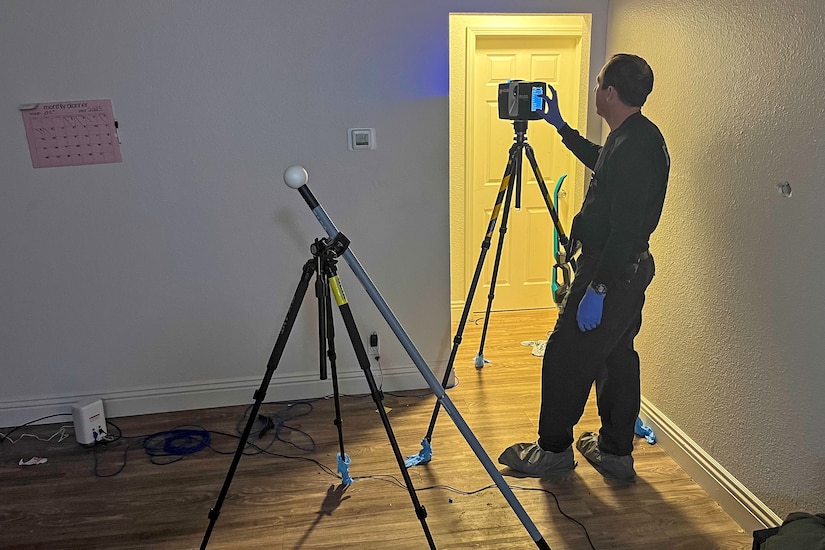
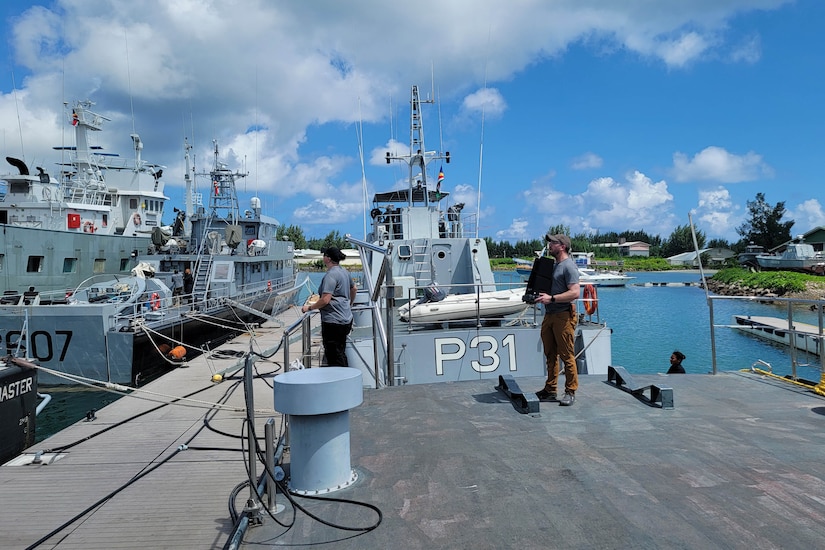
remain at the forefront of their field using sophisticated 3D imaging
technologies, such as the FARO terrestrial laser scanner, unmanned
aircraft system imaging and other cutting-edge technologies to bring
order to often chaotic and complex crime scenes.
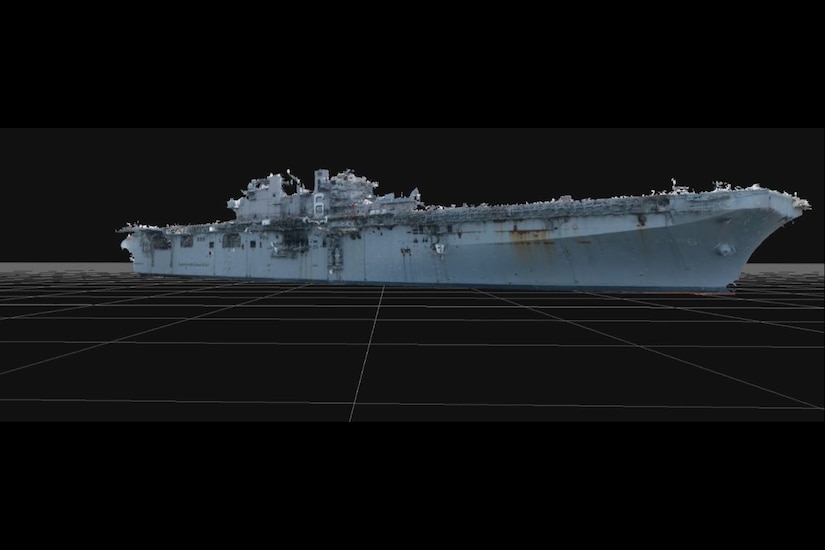
The FARO system uses lasers to create a map of its surroundings with
an accuracy of about 1 millimeter at a distance of 10 meters. The data
can then be used to generate 3D graphics and virtual "fly through"
videos, helping juries understand the spatial relationship of evidence
within a scene.
Following the catastrophic 2020 fire aboard USS Bonhomme Richard,
forensic graphics specialists used imagery collected with FARO to create
a 3D model of the area where the fire occurred, as well as the
suspect's alleged route of travel from the lower decks to the living
quarters. The model was used by the prosecution and defense teams to
assess whether a key witness could have seen what he claimed to have
seen. The model ultimately showed that a wall would have obstructed the
witness's view.
Radke is also one of four NCIS drone pilots certified by the Federal
Aviation Administration, War Department and NCIS to operate drones
around crime scenes, including within the restricted airspace of
military bases under special authorization.
Drones, Radke said, serve as "eyes in the sky" for operations,
especially in large or difficult-to-access areas. They can also fly in
grid patterns, capturing images that can be stitched together or
integrated into FARO models using photogrammetry, a technique that
produces 3D representations from photographs.
The use of drones recently proved instrumental in a death
investigation after a body was found in a courtyard surrounded by tall
barracks buildings. According to Radke, who responded as one of the
forensic consultants, there was initially no clear indication of how the
individual had died or how the body had reached the location.
"There were wounds on the body, but nothing that appeared fatal and
no wounds consistent with a fall from a significant height," he said.
"We found blood in several locations that could have indicated the
person was killed elsewhere, then transported and dumped in the
courtyard, suggesting homicide. However, by using a drone to examine the
roof of the nearby [building], I discovered a sledgehammer, a 27-foot
skid mark that looked like something heavy had slid off the roof, and
footwear impressions matching the shoes worn by the decedent."
Using the evidence and the autopsy results, NCIS determined the death was accidental, caused by a fall.
Forensics, Radke said, is rooted in the scientific method but still
leaves room for creativity and innovation. Designing experiments,
testing scenarios and developing unique strategies of retrieving
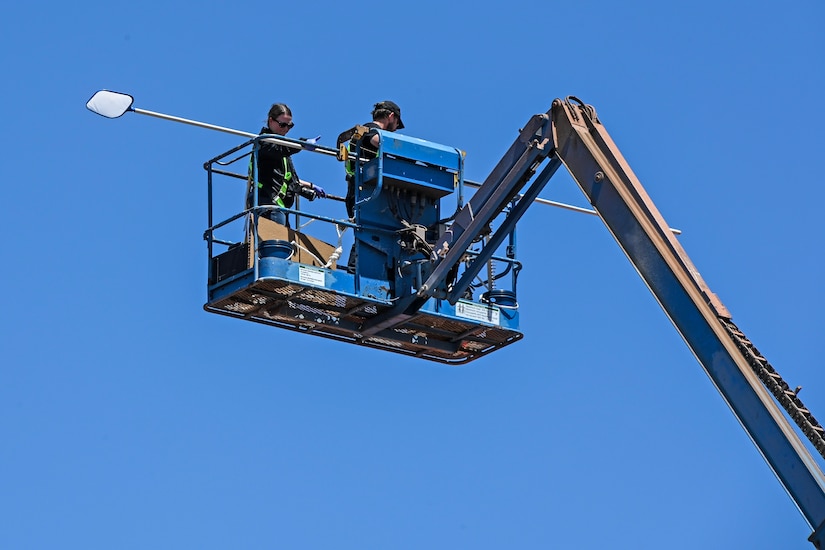
evidence are all part of the process. In one case, Radke even used a
pool skimmer and rake to retrieve evidence from a roof safely.
"It wasn't ideal and certainly not textbook," he said, "but it was
much safer. We were there because someone had died falling off that roof
— it didn't make sense for any of us to risk the same."
NCIS forensic work is a careful balance of creativity, technology and
traditional evidence collection, ensuring every scene is documented to
the highest standard. Even when answers aren't found right away,
preserved evidence remains ready for future breakthroughs. Using tools
like FARO, drones, virtual reality and mobile device LiDAR, paired with
scientific expertise, can turn even the most complex cases into
successful investigations that deliver justice for victims and their
families.
Forensic consultants are essential to the NCIS mission of
investigating major crimes involving Navy Department personnel and
assets. While many arrive with crime scene or forensic science
backgrounds, others — like Radke — begin their forensic careers at NCIS.
His opinion is that the best way to become a forensic consultant is to
be involved in the work.
"Be an active part of the major case response team, go to scenes, go
to autopsies and consider the NCIS Forensic Associate Program," he said.
"It's designed to identify and develop special agents interested in
becoming forensic consultants."
A career as an NCIS forensic consultant, Radke said, can be very
rewarding for those who think beyond the standard investigative steps
and embrace creative problem-solving.




 Posts
Posts

