Sunday, January 25, 2026

Pensacola Man Pleads Guilty to Threatening to Kill a Pensacola Police Detective

PENSACOLA, FLORIDA – Tamal W. Jenkins, 19, of Pensacola, Florida, pleaded guilty in federal court for interstate threatening communication with intent to extort. The plea was announced by John P. Heekin, United States Attorney for the Northern District of Florida.

U.S. Attorney Heekin said: “My office has zero tolerance for acts of violence and threats directed toward law enforcement. We will continue to back up the brave men and women who keep our streets safe with aggressive prosecutions against anyone who dares to threaten their safety.”

Court documents reveal that in July 2025 the Pensacola Police Department arrested suspects in a homicide investigation. Within days of the arrest, one of the Pensacola Police Detectives involved in the investigation received an electronic message making threats against her life for taking a suspect into custody. Law enforcement traced the threatening messages back to a device belonging to Jenkins.       

Jenkins faces up to 20 years’ imprisonment upon sentencing, which is scheduled for April 14, 2026, at 9:00 a.m. at the United States Courthouse in Pensacola before United States District Judge T. Kent Wetherell, II.  

The case involved a joint investigation by the Bureau of Alcohol, Tobacco, Firearms & Explosives and the Pensacola Police Department.  The case is being prosecuted by Assistant United States Attorney David L. Goldberg.

This case is part of Operation Take Back America a nationwide initiative that marshals the full resources of the Department of Justice to repel the invasion of illegal immigration, achieve the total elimination of cartels and transnational criminal organizations (TCOs), and protect our communities from the perpetrators of violent crime, human and drug trafficking.

Saturday, January 17, 2026

Federal Judge Sentences Robeson County Murder Suspect Who Shot and Ran Over Two Sheriff’s Deputies to 45 Years in Federal Prison


Shawn Tobin Locklear, Jr.

NEW BERN, N.C. –A Maxton man, Shawn Tobin Locklear, Jr., who was only 20 years old at the time, tried to kill two Robeson County Sheriff’s Deputies by shooting them and running them over with their own patrol car. Last year, he pleaded guilty to using a gun during a crime of violence and possessing a machine gun while selling drugs. A federal judge sentenced him to 45 years in federal prison for these crimes.

After officers arrested Locklear for armed robbery while using a gun, a state court judge released him in March 2022. A few months later in November 2022, while Locklear roamed free on bond despite his first gun crime, Robeson County Sheriff Deputies arrested him for murder and robbery charges. He allegedly used a gun to commit that murder. Shockingly, in May 2023, a state court judge released Locklear on bond while he awaited trial on those murder charges. A few months later in September of 2023, Locklear allegedly committed domestic violence crimes by choking his sister because he accused her of stealing one of his guns. When she called 911, he cut off his ankle monitor and fled the scene. While investigating those crimes, officers seized marijuana, cocaine, crack, and firearms, including machine guns, from Locklear’s car.


Shawn Tobin Locklear, Jr. - Guns

Two months after that latest crime spree, Robeson County Sheriff Deputies located Locklear, on November 7, 2023. As they attempted to arrest him, Locklear busted out his house and scurried into the woods. When two deputies located him on the other side of the woods, their bodycam footage showed him hiding behind a tree. As the deputies commanded him to show his hands and surrender, Locklear first showed his left hand on the left side of the tree. Suddenly, without warning, Locklear popped out on the right side of the tree with his gun drawn and unleashed a blaze of bullets. His barrage struck both deputies several times in the legs and gutshot. Wounded and shocked, the deputies crawled to cover behind their patrol car. As one deputy reloaded, Locklear sprinted up and dove into the driver’s seat of the patrol car. He gunned it in reverse, running over one deputy and almost crushing both. During the skirmish, the deputies shot Locklear. Locklear left the deputies to die, bleeding in the dirt.

The deputies called EMS to dispatch an ambulance to provide emergency care. Locklear intercepted the ambulance speeding to those deputies, stopping it in the middle of the road. He commandeered the ambulance for himself and absconded to the hospital. Thankfully, other Robeson County deputies responded, loaded their wounded brothers into the bed of a pickup truck, and rushed them to the same hospital. They arrested Locklear in the hospital. 

“Every day our law enforcement heroes steady themselves in the mirror, suit up in uniform, leave anxious families behind, and walk out of their homes to valiantly stand between our law-abiding citizens and the violent, anti-social scoundrels who care only about feeding their greed and violence,” said U.S. Attorney Ellis Boyle. “This demon should not have walked freely in our community after his first crimes in March 2022, and certainly not after the 2023 crimes. He is not fit for society, and our families don’t need to worry about him shooting more victims for the next 45 years. We all owe a debt of gratitude to the brave, steadfast public servants who put their lives on the line to remove this scourge from our community. Make no mistake, threats of violence and actual attacks on our law enforcement officers will not be tolerated in North Carolina, whether the weapon is a gun or a two-thousand-pound vehicle. As always, our thanks extend to the dedicated and professional deputies in this case, literally heroes who faced down death, and the other law enforcement partners who collaborated with the U.S. Attorney’s Office to force this villain to spend his next 45 years surrounded by concrete and steel. We also applaud Judge Flanagan’s appropriate sentence, which will keep the citizens and children in our community safe for decades.” 

“Today’s sentence brings accountability for a violent and deliberate attack on law enforcement. By the grace of God, the two deputies who were shot and ran over with a stolen patrol car survived, and we remain deeply grateful for their courage, resilience, and recovery. This outcome sends a clear message that violence against those who serve and protect our communities daily will not be tolerated, and those responsible will be held fully accountable,” said Sheriff Burnis Wilkins.

“The safety of our communities is strongly supported by the brave men and women in law enforcement,” said Special Agent in Charge Alicia Jones. “An attack on an officer is an attack on the community, and ATF will continue to deliver every resource we can to prevent this type of violence against our law enforcement partners.”

“The Robeson County District Attorney’s Office is grateful to the Eastern District of North Carolina U.S. Attorney’s Office’s efforts on this case and look forward to partnering in the future to have a robust federal presence to promote safety in our community,” said Robeson County District Attorney Matt Scott. “One exciting example of this partnership is the imminent hiring of a Special AUSA from Robeson County District Attorney’s Office to further pursue state and federal criminal convictions focused on keeping our community safe.”

The Robeson County Sheriff’s Office and the ATF investigated the case, and AUSAs Ashley Foxx and Robert Dodson prosecuted the case. Locklear still faces state charges for attempted murder and other crimes in Robeson County.

A copy of this press release is located on the EDNC USAO website. Related court documents and information can be found on the EDNC USAO website or on PACER by searching for Case No. 7:24-CR-33-FL-BM. 

Wednesday, January 07, 2026

NCIS Forensic Consultants Crack Toughest Cases With Advanced Technology, Creativity

 Jan. 7, 2026 | By Denise Caskey, Naval Criminal Investigative Service

Far outside of the world of Hollywood television and so-called "magic tools," such as photographic enhancements or instant DNA results, Naval Criminal Investigative Service forensic consultants focus on the real science of evidence — finding the key details that help bring investigations to the finish line and provide prosecutors with what they need to see justice served. 

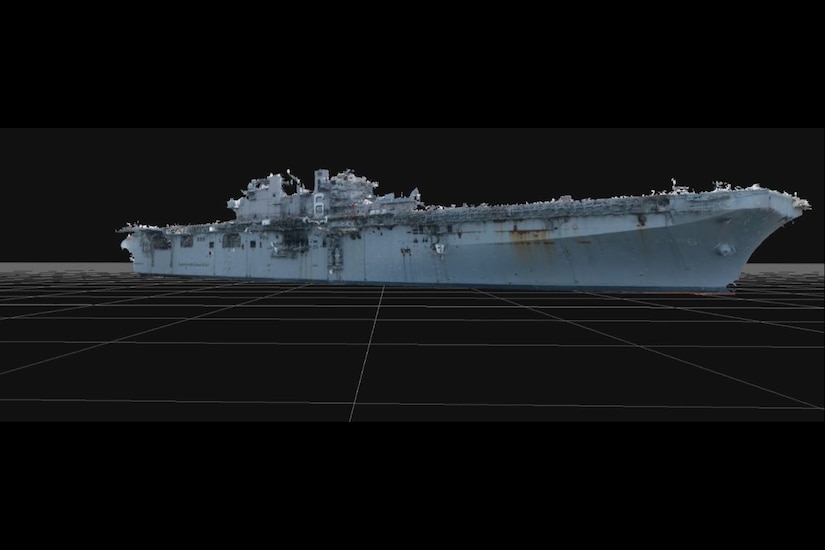
A digital model of a military ship is shown.

The reality is that most of the tools used by fictional forensic consultants don't exist. There is no centralized, searchable military database cataloging the fingerprints or DNA for every service member. A DNA profile can take months to process. Even under ideal conditions, zooming in on a surveillance image rarely produces a clear license plate number. 

According to Special Agent Garrett Radke, a forensic consultant stationed at NCIS Resident Agency Marine Corps Base Camp Pendleton, California, the notion that valuable, clear-cut evidence will be found at a crime scene is often unrealistic. 

"It's such a mess of mixed profiles and mixed prints that you really can't discern which is the one that would be relevant," Radke said. "It happens a lot with weapons. It's virtually impossible for us to do anything with a military weapon, for example, because [there are] literally hundreds of people who have touched that weapon." 

Despite the lack of cinematic shortcuts, NCIS forensic consultants remain at the forefront of their field using sophisticated 3D imaging technologies, such as the FARO terrestrial laser scanner, unmanned aircraft system imaging and other cutting-edge technologies to bring order to often chaotic and complex crime scenes. 

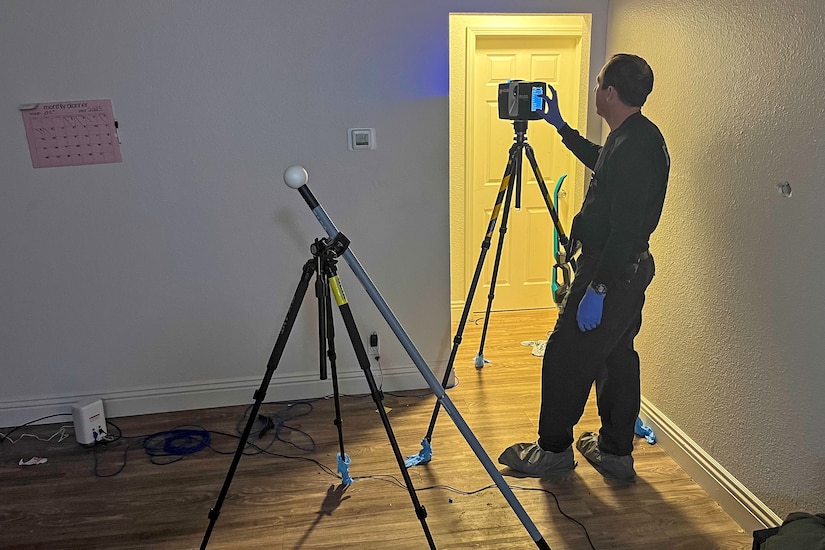
A man stands in a room while using imaging equipment.

The FARO system uses lasers to create a map of its surroundings with an accuracy of about 1 millimeter at a distance of 10 meters. The data can then be used to generate 3D graphics and virtual "fly through" videos, helping juries understand the spatial relationship of evidence within a scene. 

Following the catastrophic 2020 fire aboard USS Bonhomme Richard, forensic graphics specialists used imagery collected with FARO to create a 3D model of the area where the fire occurred, as well as the suspect's alleged route of travel from the lower decks to the living quarters. The model was used by the prosecution and defense teams to assess whether a key witness could have seen what he claimed to have seen. The model ultimately showed that a wall would have obstructed the witness's view. 

Radke is also one of four NCIS drone pilots certified by the Federal Aviation Administration, War Department and NCIS to operate drones around crime scenes, including within the restricted airspace of military bases under special authorization. 

Drones, Radke said, serve as "eyes in the sky" for operations, especially in large or difficult-to-access areas. They can also fly in grid patterns, capturing images that can be stitched together or integrated into FARO models using photogrammetry, a technique that produces 3D representations from photographs. 

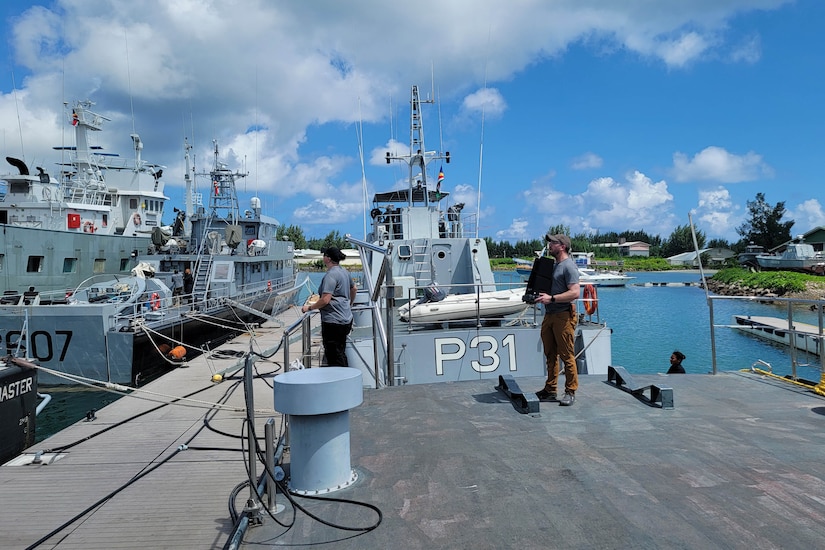
Two people stand on a dock near small military vessels.

The use of drones recently proved instrumental in a death investigation after a body was found in a courtyard surrounded by tall barracks buildings. According to Radke, who responded as one of the forensic consultants, there was initially no clear indication of how the individual had died or how the body had reached the location. 

"There were wounds on the body, but nothing that appeared fatal and no wounds consistent with a fall from a significant height," he said. "We found blood in several locations that could have indicated the person was killed elsewhere, then transported and dumped in the courtyard, suggesting homicide. However, by using a drone to examine the roof of the nearby [building], I discovered a sledgehammer, a 27-foot skid mark that looked like something heavy had slid off the roof, and footwear impressions matching the shoes worn by the decedent." 

Using the evidence and the autopsy results, NCIS determined the death was accidental, caused by a fall. 

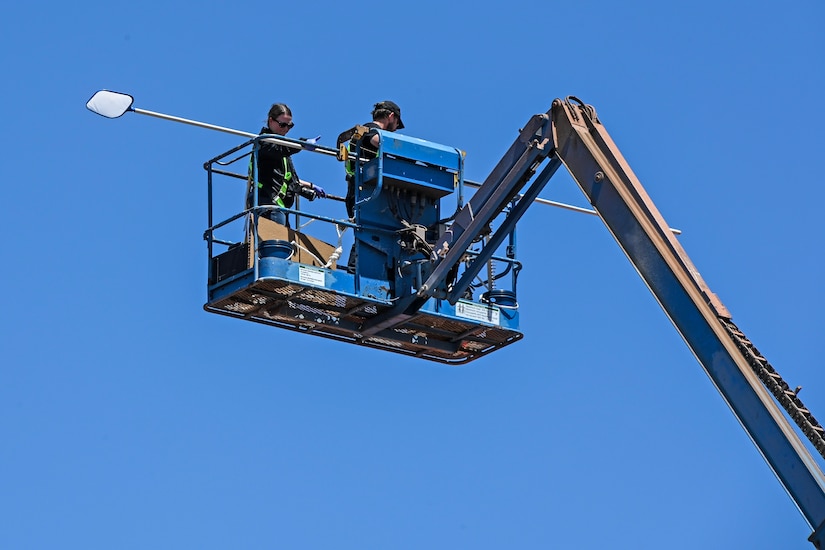
Forensics, Radke said, is rooted in the scientific method but still leaves room for creativity and innovation. Designing experiments, testing scenarios and developing unique strategies of retrieving evidence are all part of the process. In one case, Radke even used a pool skimmer and rake to retrieve evidence from a roof safely. 

"It wasn't ideal and certainly not textbook," he said, "but it was much safer. We were there because someone had died falling off that roof — it didn't make sense for any of us to risk the same." 

Two people stand on a hydraulic lift and hold a long pool skimmer.

NCIS forensic work is a careful balance of creativity, technology and traditional evidence collection, ensuring every scene is documented to the highest standard. Even when answers aren't found right away, preserved evidence remains ready for future breakthroughs. Using tools like FARO, drones, virtual reality and mobile device LiDAR, paired with scientific expertise, can turn even the most complex cases into successful investigations that deliver justice for victims and their families. 

Forensic consultants are essential to the NCIS mission of investigating major crimes involving Navy Department personnel and assets. While many arrive with crime scene or forensic science backgrounds, others — like Radke — begin their forensic careers at NCIS. His opinion is that the best way to become a forensic consultant is to be involved in the work. 

"Be an active part of the major case response team, go to scenes, go to autopsies and consider the NCIS Forensic Associate Program," he said. "It's designed to identify and develop special agents interested in becoming forensic consultants." 

A career as an NCIS forensic consultant, Radke said, can be very rewarding for those who think beyond the standard investigative steps and embrace creative problem-solving.