Monday, December 15, 2025

The Ten Minutes that Decide Justice: Crime Scene Mistakes that Shape Verdicts

Long before a jury is sworn in, justice is already being tested—often in silence, confusion, and haste.

Modern criminal investigations project an image of near-scientific certainty. Body-worn cameras record encounters, DNA can identify a suspect from a single cell, and digital devices quietly log movements, contacts, and timelines. Yet despite this technological confidence, a stubborn truth remains: the outcome of many criminal cases is still determined in the first ten minutes after first responders arrive. Those minutes, shaped by stress, urgency, and human judgment, often matter more than anything that follows.

Recent reviews by the U.S. Department of Justice and the Innocence Project show that basic crime scene errors continue to play a measurable role in wrongful convictions, acquittals, and dismissed cases. These failures are not relics of the past. They are present-day problems unfolding in an era that should know better.

Crime scenes are non-repeatable events. Once altered, contaminated, or partially ignored, they cannot be recreated. While detectives, analysts, and prosecutors may spend months assembling a case, the foundation they inherit is set almost immediately. The first officer, medic, or supervisor on scene becomes the unintentional architect of the investigation.

One of the most persistent errors is the failure to secure a scene quickly and broadly. In recent officer-involved shooting reviews and mass-casualty after-action reports, investigators repeatedly note that perimeters were drawn too narrowly or too late. Shell casings, vehicles, and witnesses often existed just outside the initial boundary, later discovered only after contamination or loss. National Institute of Justice guidance continues to emphasize establishing a wide perimeter first and narrowing it later, yet real-world pressures frequently reverse that logic.

Closely related is the breakdown of entry and exit control. Body-worn camera footage now routinely documents multiple responders entering scenes without logging their presence or purpose. Each untracked entry weakens the chain of custody and gives defense counsel an opening to question whether evidence was planted, moved, or compromised. Courts do not require proof of misconduct—only reasonable doubt about integrity.

Evidence contamination remains another critical failure point. Gloves, masks, and protective equipment are widely available, yet cross-contamination still occurs through unnecessary handling, poor movement discipline, or simple impatience. The President’s Council of Advisors on Science and Technology has warned that forensic reliability is inseparable from collection practices. DNA evidence does not fail in laboratories nearly as often as it fails at scenes.

Witness management has grown more complicated in the age of smartphones and social media. When witnesses are not separated immediately, their accounts can unintentionally synchronize. Group conversations, text messages, and online posts reshape memory in real time. By the time formal statements are taken, independent recollections may already be lost, a problem now cited in multiple appellate decisions involving credibility disputes.

Digital evidence introduces new fragility. Phones left unlocked, vehicles left powered down incorrectly, and surveillance systems overwritten by automatic loops have all erased critical timelines in recent cases. The National Institute of Standards and Technology has repeatedly stressed that digital evidence must be isolated and preserved immediately, yet many first responders still treat it as secondary to physical objects.

Perhaps the most dangerous error is cognitive bias. Early assumptions—about motive, guilt, or narrative—can quietly guide decisions about what matters and what does not. DOJ civil rights investigations have noted how premature conclusions influence scene handling, witness questioning, and documentation. Once a story forms, contradictory evidence is more likely to be overlooked or minimized.

In court, these mistakes rarely appear dramatic. They surface slowly, through cross-examination and expert testimony, as credibility erosion. Prosecutors may still have facts, but juries are asked to trust processes. When those processes appear careless or inconsistent, verdicts follow suit. Justice does not fail loudly; it unravels incrementally.

Why do these errors persist? Training exists. Policies exist. The gap lies in performance under pressure. First responders operate in environments defined by urgency, emotion, and competing priorities. Yet the law does not grade on difficulty. It evaluates outcomes and procedures, not intentions.

Reframing the role of the first responder is essential. Beyond emergency care and scene safety, they are custodians of future truth. The restraint to pause, observe, and control may feel counterintuitive in moments of chaos, but it is precisely that discipline that separates successful prosecutions from compromised ones.

The promise of modern justice rests not only on science and technology, but on fundamentals that have changed little in a century. Control the scene. Preserve what exists. Document what you see. The first ten minutes still decide what the next ten years will look like in court.


References

Department of Justice, Office of Justice Programs. (2024). Crime scene investigation standards and protocols. Washington, DC.

Federal Bureau of Investigation. (2023). Crime scene processing and evidence integrity guidelines. Washington, DC.

Innocence Project. (2024). Contributing factors to wrongful convictions in the United States. New York, NY.

National Institute of Justice. (2023). Crime scene investigation: A guide for law enforcement. Washington, DC.

National Institute of Standards and Technology. (2024). Digital evidence and forensic science standards. Gaithersburg, MD.

President’s Council of Advisors on Science and Technology. (2023). Forensic science in criminal courts: Ensuring scientific validity. Washington, DC.

United States Department of Justice, Civil Rights Division. (2024). Law enforcement accountability and evidence handling reviews. Washington, DC.

Friday, December 12, 2025

Gloucester man who threatened deputies sentenced to three years in prison for unlawfully possessing firearms

NEWPORT NEWS, Va. – A Gloucester man was sentenced yesterday to three years in prison for being a felon in possession of a firearm. The federal district court ordered the three-year sentence to run consecutively to the five-year sentenced imposed by the Commonwealth of Virginia earlier this year for offenses related to the federal conviction.

According to court documents, following the arrest of his adult son in August 2023 by the Gloucester County Sheriff’s Office (GCSO), Allen Dowell, 59, posted videos on social media threatening deputies and their families with violence if they were involved in his son’s arrest.

An investigation into Dowell’s threats revealed several videos posted to social media in which Dowell possessed a firearm and described his marijuana cultivation practices at his residence. As a previously convicted felon, Dowell is prohibited from possessing firearms or ammunition. On Sept. 1, 2023, GCSO and the Virginia State Police arrested Dowell at his residence. From the residence, investigators recovered 20 firearms, approximately 1,000 cartridges of ammunition, an assortment of firearm parts and accessories, suspected silencers/suppressors, and over 400 marijuana plants.

“This case demonstrates how the convergence of multiple criminal acts heightens the danger to our communities,” said Lindsey Halligan, U.S. Attorney for the Eastern District of Virginia. “A convicted felon cultivating a Schedule I narcotic while stockpiling firearms and ammunition felt emboldened to threaten deputies and their families in retaliation for doing their jobs. This conduct is precisely why we remain committed to holding individuals like Allen Dowell accountable when they choose to disregard the law.”

“Today’s sentence sends a clear message: those who endanger our communities with illegal firearms and narcotics, and who attempt to intimidate law enforcement through threats, will be held fully accountable” said ATF Special Agent in Charge Anthony Spotswood. “We are committed to keeping our neighborhoods safe, and we will not tolerate violence, criminal activity, or efforts to undermine the safety of law enforcement.”

In January 2025, the Circuit Court of the County of Gloucester sentenced Dowell to five years for multiple convictions of obstruction and resisting arrest by threat/force after Dowell barricaded himself in his home while armed during the Sept. 1, 2023, standoff with GCSO and the Virginia State Police. Dowell’s three-year federal sentence will begin once his Virginia sentence is served.

Assistant U.S. Attorneys Peter G. Osyf and Alyson C. Yates prosecuted the case.

Detroit Man Charged with Carjacking, Attempted Murder of ATF Special Agents

DETROIT – Terrance Markyce Davis, 33, of Detroit, Michigan, was indicted by a federal grand jury for carjacking, assaulting and attempting to murder ATF Special Agents, and weapons offenses, United States Attorney Jerome F. Gorgon Jr. announced today.

Gorgon was joined in the announcement by James Deir, Special Agent in Charge of the Bureau of Alcohol, Tobacco, Firearms and Explosive, Detroit Field Division, Chief Todd Bettison, Detroit Police Department, and Colonel James F. Grady II, Director, Michigan State Police.

According to court documents, between November 5, 2025, and November 13, 2025, Davis fired shots into several houses and cars in Detroit, seriously injuring one person. On November 14, 2025, ATF Special Agents obtained an arrest warrant, charging Davis in connection with felon in possession of ammunition for one of those shootings. When agents attempted to arrest Davis, he fled in his vehicle. While fleeing from agents, Davis carjacked a person and exchanged gunfire with ATF agents. Michigan State Police Troopers eventually disabled the stolen vehicle that Davis was driving, and Davis fled on foot, armed with a handgun. Davis was shot by Detroit Police Officers and taken into custody. Preliminary ballistics testing shows that the firearm Davis had in his hands while he ran from police was the same firearm used to shoot at ATF Agents, and the same firearm used in the shootings between November 5 and November 13.

“This man is an agent of chaos,” said U.S. Attorney Gorgon. “He tore through our city streets, raising hell. We are thankful for the brave men who put a stop to the defendant’s rampage.”  

“Terrance DAVIS is a poster child for the work being done by ATF across the state of Michigan.  He is a predator armed with an illegal firearm that ATF and its partners identified through NIBIN, said ATF Detroit Field Division Special Agent in Charge James Deir. “Carjacking, assaulting, and attempting to murder ATF federal agents strike at the very heart of our community and its public safety. When individuals are alleged to commit violence at this level, we will respond decisively with sound policing techniques and strategies using every lawful tool to bring these urban terrorists to the federal justice system.”       

An indictment is only a formal charging document and is not evidence of guilt. A defendant is entitled to a fair trial in which it will be the government’s burden to prove guilt beyond a reasonable doubt.

This case was investigated by the Bureau of Alcohol, Tobacco, Firearms and Explosive, Detroit, Police Department, and the Michigan State Police. The case is being prosecuted by Assistant U.S. Attorneys Andrew R. Picek and John Turrettini.

ATF National Response Team Investigates Roswell Air Center Fir

ROSWELL, New Mexico – The Bureau of Alcohol, Tobacco, Firearms and Explosives (ATF) has deployed its National Response Team (NRT) to Roswell, New Mexico, to investigate a large structural fire at the Roswell Air Center.

On Dec. 5, the Roswell Fire Department arrived to find the building heavily involved in fire. The blaze burned for several hours and destroyed the structure. After consulting with other local agencies, the Roswell Fire Department requested ATF’s National Response Team to assist with the investigation of the origin and cause of the fire.

“This fire spread across 40,000 square feet of hangar space at the Roswell Air Center, resulting in a total structural loss,” said ATF Acting Special Agent in Charge Shawn Stallo. “The rapid deployment of the NRT brings critical federal resources to support our local public safety partners as we work side by side to determine the fire’s origin and cause in the days and weeks ahead.”

“I appreciate the NRT rapid response to Roswell as well as the opportunity to work with such a highly specialized team,” said Roswell Fire Department Chief Steve Chavez.

The team consists of Special Agents, Special Agent Certified Fire Investigators, Special Agent Certified Explosives Specialists, Fire Protection Engineers, Electrical Engineers, Forensic Chemists, Intelligence Research Specialists, Digital Forensic Specialists, a Medic and an Ignitable Liquid or Explosive Detection K-9 with handler.

Since its inception in 1978, the NRT has responded to 942 incidents, including four activations this fiscal year alone. The NRT’s rapid-response structure enables it to generally deploy within 24 hours, bringing in state-of-the-art technology, including unmanned aerial systems, 3-D scanning, forensic mapping and portable labs, to aid in fire and explosion origin and cause determinations.

The NRT has a proven track record of handling the nation’s most tragic and complex fire and explosive incidents. Past deployments include:

  • The Palisades Fire: A major wildfire in early January 2025 in Los Angeles County, burned over 23,000 acres, devastating the Pacific Palisades.
  • The Maui Wildfire Disaster: One of the deadliest U.S. fires in over a century, requiring an intricate investigation due to high winds and rapid fire spread.

  • Conception Dive Boat Fire: A fatal fire near Santa Barbara where the NRT helped uncover key evidence leading to safety reforms in marine operations.

Thursday, December 11, 2025

Guard Keeping Streets Safe, Protecting Federal Property, Say DOW Leaders

War Department leaders provided an update during a Senate Armed Services Committee hearing in Washington today on the National Guard's mobilization and responsibilities in supporting homeland defense. 

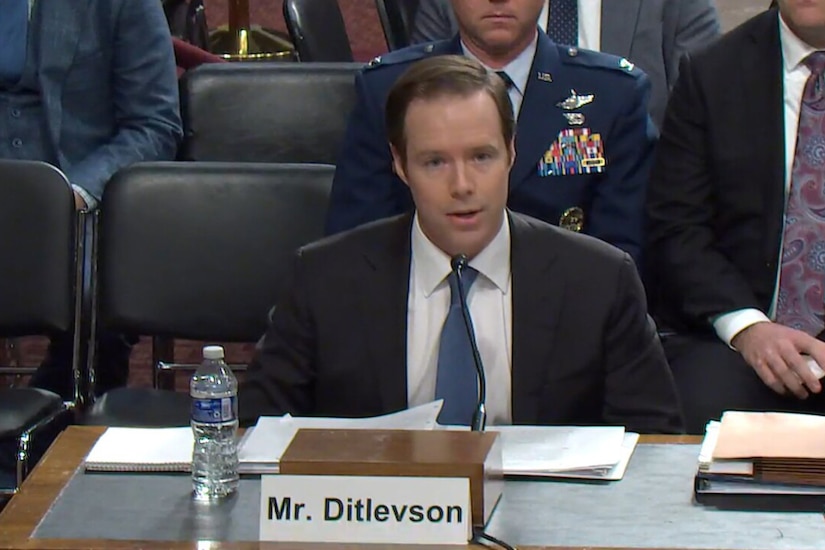
Currently, the National Guard is deployed under both Title 10 and Title 32 authorities, providing support for missions, including federal protection in California, Illinois and Oregon, support to federal law enforcement in Tennessee and restoring law and order in Washington, said Mark R. Ditlevson, principal deputy assistant secretary of war for homeland defense and Americas security affairs.

A man in business attire sits at a table and speaks into a microphone.

Ditlevson noted that the department is committed to ensuring all National Guardsmen are properly trained and equipped for these missions.  

"We emphasize de-escalation techniques, respect for civil liberties and adherence to the rules for the use of force. We also work closely with state governments and other federal agencies to ensure a coordinated and effective response to domestic challenges," he said.  

In addition to transparency and accountability in all activities, Ditlevson said providing peace of mind is also critical. 

"Americans must know that they can walk home at night, that they can take their children to the playground, that they can exist without fear of being attacked," he said.

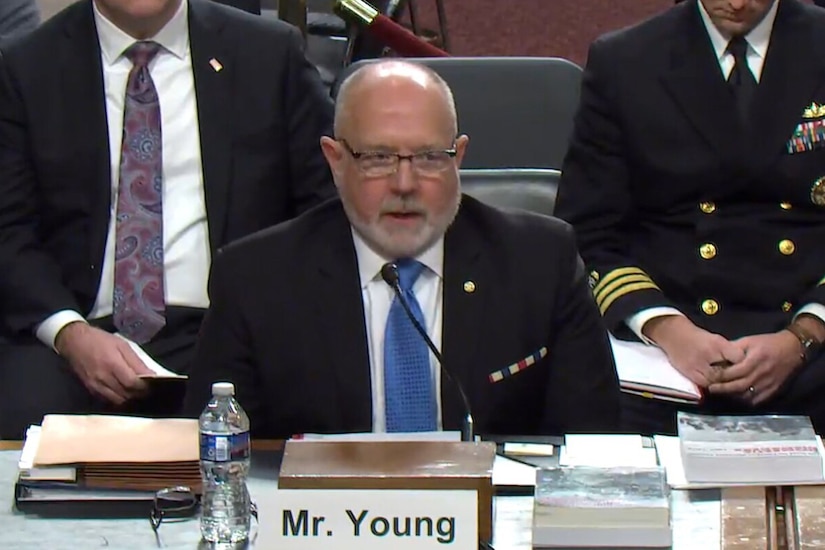
A man in business attire sits at a table and speaks into a microphone.

War Department Principal Deputy General Counsel Charles L. Young III said the overarching concern is to ensure that communities remain safe places where citizens can enjoy their constitutionally protected rights in peace and where federal officers can perform their valid federal functions without fear of physical harm.

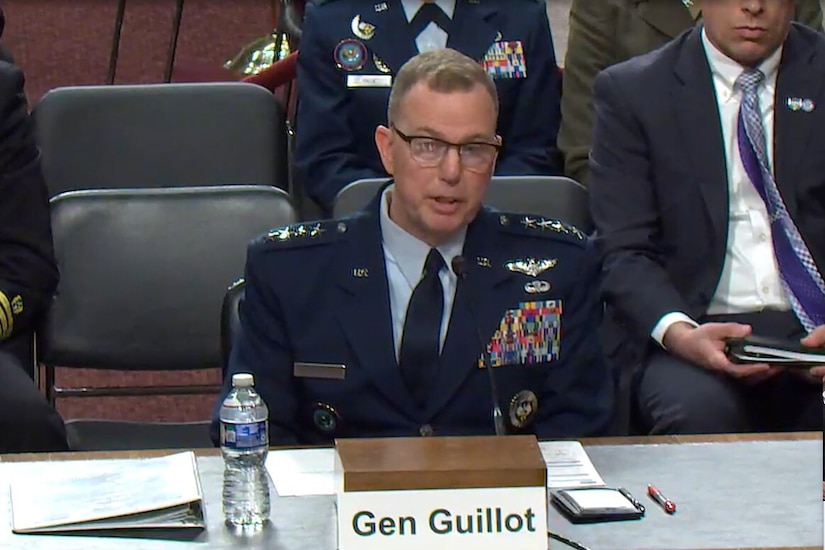
Air Force Gen. Gregory M. Guillot, commander of North American Aerospace Defense Command and U.S. Northern Command, said that every service member participating in federal protection missions is thoroughly trained on their authorities and limitations.  

"It is essential that everyone involved in this mission understands precisely what they are authorized to do, but perhaps more importantly, what they are authorized not to do," he said.

A man in a military dress uniform sits at a table and speaks into a microphone.

Title 10 troops are prohibited from conducting traditional law enforcement activities, including arrest, seizure, search or evidence collection in connection with the enforcement of laws, Guillot said, adding that their mission is to take reasonable measures to prevent the destruction of federal property and protect federal personnel from harm. 

"Service members may temporarily restrain civilians, conduct cursory searches or take other similar measures to ensure safety of the persons on the property," he said. 

Friday, December 05, 2025

York Man Who Impersonated A Deputy U.S. Marshal Sentenced To Over Three Years In Prison

HARRISBURG - The United States Attorney’s Office for the Middle District of Pennsylvania announced that Jaimie Lynn Cummings, age 52, of York County, Pennsylvania, was sentenced on December 2, 2025, to 40 months’ imprisonment by United States District Judge Kelli N. Neary for impersonating an officer of the United States and a firearms offense.

According to United States Attorney Brian D. Miller, Cummings was sentenced for falsely impersonating a Deputy U.S. Marshal and illegal possession of a short-barreled firearm. Cummings previously pleaded guilty those charges.  The charges arose from a September 20, 2023, incident where Cummings appeared at the Northern York Regional Police Department wearing what purported to be a U.S. Marshal badge, tactical gear, tactical clothing, and a firearm.  After representing himself to police as a deputy U.S. Marshal, local law enforcement recognized that he was not a law enforcement officer. Cummings left the police station but was later stopped by police.  Police found in his car and in his home an assortment of firearms, ammunition, and rifles less than sixteen inches in length. Cummings possessed the short-barreled rifles illegally. 

When imposing sentence, Judge Neary noted Cummings’s criminal history, his personal circumstances, and the seriousness of the conduct.  

The case was investigated by the Bureau of Alcohol, Tobacco, Firearms and Explosives (ATF) and the Northern York Regional Police Department. Assistant United States Attorney Michael A. Consiglio is prosecuting the case.

Friday, November 28, 2025

The Top Ten Emerging Threats Every Police Department Must Prepare for in 2026

Law enforcement in the United States is entering a period of profound complexity. Crime is evolving in ways that outpace traditional policing models, driven by rapid technological change, the destabilizing effects of synthetic drugs, shifting public expectations, and new forms of social and economic strain. As 2026 approaches, police leaders face a widening threat landscape that demands sharper foresight, modernized systems, and deeper partnerships across agencies and communities.

This “Top Ten” assessment highlights the most pressing emerging threats shaping the future of policing in America—a roadmap for departments seeking to stay ahead of the curve rather than struggle from behind it.

1. AI-Driven Cybercrime and Deepfake Fraud

Artificial intelligence is accelerating criminal innovation. Fraudsters now use AI tools to create realistic voice clones, synthetic identities, and sophisticated deepfake media. Local agencies face a surge in AI-assisted phishing schemes, impersonation crimes, and cyber-enabled financial fraud. As research in the journal Laws notes, AI is dramatically expanding the scale and speed of cybercrime, challenging agencies that lack digital forensic capability or updated training.

2. Synthetic Drugs and the Continuing Fentanyl Crisis

Synthetic opioids remain the deadliest driver of overdose deaths nationwide. The 2025 National Drug Threat Assessment confirms that fentanyl and its analogues continue to dominate both the illicit market and overdose statistics. For police departments, this translates into sustained increases in overdose calls, risks of accidental exposure, and demands for coordinated responses with health agencies. Even in communities claiming improved crime numbers, synthetic drugs remain a destabilizing force.

3. Mental-Health and Crisis Calls Outpacing Patrol Resources

A growing share of 911 calls involve mental-health emergencies, homelessness, or addiction-related crises. Many agencies report that these calls now represent a substantial portion of daily workload. Without adequate co-responder programs or mental-health partnerships, officers are often thrust into situations they are not clinically trained to resolve. This expands liability, strains staffing, and diverts officers from proactive policing. National discussions around policing consistently highlight this pressure point as one of the most urgent structural challenges facing departments.

4. Recruitment Collapse and Officer Retention Crises

Many agencies report historic lows in new applicants and troubling levels of attrition. Veteran officers are retiring early, younger officers are leaving for better conditions elsewhere, and the hiring pipeline cannot keep pace. The result is reduced patrol staffing, slower response times, and increased burnout among remaining personnel. Without significant investment in recruitment, training, and officer wellness, the profession risks entering a multi-year staffing deficit.

5. Cyber Extortion and Ransomware Targeting Public Safety Systems

Smaller agencies and municipalities have become frequent targets of ransomware attacks and cyber extortion. When CAD systems, records databases, or digital evidence platforms are compromised, entire departments can be crippled. According to assessments from the Department of Homeland Security, criminal organizations increasingly rely on AI-enhanced tools to identify vulnerable public-sector targets. Police agencies with outdated servers or fragmented IT oversight face elevated risk.

6. Violent-Crime Clusters and Localized Hot Spots

National violent crime numbers tell an incomplete story. While many cities report declines, the Council on Criminal Justice finds that violence is becoming more concentrated geographically. Some neighborhoods face persistent gun crime, gang activity, or high-risk property crime while adjacent areas remain comparatively stable. This uneven distribution requires hyper-local strategies, precision policing, and real-time analytics to avoid a return to chronic urban violence.

7. Organized Auto Theft and Keyless-Entry Exploitation

Technological convenience has created opportunity. Criminal networks increasingly use electronic amplifiers, signal boosters, and hacking devices to bypass keyless ignition systems. Car theft rings now operate across jurisdictions, stealing vehicles to ship overseas or dismantle for parts. While auto theft is sometimes dismissed as a “property crime,” its organized nature and speed represent a growing threat for many regions.

8. Community Trust Pressures and Demands for Transparency

Public expectations around transparency and accountability continue to rise. Communities demand clarity on use-of-force decisions, body-worn camera policies, bias mitigation, and complaint investigations. Even as crime evolves technologically, police legitimacy remains rooted in trust. Departments unable to demonstrate consistent transparency risk widening divides that hinder cooperation, intelligence sharing, and effective community partnership.

9. Legacy Technology, Data Siloes, and Interagency Coordination Gaps

Many departments still operate with outdated systems—disconnected databases, slow evidence tracking, obsolete servers, or paper-heavy workflows. Fragmented technology hampers investigations and limits the speed at which officers can access critical information. Modern policing requires integrated data platforms, cloud-based case management, and cross-agency information sharing. Agencies that fail to modernize will struggle to manage 21st-century crime.

10. The Combined Effect: A National “Threat Matrix”

The most significant danger is not any single trend—it's the convergence of all of them. AI-driven fraud, synthetic drugs, officer shortages, cyber threats, violent-crime clusters, and crisis-response overload combine to form a systemic challenge. Agencies that address these threats in isolation will remain overwhelmed. Those that adopt a holistic, future-focused strategy—integrating technology, partnerships, officer support, and community engagement—will shape the next era of American policing.

Conclusion: Meeting the Moment

The next several years will define the future of law enforcement. The threats outlined above are real, verifiable, and already impacting departments nationwide. Agencies that embrace modernization, strengthen community relationships, invest in officer development, and prepare for technological transformation will be positioned to lead. Those who resist change risk falling behind a rapidly evolving threat environment.

Policing is entering a new chapter. The question is not whether these challenges will grow—but whether agencies will be ready.


References

Council on Criminal Justice. (2025). Crime trends in U.S. cities: Mid-year 2025 update. Council on Criminal Justice. https://counciloncj.org/crime-trends-in-u-s-cities-mid-year-2025-update/

Drug Enforcement Administration. (2025). 2025 National Drug Threat Assessment. U.S. Department of Justice. https://www.dea.gov/sites/default/files/2025-07/2025NationalDrugThreatAssessment.pdf

Lin, L. S. F. (2025). Organisational challenges in U.S. law enforcement’s response to AI-driven cybercrime and deepfake fraud. Laws, 14(4), 46. https://doi.org/10.3390/laws14040046

Schiliro, F. (2024). From crime to hypercrime: Evolving threats and law enforcement’s new mandate in the AI age. arXiv. https://arxiv.org/abs/2411.10995

United States Department of Homeland Security. (2024). Impact of artificial intelligence on criminal and illicit activities. DHS Office of Intelligence and Analysis. https://www.dhs.gov/sites/default/files/2024-10/24_0927_ia_aep-impact-ai-on-criminal-and-illicit-activities.pdf

Actuate AI. (2025). New police technology 2025: The future of law enforcement. Actuate. https://actuate.ai/blogs/new-police-technology-2025-the-future-of-law-enforcement/


Friday, November 21, 2025

FORMER LEON COUNTY DEPUTY SHERIFF PLEADS GUILTY TO UNLAWFUL POSSESSION OF AN UNREGISTERED MACHINEGUN


TALLAHASSEE, FLORIDA
 – Bill Ed Culpepper, Jr. 56, of Havana, Florida, has pleaded guilty to unlawful possession of an unregistered machinegun. John P. Heekin, United States Attorney for the Northern District of Florida announced the charge.

U.S. Attorney Heekin said: “When this defendant unlawfully possessed these firearms, he not only violated federal law, but also the public trust placed in him as a sworn law enforcement officer. No one is above the law, and my office will not hesitate to aggressively prosecute every violation of federal law that occurs in the Northern District of Florida.”

During a drug trafficking investigation of the defendant’s son, Garret Culpepper, additional probable cause developed to search the defendant’s residence in Havana, Florida. During the search, law enforcement located multiple unregistered machineguns as well as an unregistered rifle silencer.

Sentencing is scheduled for January 20, 2026, in federal court before Chief United States District Judge Allen C. Winsor in Tallahassee, Florida. Culpepper faces up to ten years’ imprisonment on the charges.

The case was investigated by the Tallahassee Police Department, the Drug Enforcement Administration and the Bureau of Alcohol, Tobacco, Firearms and Explosives. The case is being prosecuted by Assistant United States Attorney Eric K Mountin.

This case is part of Operation Take Back America a nationwide initiative that marshals the full resources of the Department of Justice to repel the invasion of illegal immigration, achieve the total elimination of cartels and transnational criminal organizations (TCOs), and protect our communities from the perpetrators of violent crime.

Man Pleads Guilty To Threatening To Murder Federal Agents

CHARLOTTE, N.C. – Johnathan Trent Thomas, 27, of Linwood, N.C., pleaded guilty in federal court today to making threats to murder federal officers to impede, intimidate, or interfere with the performance of their official duties, announced Russ Ferguson, U.S. Attorney for the Western District of North Carolina.

Cardell T. Morant, Special Agent in Charge of Homeland Security Investigations (HSI) in North Carolina and South Carolina, joins U.S. Attorney Ferguson in making today’s announcement.

According to filed court documents and court proceedings, six months ago, on Wednesday, May 14, 2025, at approximately 12:00 p.m., a caller, later identified as Thomas, contacted the Charlotte Mecklenburg Police Department (CMPD) and threatened to kill Immigration and Customs Enforcement (ICE) agents and CMPD officers if immigration enforcement actions did not stop. During a second telephone call with a CMPD officer, Thomas warned that he was coming to Charlotte with armor piercing ammunition, night vision devices, and body armor to kill law enforcement officers and threatened to “shoot them all” if he observed anyone making arrests. Thomas was referencing arrests made previously by ICE federal agents on Albemarle Road in Charlotte.

Court documents show that Thomas stated that if a police officer pointed a gun at him, he was just going to open fire. He also said that he would “Swiss cheese” the officers if they were doing the same thing they did before, meaning making arrests. Thomas made additional threats to law enforcement, including that he had Tannerite (an explosive) all around his house if the police came, and referenced April 29, 2024, which is the date that four law enforcement officers were killed in the line of duty in Charlotte, warning that he “could do a whole lot better than that.”  Law enforcement executed a search warrant at Thomas’s residence, seizing three rifles, a handgun, and a variety of ammunition.  

According to court records, Thomas has an extensive history of threatening law enforcement, to include the Davidson County Sheriff’s Office and CMPD, and had previously followed CMPD officers in marked patrol cars while they were performing their official duties.

Thomas pleaded guilty to one count of threatening to murder federal law enforcement officers which carries a maximum penalty of 10 years in prison. Thomas remains in federal custody. A sentencing date has not been set.

In making today’s announcement, U.S. Attorney Ferguson commended HSI for the investigation of the case and thanked the U.S. Attorney’s Office in the Middle District of North Carolina, the Bureau of Alcohol, Tobacco, Firearms and Explosives, the Davidson County Sheriff’s Office, the Waxhaw Police Department, and the Charlotte Mecklenburg Police Department for their assistance.

Assistant U.S. Attorneys David Kelly and Stephanie Spaugh of the U.S. Attorney’s Office in Charlotte are prosecuting the case.

Friday, November 14, 2025

Ohio Man Indicted on Attempted Murder of a Federal Agent

CLEVELAND – An Ohio man now faces additional charges—including attempted murder of a federal officer—in connection with an Oct. 15 incident that resulted as federal officers attempted to serve an arrest warrant.

On Oct. 29, a federal grand jury in Cleveland returned a four-count indictment charging Larry Leon Dwight Wiley, 55, of Cleveland, with:

  • Count 1 - Attempted Murder of a Federal Officer
  • Count 2 - Assault on Federal Officers with a Deadly Weapon
  • Count 3 – Using, Carrying, and Discharging a Firearm During and in Relation to a Crime of Violence
  • Count 4 - Felon in Possession of a Firearm and Ammunition, for prior convictions that include Felonious Assault in 2010; Domestic Violence in 2009; Aggravated Robbery with Firearm Specification in 2000; Burglary in 1999; and Assault on a Police Officer in 1998.

According to the criminal complaint affidavit, on Oct. 15, members of the U.S. Marshals Service Northern Ohio Violent Fugitive Task Force went to an apartment unit in Cleveland to execute an arrest warrant on Wiley, who was wanted for felonious assault. Officers announced their presence as law enforcement and breached the door of the unit. Wiley, who was inside, allegedly fired a handgun in the direction of the officers, striking a deputy U.S. Marshal in the arm with a .380 caliber round. The deputy U.S. Marshal was immediately rushed to a nearby hospital where he received treatment for his injuries. Wiley then barricaded himself in the apartment, leading to a standoff that lasted several hours until he surrendered and was taken into custody.

If convicted, Wiley faces up to 20 years in prison for Counts 1 and 2; up to life in prison for Count 3; and up to 15 years in prison on Count 4. The defendant’s sentence will be determined by the Court after a review of factors unique to the case, including prior criminal record, role in the offense, and characteristics of the violation.

This case is being investigated by the FBI Cleveland Division, the Bureau of Alcohol, Tobacco, Firearms, and Explosives (ATF), and the Cleveland Division of Police. The Cuyahoga County Sheriff’s Office also provided valuable assistance. The prosecution is being led by Assistant United States Attorneys Margaret A. Sweeney, Scott Zarzycki, and James P. Lewis for the Northern District of Ohio.

An indictment is merely an allegation. The defendant is presumed innocent until proven guilty beyond a reasonable doubt in a court of law.

PENSACOLA MAN PLEADS GUILTY TO FEDERAL CHARGES FOR ATTEMPTING TO KILL AN ESCAMBIA COUNTY SHERIFF’S DEPUTY

PENSACOLA, FLORIDA – Darrion K. Finley, 21, of Pensacola, Florida, has pled guilty in federal court on charges related to a shooting incident in late 2024. John P. Heekin, United States Attorney for the Northern District of Florida announced the guilty plea.

The Indictment charged Finley with Possession of a Firearm by a Convicted Felon, Attempting to Kill an Escambia County Sheriff’s Deputy to Prevent Certain Communications, and Discharging a Firearm During and in Relation to a Crime of Violence.

U.S. Attorney Heekin said: “This case shows the deadly threats our brave men and women in law enforcement face every day as they fight to remove violent criminals from our communities. My office remains firmly committed to aggressively prosecuting those violent offenders, and we will stand shoulder to shoulder with our law enforcement partners in the fight to keep our streets safe.”

Court documents reveal that on December 17, 2024, the defendant was driving in Pensacola in a stolen vehicle.  When the Escambia County Sheriff’s Office attempted to conduct a traffic stop of the defendant, he accelerated and law enforcement began its vehicle pursuit.  The defendant was eventually stopped when a Deputy Sheriff conducted a precision immobilization technique on the stolen vehicle.  As the defendant and his vehicle were being stopped, he fired a 9 millimeter round into the Deputy’s vehicle.  The defendant then attempted to escape on foot, with his Glock 9 millimeter pistol and loaded extended magazine still in hand, but the Deputy released his K9 partner, who put the defendant down onto the ground.  The defendant, still armed, then tried to run but was shot by the Deputy.  The defendant survived his wounds and was thereafter indicted by a federal grand jury for his crimes.

Sentencing is scheduled on January 13, 2026, at 1:00 p.m. before United States District Judge T. Kent Wetherell II.  Finley faces up to life imprisonment. 

The case is being jointly investigated by the Bureau of Alcohol, Tobacco, Firearms, and Explosives; the Escambia County Sheriff’s Office; the State Attorney’s Office; and the Florida Department of Law Enforcement. The case is being prosecuted by Assistant United States Attorneys David L. Goldberg and Jessica S. Etherton.